PE Only 10x vs. EPS Growth of 327% — Micron Remains Attractive Even After Massive Rally!
Micron’s biggest investment highlight lies in the coexistence of low valuation and high growth. Micron is currently trading at a price-to-earnings ratio of only around 9.9x, while the median valuation for the semiconductor industry is approximately 32x. At the same time, the company’s projected future EPS growth is as high as 327%, showing that its earnings growth rate is far above the industry average.
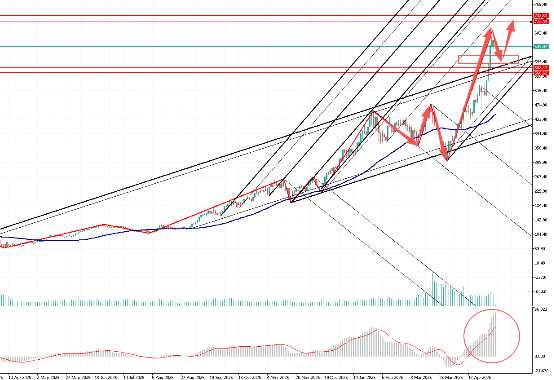
Driven by surging demand for memory chips fueled by AI, Micron’s stock has remained exceptionally strong recently. Data shows that the company’s share price has risen approximately 720% over the past 12 months, while gaining around 80% in the past month alone.

Quantitative models focus on company fundamentals rather than pure market sentiment. If the growth data, profitability, and valuation logic remain intact, Micron may still represent a strong buy opportunity even as a cyclical stock.
At the current valuation level of roughly 10x earnings, Micron’s expected earnings growth remains extremely strong. As demand for AI servers, high-performance computing, and data centers continues to expand, the outlook for HBM (High Bandwidth Memory) and DRAM markets has improved significantly, prompting markets to reassess the long-term growth potential of the memory chip industry.
Bernstein remains bullish on memory stocks. The latest data shows that DRAM and NAND contract prices are expected to rise significantly in the second quarter of calendar year 2026, with gains exceeding the firm’s previous expectations. Demand for server DRAM and enterprise SSDs remains strong, continuing to maintain tight supply conditions.
Bernstein expects memory chip prices to remain strong through calendar year 2027, before gradually returning to normal levels starting in the second half of 2027 and continuing into 2028.
Market Interpretation:
Bernstein pointed out that spot market pricing signals remain relatively mixed. Spot prices for server DDR5 modules declined 6.7% month-over-month, while NAND wafer spot prices fell around 7%. The reason is that rising prices have begun suppressing consumer demand, forcing OEMs and module manufacturers to reduce procurement volumes.