




This year marks a critical turning point in the generative AI boom, as the focus shifts from cloud-based compute to real-world, end-user applications. Against this backdrop, CES 2026 carries an important signaling function: can consumer-grade AI hardware take the baton and become the new engine of industry growth?

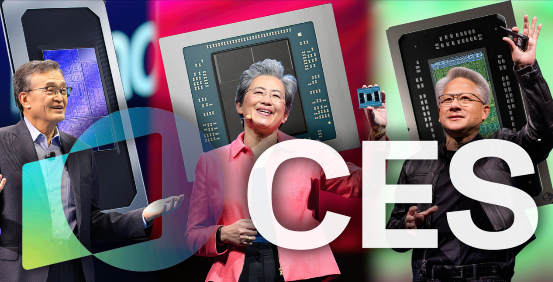
Based on NVIDIA’s official schedule and Wall Street analyst forecasts, Huang’s keynote is unlikely to be limited to a single product release. Instead, it is expected to sketch out a much grander vision of the future. At its core will likely be the concept of “physical AI” — artificial intelligence that can understand and interact with the real, physical world. The speech may delve into the latest progress in data centers and robotics, and highlight how NVIDIA’s Cosmos foundation model platform is accelerating the development of complex AI systems such as autonomous driving. In addition, any updates on the next-generation Rubin platform and the NVLink ecosystem are being closely watched by the industry. The clear goal of this keynote is to reinforce NVIDIA’s role as the central “enabler” at the heart of the AI ecosystem.
By contrast, Lisa Su’s keynote for AMD is expected to focus more on concrete product rollouts and competitive positioning. The market anticipates that she will showcase AMD’s latest advances in AI PCs and gaming, including next-generation Ryzen processors and Radeon graphics cards. Progress on EPYC server CPUs and Instinct-series GPUs for the data center market may also be featured. Some analysts believe that a brand-new Zen 6 architecture built on TSMC’s 2-nanometer process could make an appearance, with its performance gains becoming a key weapon for AMD in the battle for market share.
Key Themes to Watch at CES
The product matrix at this year’s CES clearly outlines several core battlegrounds for AI’s real-world deployment, with three areas in particular drawing the most attention:
1. Robots
Humanoid robots, in particular, are set to become the undisputed stars of the show. The number of exhibitors is so large that the organizers have allocated an entire dedicated hall to them. Exhibits will span home companionship, manufacturing, logistics, and restaurant services, among other scenarios.
However, unlike past years where many displays were more conceptual than practical, this year’s robotics companies are facing much stricter scrutiny from capital markets. After a series of commercial setbacks in the AI hardware space, investors are eager to see tangible progress in cost control, safety, and real-world task execution. This will be crucial in validating the commercial viability of humanoid robots. The outcome of this “robot war” will directly shape how investors value this track over the long term.
2. AI Glasses
AI smart glasses are viewed by many institutions as a product category that could see explosive growth in 2026. The market increasingly believes that as voice interaction, industrial design, and battery life continue to improve, user stickiness for AI glasses is strengthening.
Their development trajectory is being compared to that of TWS (true wireless stereo) earphones in 2019 — using “lightweight feature penetration + low-friction interaction” to open up scenarios across both consumer and enterprise markets. At this CES, multiple manufacturers from China, the US, and South Korea will showcase their latest offerings. This will be a critical litmus test for actual market enthusiasm and supply-chain readiness.
3. AI PCs and Smart Homes
Personal computers equipped with powerful on-device AI compute (AI PCs) remain one of the central stars of the show. At the same time, AI is set to permeate everyday life more deeply. From smart appliances to fully integrated smart-home ecosystems, major brands will demonstrate how AI can more precisely serve personalized needs in home environments.
This points to a broader shift: AI is evolving from a specialized tool into a mass-market technology aimed at boosting everyday productivity and quality of life.

Which Sectors and Companies Deserve Attention?
Historically, CES has been a breeding ground for annual tech investment themes. For example, the debut of wireless earbuds in 2018 helped trigger the subsequent boom in TWS earphones. During CES 2025, chip stocks were among the biggest winners, with semiconductor ETFs rallying noticeably after the show opened.
Looking ahead, the impact of CES 2026 may play out on two levels:
Short-term event-driven moves – Major product launches and upbeat guidance from tech giants typically lift sentiment for the companies involved and, at times, for the broader tech sector.
Medium- to long-term theme confirmation – The technology trends and product feedback showcased at the event will help investors distinguish between overhyped stories and sectors with real commercial potential, and recalibrate their full-year positioning in consumer electronics and AI hardware.
The main investment lines to watch at this year’s show include:
1.Core Chips and Compute Partners
No matter how AI evolves at the device level, underlying compute demand remains the bedrock. As such, providers of high-end chips — NVIDIA (NVDA), AMD (AMD), and leading foundry TSMC (TSM) — will remain perpetual focal points. Their earnings and guidance effectively define the ceiling for the entire AI hardware complex.
2.AI Hardware and Robotics Supply Chain
The concentrated display of robotics is set to draw attention to the entire value chain, from critical components to final assembly. This includes suppliers of precision motion systems, sensors, and servo drives.
At the same time, the rise of AI glasses will benefit companies involved in optical lenses, micro-display modules, structural components, and end-product assembly.
3.Consumer Electronics Brands and ODMs
Finally, the upgrade cycle in AI PCs and the constant innovation in smart devices ultimately have to be brought to market by brands and design-manufacturing partners.
Therefore, major consumer-electronics brands — as well as large ODMs (original design manufacturers) such as Foxconn, Quanta, and Wistron — will be key barometers. Their order momentum and capacity plans will be crucial in verifying whether these trends can translate into real, sustained demand.







