

Dogecoin Price Forecast: DOGE risks a steeper decline, discounting ETF inflow
- Dogecoin slips below $0.0850 on Thursday, extending its decline for the fourth consecutive day.
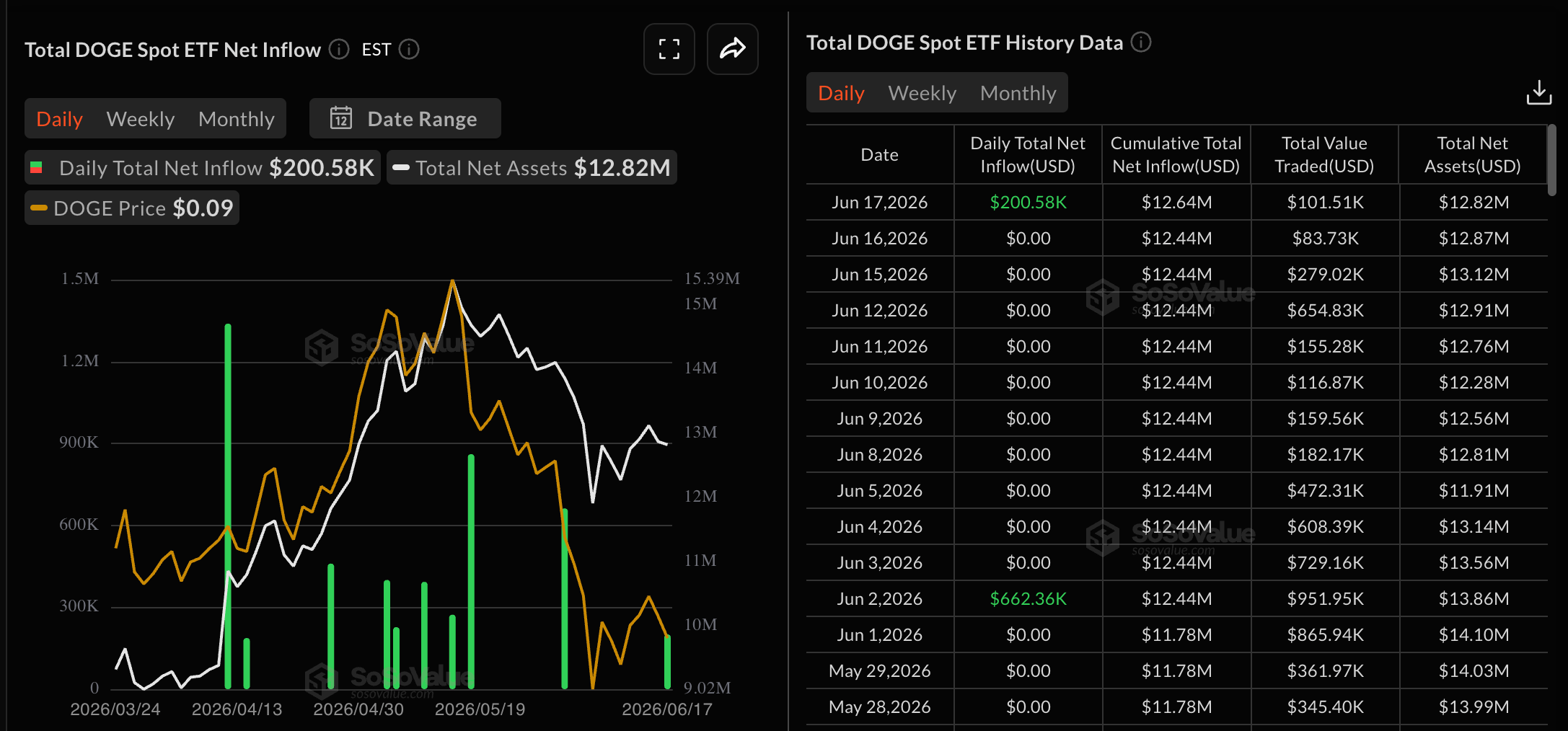
- DOGE ETFs recorded an inflow of about $200,000 on Wednesday, ending the streak of 10 zero-flow days.
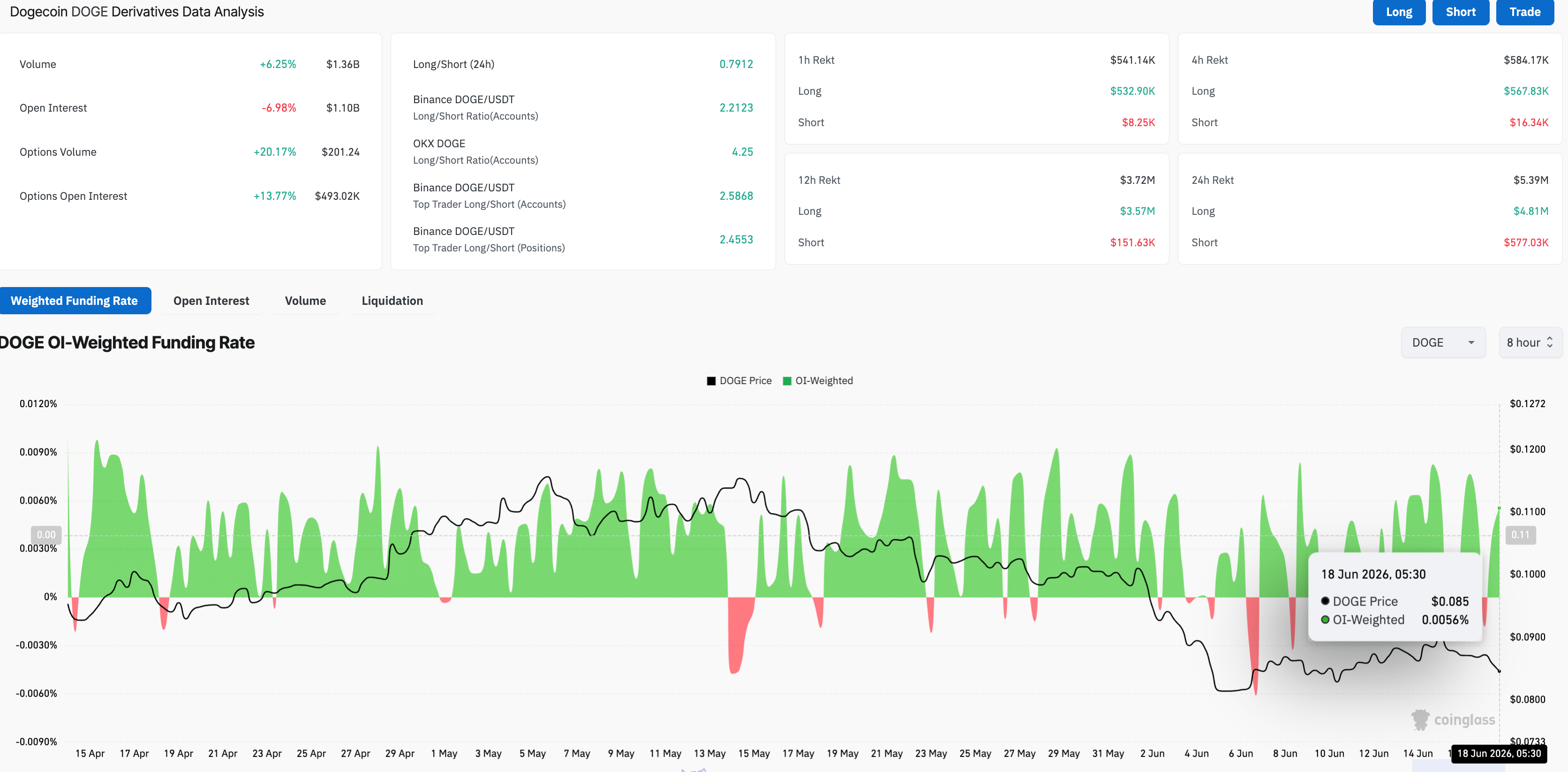
- Retail demand weakens in the meme coin as Open Interest wanes and long liquidations rise.
Dogecoin (DOGE) is trading in the red below $0.08500 for the fourth straight day as broader market interest shifts toward real-world utility tokens. The meme coin is losing retail strength despite a mild institutional inflow on Wednesday after 10 days of silence. The technical outlook indicates DOGE is on a bearish slope with further downside potential, likely toward the June 6 low of $0.07766.

Retail interest discounts occasional ETF inflows
Dogecoin is losing its retail strength, a crucial bullish factor for the meme coin, as general crypto investor interest matures toward tokenization, privacy, and AI-themed tokens. CoinGlass data shows that DOGE Open Interest (OI) is down 7% over the last 24 hours to $1.10 billion, suggesting risk-off sentiment amid a decline in active positions.
Corroborating the risk-averse situation, liquidation data shows $4.81 million in long liquidations outpaces $577,030 in short liquidations. This bullish-biased wipeout could continue as the funding rate remains positive at 0.0056%, indicating that traders continue to prefer buying long in the hope of a turnaround.
A key reason fueling this hope among investors is the mild inflow of $200,580 recorded by DOGE-focused Exchange Traded Funds (ETFs). However, the inconsistency in inflows after 10 days of zero flows keeps the impact on retail sentiment to a minimum.
Could Dogecoin extend a lower leg?
Dogecoin trades below $0.0850 at press time on Thursday, well below the 50-, 100-, and 200-day Exponential Moving Averages (EMAs), maintaining a bearish near-term tone. The consecutive days of losses reflect a quick bearish turnaround from the $0.0900 round figure, as sellers regained control.
The 14-day Relative Strength Index (RSI) sits near 35 on the daily chart, hinting at weak demand but not yet a clear oversold extreme, while the Moving Average Convergence Divergence (MACD) sits close to its signal line, suggesting only a modest loss of downside momentum within a still-capped structure.
Looking down, the immediate support aligns with the February 6 low of $0.07766, guarding the downside to the $0.0700 round figure followed by the $0.0641 level.
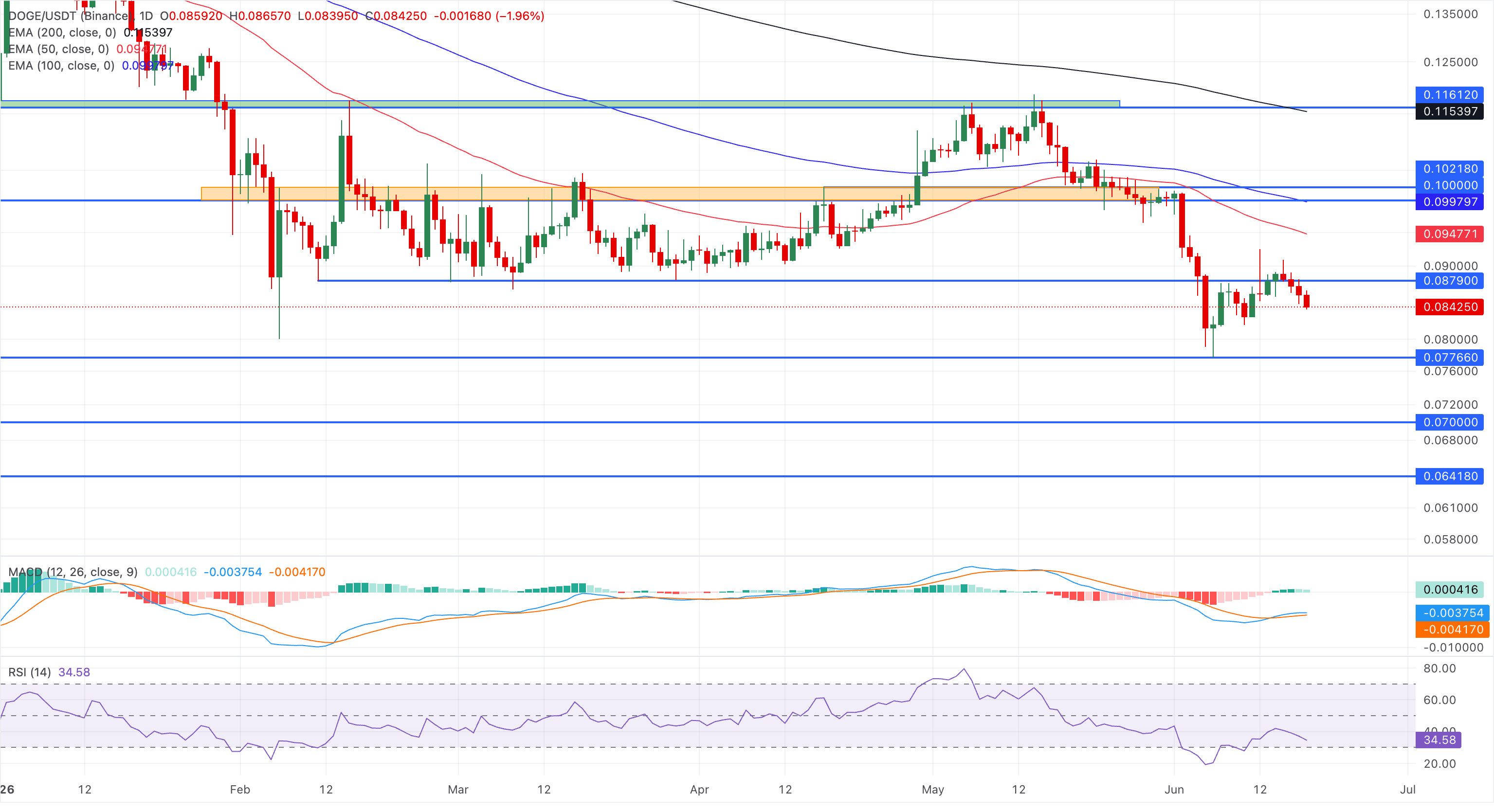
On the topside, initial resistance is seen at the $0.0900 level, followed by the 50-day EMA at roughly $0.094 and the 100-day EMA at roughly $0.0997, reinforcing the broader bearish cap.
(The technical analysis of this story was written with the help of an AI tool.)














