

التداول
اكتشف مجموعة متنوعة من الأسواق العالمية مع تسعير تنافسي، سيولة عالية، وأدوات تداول متقدمة تدعم قراراتك الاستثمارية.
اكتشف المزيد 
منصات التداول
تداول بسلاسة مع منصة TMGM القوية، المصممة للسرعة والدقة وتجربة تداول فائقة.
اكتشف المزيد منصات التداول
الأكاديمية
تعلّم أساسيات التداول من خلال محتوى تعليمي مُبسط ومصمم للمبتدئين، يشمل أدلة تعليمية،ندوات مباشرة عبر الإنترنت، وتحليلات لأهم تحركات السوق.
اكتشف المزيد أكاديمية TMGM
الأخبار والتحليلات
تابع أحدث تطورات الأسواق لحظة بلحظة، مع تحليلات احترافية تساعدك على اتخاذ قرارات مدروسة والاستفادة من فرص التداول.
اكتشف المزيد الأخبار والتحليلات
معلومات عنا
تعرّف على ما يميز TMGM، من حضور عالمي قوي وإشراف تنظيمي موثوق، إلى التزامنا المستمر بالابتكار وتطوير بيئة تداول متقدمة.
اكتشف المزيد لماذا TMGM؟
Euro stuck under 1.10 as weak US data fails to slow the Dollar
- EUR/USD touches 1.1000, turns back and holds above Wednesday's 19-month low.
- Fed officials call inflation too high, and a December rate hike remains priced in.
- ECB President Lagarde speaks Friday, before US consumer sentiment figures.
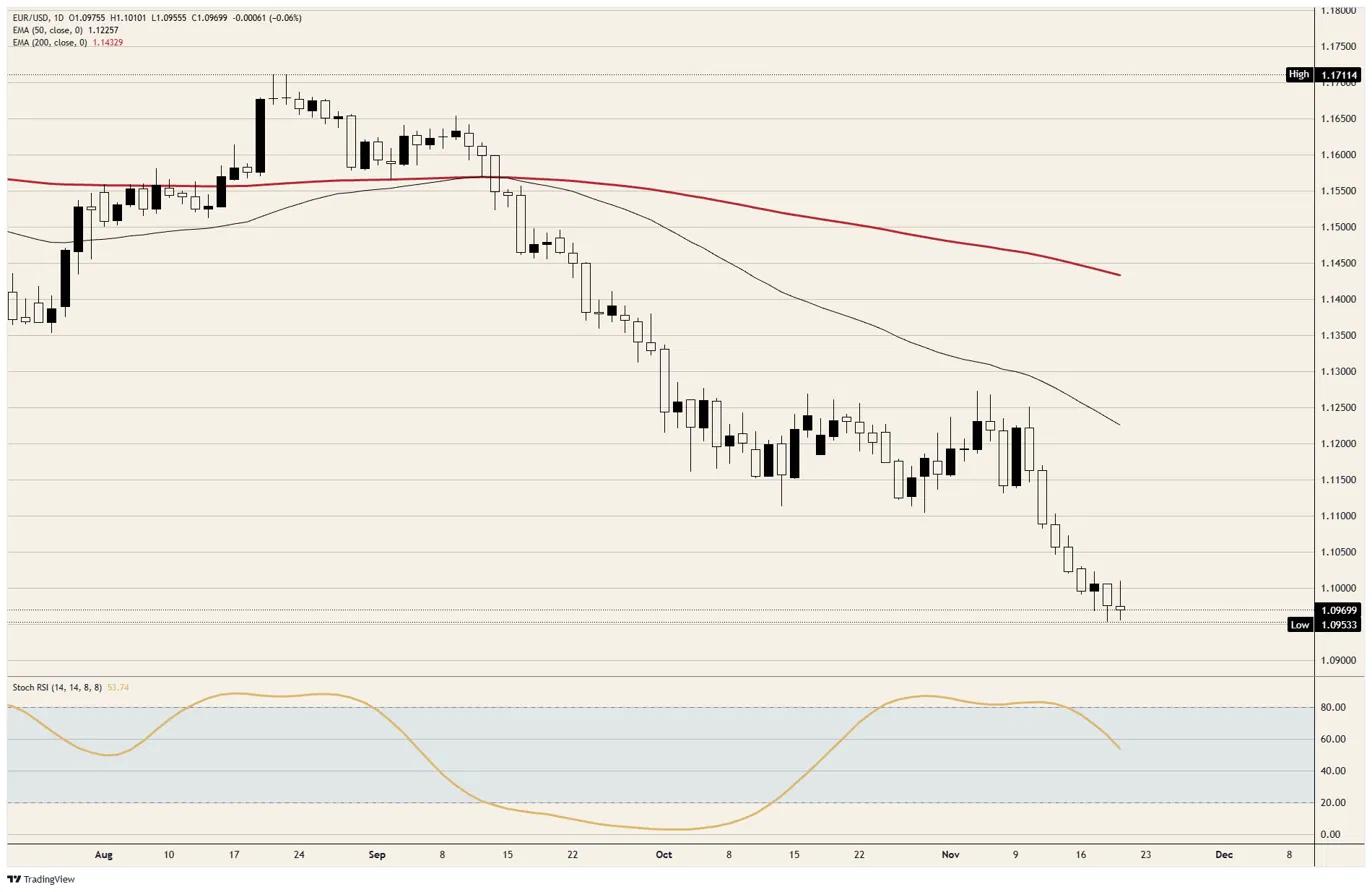
Two weak US releases weren't enough to lift the Euro back above 1.1000. EUR/USD reached that level, turned back and is trading near 1.0970, inside Wednesday's range and above Wednesday's low near 1.0950, its lowest in 19 months. The Pound and the Australian Dollar both fell to new lows for 2026 on the same session, which makes a flat Euro the strongest of the three.

Initial jobless claims came in at 203K versus a 197K forecast, and the Philadelphia Fed manufacturing survey fell to 6.3 from 20.9, down from 20 as expected. Fed officials kept a quarter-point hike on December 9 priced: Chicago Fed President Goolsbee said he doesn't see inflation heading back to 2%, and Fed Governor Barr said it remains far too high. The Dollar gave nothing back to the Euro on the weak data.
The European Central Bank (ECB) has kept its deposit rate at 2.50% since September 16, against the Fed's 3.75%-4.00%. ING says the gap between US and Eurozone two-year swap rates has widened by about a third of a point, to its widest since September 2025. ECB President Lagarde said on November 7 that she couldn't promise a hike in December, and the Euro has lost about 250 pips since November 9.
On the calendar
ECB Executive Board member Cipollone speaks at 03:10 GMT on Friday, ECB President Lagarde at 08:30 GMT and Bundesbank President Nagel at 13:00 GMT. The Eurozone's preliminary consumer confidence reading for November follows at 15:00 GMT, forecast unchanged at -17.9. All of it comes before the ECB's December 17 decision, the European side of the rate gap.
Philadelphia Fed President Paulson speaks at 23:30 GMT on Thursday, and Fed Governor Waller, who wants a half-point hike in December, at 13:25 GMT on Friday. The University of Michigan's consumer sentiment index is due at 15:00 GMT, forecast at 51.5 after 51, and Fed Governor Cook speaks at 17:15 GMT.
On the charts
The Euro traded between 1.1100 and just under 1.1300 for almost six weeks before breaking lower on November 11, and it's now more than 100 pips under that range. The 50-day Exponential Moving Average (EMA) is just under 1.1250 and the 200-day is just under 1.1450. The pair is about 6% below its August high just above 1.1700.
EUR/USD daily chart
Euro FAQs
The Euro is the currency for the 20 European Union countries that belong to the Eurozone. It is the second most heavily traded currency in the world behind the US Dollar. In 2022, it accounted for 31% of all foreign exchange transactions, with an average daily turnover of over $2.2 trillion a day. EUR/USD is the most heavily traded currency pair in the world, accounting for an estimated 30% off all transactions, followed by EUR/JPY (4%), EUR/GBP (3%) and EUR/AUD (2%).
The European Central Bank (ECB) in Frankfurt, Germany, is the reserve bank for the Eurozone. The ECB sets interest rates and manages monetary policy. The ECB’s primary mandate is to maintain price stability, which means either controlling inflation or stimulating growth. Its primary tool is the raising or lowering of interest rates. Relatively high interest rates – or the expectation of higher rates – will usually benefit the Euro and vice versa. The ECB Governing Council makes monetary policy decisions at meetings held eight times a year. Decisions are made by heads of the Eurozone national banks and six permanent members, including the President of the ECB, Christine Lagarde.
Eurozone inflation data, measured by the Harmonized Index of Consumer Prices (HICP), is an important econometric for the Euro. If inflation rises more than expected, especially if above the ECB’s 2% target, it obliges the ECB to raise interest rates to bring it back under control. Relatively high interest rates compared to its counterparts will usually benefit the Euro, as it makes the region more attractive as a place for global investors to park their money.
Data releases gauge the health of the economy and can impact on the Euro. Indicators such as GDP, Manufacturing and Services PMIs, employment, and consumer sentiment surveys can all influence the direction of the single currency. A strong economy is good for the Euro. Not only does it attract more foreign investment but it may encourage the ECB to put up interest rates, which will directly strengthen the Euro. Otherwise, if economic data is weak, the Euro is likely to fall. Economic data for the four largest economies in the euro area (Germany, France, Italy and Spain) are especially significant, as they account for 75% of the Eurozone’s economy.
Another significant data release for the Euro is the Trade Balance. This indicator measures the difference between what a country earns from its exports and what it spends on imports over a given period. If a country produces highly sought after exports then its currency will gain in value purely from the extra demand created from foreign buyers seeking to purchase these goods. Therefore, a positive net Trade Balance strengthens a currency and vice versa for a negative balance.
المقالات الشائعة
1مؤشر داو جونز الصناعي يتراجع بأكثر من 1,000 نقطة مع هيمنة الطرح العام الأولي لشركة Anthropic على المشهد2توقعات سعر إيثريوم: ETH يبقى دون 1,800 دولار مع ظهور Anthropic لأول مرة3الروبية الإندونيسية: مخاطر مزيد من التشديد النقدي مع تبنّي بنك إندونيسيا نبرة متشددة – كومرتس بنك4سوق الفوركس اليوم: بيانات التضخم في اليابان وإنفاق المستهلكين في المملكة المتحدة ستحدد اتجاه التداولات5الدولار الكندي يرتفع مع تعافي النفط، وموقف الاحتياطي الفيدرالي المتشدد يحدّ من المكاسب6الدولار الأسترالي يهوي إلى أدنى مستوى جديد هذا العام مع دفع صدمة بيانات الوظائف إلى إعادة النظر في سياسة بنك الاحتياطي الأسترالي7الذهب يتراجع إلى أدنى مستوى في 14 شهرًا مع تزايد الرهانات على رفع الاحتياطي الفيدرالي أسعار الفائدة8توقعات سعر Ether.fi: المشترون يدفعون ETFFI للتعافي فوق 0.50 دولار9اليورو يواجه صعوبة في التعافي وسط توقعات بتزايد تشدد الاحتياطي الفيدرالي النقدي

ابدأ الآن!
سجّل وابدأ التداول في الأسواق العالمية خلال أقل من 3 دقائق

تواصل معنا









جهات الاتصال
الهاتف +61 2 8036 8388
الفاكس +61 2 8036 8388
البريد الإلكتروني support@tmgm.com
الموقع الإلكتروني https://www.tmgm.com



المعلومات المقدمة على هذا الموقع الإلكتروني ذات طبيعة عامة فقط ولا تشكل نصيحة مالية شخصية. قبل اتخاذ أي إجراء بناءً على أي معلومات واردة في هذا الموقع الإلكتروني، ينبغي عليك النظر في مدى ملاءمة هذه المعلومات لأهدافك ووضعك المالي واحتياجاتك. ينطوي الاستثمار في عقود الفروقات وعقود الهامش على الفوركس على مخاطر كبيرة، وهو غير مناسب لجميع المستثمرين. قد تخسر أكثر من إيداعك الأولي. أنت لا تملك الأصل الأساسي، ولا لديك أي مصلحة فيه. نوصي بأن تطلب مشورة مستقلة وأن تتأكد من أنك تفهم تمامًا المخاطر التي تنطوي عليها قبل التداول. من المهم أن تقرأ وثيقة الإفصاح وتدرسها قبل الحصول على أي منتج مدرج على الموقع الإلكتروني. إن المعلومات والإعلانات المعروضة على هذا الموقع الإلكتروني غير مخصصة للاستخدام من قبل أي شخص في أي بلد أو ولاية قضائية يكون فيها هذا الاستخدام مخالفًا للقوانين واللوائح المحلية. المنتجات والخدمات المعروضة على هذا الموقع الإلكتروني غير مخصصة للمقيمين في الولايات المتحدة وماليزيا وتايلاند.
TMGM مرخصة ومنظمة في ولايات قضائية مختلفة.
شركة Trademax Australia Limited، التي تتداول باسم TMGM، منظمة من قبل لجنة الأوراق المالية والاستثمارات الأسترالية (ASIC)، رقم AFSL 436416 وتقع في المستوى 28، برج دولي واحد، 100 شارع بارانجارو، 2000 سيدني، نيو ساوث ويلز أستراليا.
البريد الإلكتروني: support@tmgm.com.au
شركة Trademax Global Limited، التي تتداول باسم TMGM، مرخصة ومنظمة من قبل لجنة الخدمات المالية في فانواتو (VFSC)، رقم التسجيل 40356 ومسجلة في 1276، طريق كومول السريع، بورت فيلا، فانواتو، جمهورية فانواتو.
البريد الإلكتروني: support@tmgm.com
شركة Trademax Global Markets (SE) Limited، المعروفة باسم TMGM، مرخصة ومنظمة من قبل هيئة الخدمات المالية (FSA) في سيشيل، برقم الترخيص SD224. الشركة مسجلة في المكتب رقم 13، مركز ABIS العقاري، ماهي، سيشيل.
البريد الإلكتروني: support@tmgm.com
شركة Trademax Global Markets (International) Pty Ltd، التي تتداول باسم TMGM، مرخصة ومنظمة من قبل لجنة الخدمات المالية، موريشيوس (FSC) برقم الترخيص GB22201012، ومسجلة في 33، شارع إديث كافيل c/o IQ EQ Fund Services (Mauritius) Ltd بورت لويس، 11324 موريشيوس.
البريد الإلكتروني: support@tmgm.com
حقوق الطبع والنشر © TMGM. جميع الحقوق محفوظة