

Is Bitcoin's four-year cycle dead?
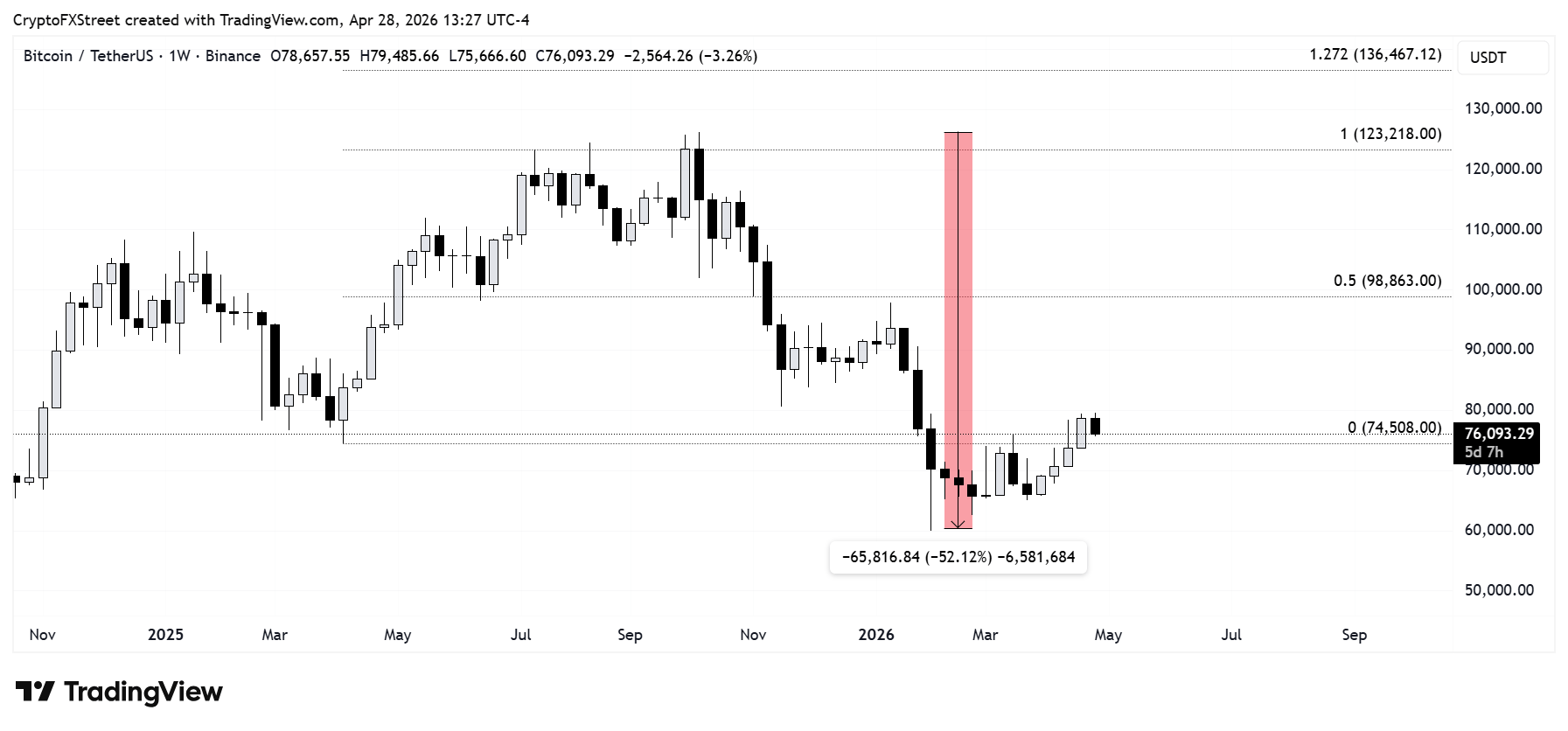
Is the legendary boom-and-bust rhythm of Bitcoin finally breaking down, or are traders misreading the market? After surging to $126,000 and then dropping nearly 50% in a matter of months, Bitcoin is challenging one of its most trusted narratives: the four-year cycle.
The Bitcoin four-year cycle is dead! That line trended across crypto social circles from 2024 to 2025 as Bitcoin consistently set new record highs, reaching a peak of about $126,000 in October. Several experts, including Bitwise's Matt Hougan and ARK Invest's Cathie Wood, championed the narrative. They cited new market dynamics, including spot BTC exchange-traded funds (ETFs), developing regulations and strong institutional and government adoption.

However, following the top crypto's ~50% fall from grace over the past six months, many of those who flaunted that sentiment have quickly shifted back in favor of the cyclical pattern. But what if they were right in the first place?
The four-year cycle, explained
Typically, Bitcoin has followed a cyclical four-year pattern marked by Bitcoin halvings, with bull market tops and bear market bottoms roughly four years apart. The pattern is evident in Bitcoin's new highs in November 2013, December 2017, November 2021 and October 2025 – the different years following its halving events.
Bitcoin halvings reduce the rate at which new BTC tokens enter circulation by 50% every 4 years.
The top crypto has marked bear market bottoms with roughly 80% drawdowns from record highs in January 2015, December 2018 and November 2022.
Bitcoin may be repeating a similar pattern after seeing a 50% drawdown from its record high of $126,000 in October to $63,000 in February. But this might be the last time it follows that pattern.
Why was calling the death of the four-year cycle in 2024 too early?
One of the first reasons many called the death of the cycle was Bitcoin hitting a new high before the April 2024 halving, partly due to strong demand from the launch of spot BTC ETFs. This is unlike other cycles, when the top crypto usually reaches a new record high 16-18 months after the halving.
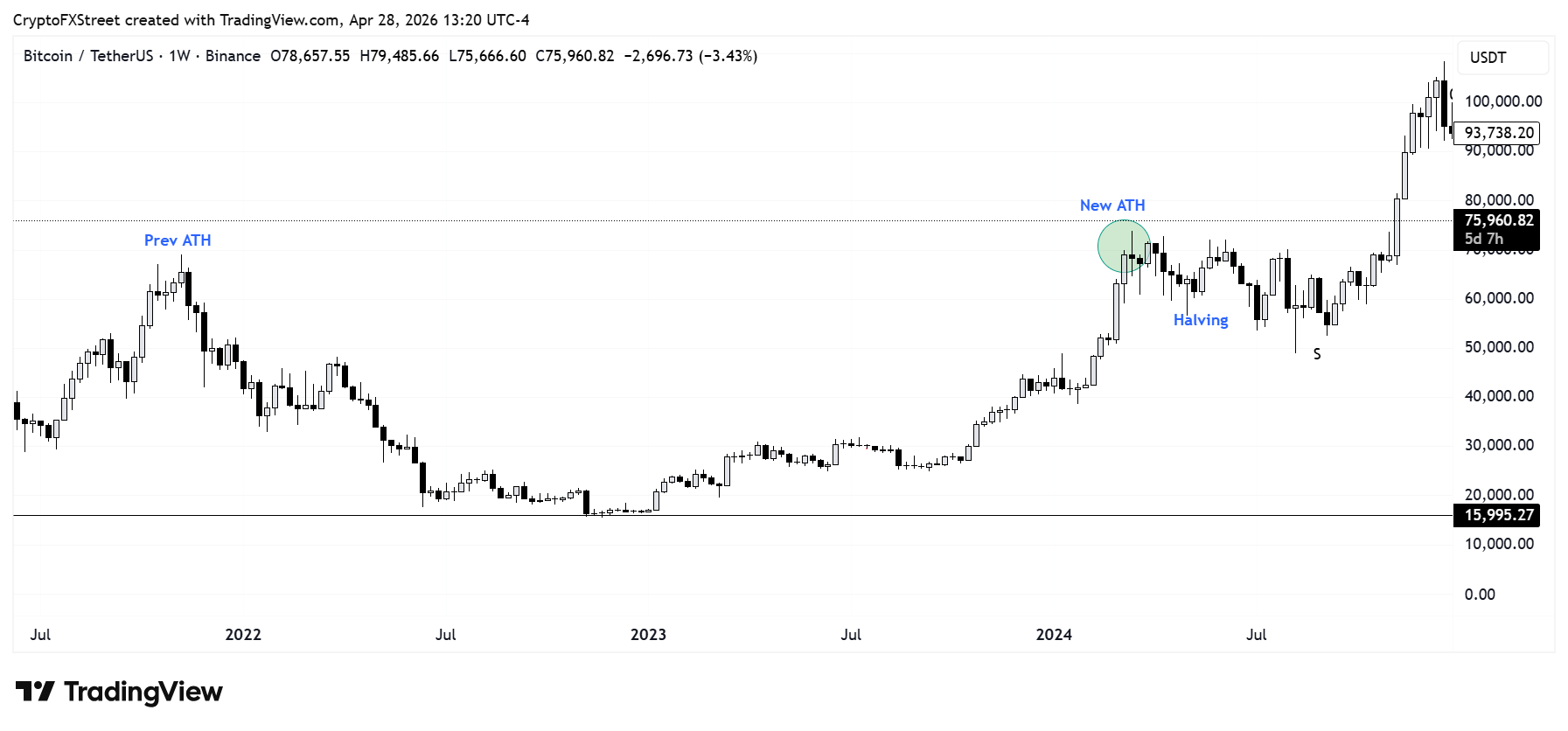
Some said the introduction of TradFi players through ETFs meant new market dynamics have taken shape since they don't behave like native crypto investors. There are some truths to that, but the argument overlooks a key fundamental determinant of prices: demand and supply.
While ETF players joined the ride in January 2024, one year of bear market consolidation has already passed. During this period, native crypto investors – four-year cycle players, comprising whales and retailers – had already accumulated a large BTC supply, placing them in the long-term holder (LTHs) cohort.
In line with their cycle pattern beliefs, most of these investors held their positions – taking only partial profits along the way – until Q3 2025, a timing that aligns with their strategy. Accordingly, LTHs increased distributions before the final nail in the coffin on October 10.
In the months that followed, LTHs' supply declined rapidly, reaching 13.6 million BTC in December, their lowest level since 2021.
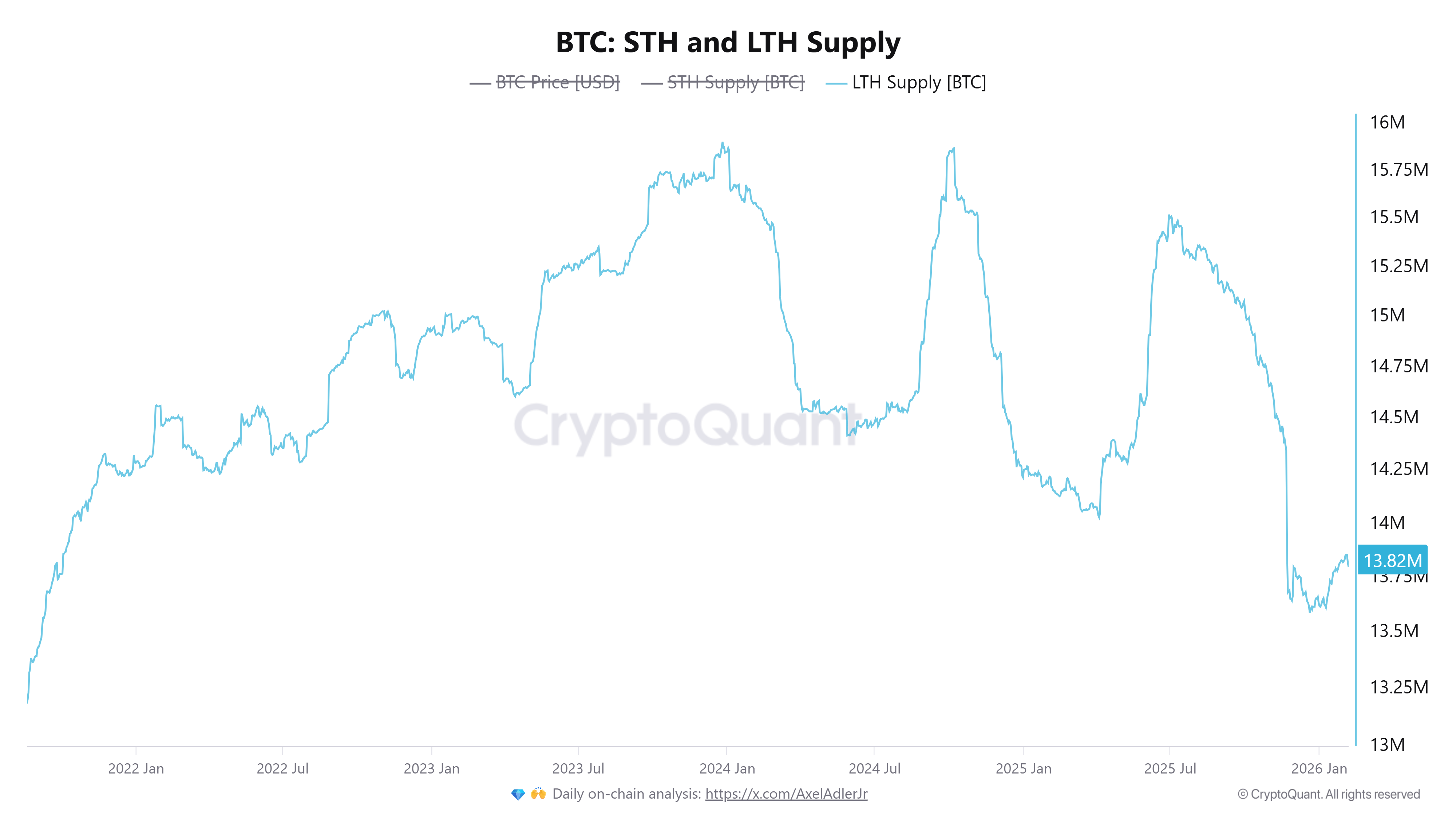
On the surface, the large distribution, coupled with the 50% price decline, appeared to confirm Bitcoin's cyclical pattern. But it may have marked the beginning of its end and the emergence of a new order.
Four-year cycle relevance may diminish over time
The market reset is seeing a majority of coins gradually changing hands from cycle players to ETF investors and Bitcoin treasuries like Strategy.
Over the past two months, US spot BTC ETFs have posted net inflows of $3.75 billion, while Strategy has acquired more than 100,000 BTC since the beginning of the year. New “big-boy” institutional market players are also joining the BTC ETF market, as evidenced by the Morgan Stanley Bitcoin ETF launch earlier in April.
If this trend continues, with most large-scale crypto-native players already on the sidelines, the four-year cyclical pattern will gradually have less impact on prices in the coming years.
For example, the 50% drawdown from Bitcoin's all-time high is significantly lower than the 80% average drawdown in previous bear markets. That's a 30 percentage point difference, and if prices don't fall below $60,000, it would mark the lowest drawdown from an all-time high Bitcoin has ever experienced.
Additionally, the halving is becoming less important as Bitcoin's supply approaches the 21 million mark (BTC's circulating supply at the time of writing is 20.02 million, per CoinGecko data), with the law of diminishing returns kicking in.
As the market continues to mature and more institutional and corporate players step in, that change may accelerate, forcing crypto-native players to redefine their strategy.
Still, there’s room for error
But let me play the devil's advocate (or four-year cycle advocate) a bit.
Most ETF investors felt the cycle effect last year, with a majority of funds experiencing notable inflows that drove the new all-time high, followed by heavy outflows as investors rushed to book profits and cut losses post the October leverage flush.
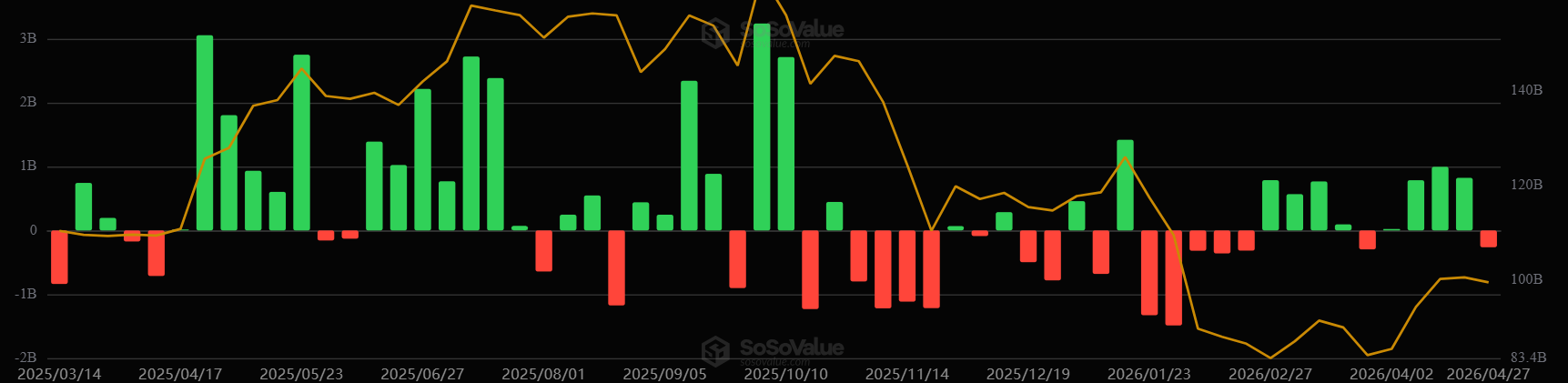
With this experience in mind, ETF investors may include the four-year cycle as a key factor in their strategy, leading to a self-fulfilling prophecy, as has been the case with crypto-native investors.
Additionally, the core intent behind ETF investors' demand isn't entirely clear. I mean, BTC treasuries like Strategy have clearly stated it's holding for dear life (HODL), but we don't know why ETF investors are buying. Considering they represent a diverse class of investors, those reasons may differ.
Some may believe in Bitcoin's store-of-value thesis; others may be in to enjoy the four-year cycle ride like crypto-native players; a few are hedge funds capturing yield through the basis trade. As a result, it's difficult to efficiently estimate how they will shape the market cycle going forward.
So, to answer the question, is the four-year cycle dead?
I will say Bitcoin's cycle may weaken structurally, but could persist behaviorally. The outcome will depend less on halvings and more on how institutional capital chooses to behave.














