[TMGM Financial Breakfast] Middle East Conflict Reignites in the Strait of Hormuz, Inflation Risks Drive Dollar Surge as Gold Drops 2%
Reports of Iranian attacks on vessels and fires at an oil port in the UAE pushed oil prices higher and strengthened the U.S. dollar, putting significant pressure on gold.
The Strait of Hormuz has long been known as the world’s oil valve, handling about one-fifth of global crude oil and LNG shipments before the conflict. The latest escalation stems from Trump’s attempt to break Iran’s blockade of the strait. According to reports, the U.S. sought to deploy naval escorts for commercial ships passing through the corridor — a move Iran viewed as a direct provocation.

Iran responded swiftly, attacking multiple vessels. A South Korean commercial ship caught fire after an explosion in the strait, while a major UAE oil port was engulfed in flames following a drone strike.
Compared to the relative calm following the ceasefire announced four weeks ago, this escalation is seen as the most serious resurgence of conflict so far. Trump had previously struggled to resolve the blockade issue, and while the “freedom plan” was intended to restore energy flows, it appears to have had the opposite effect in the early stages.
Shipping companies have largely adopted a wait-and-see approach, with major operators indicating they will only resume large-scale transit once the conflict subsides. This has once again raised the risk of global energy supply disruptions, amplifying market concerns about oil shortages.
Under such geopolitical conditions, gold would typically rise on safe-haven demand. However, the opposite occurred. Instead of generating a pure risk premium, the conflict pushed up energy prices and strengthened the dollar, creating stronger downward pressure on gold.
This is the key counterintuitive dynamic behind the decline: when conflict transmits through higher inflation and rising interest rate expectations, gold’s sensitivity to real yields outweighs its safe-haven appeal.
As long as the Strait of Hormuz remains blocked, the U.S. dollar is likely to stay relatively strong. Energy crises tend to reinforce the dollar’s status as a global reserve currency and safe haven. Conversely, any signs of peace could quickly reverse risk sentiment and weaken the dollar — a pattern observed repeatedly in history.
Against the backdrop of conflict and inflation pressure, the U.S. will release key economic data this week, including job openings, the ADP employment report, and the April nonfarm payrolls report.
These indicators will serve as a crucial test of labor market resilience and inflation transmission. Strong employment data would further support the Federal Reserve’s higher-for-longer rate stance, while weaker data could ease tightening expectations. However, in the context of Middle East tensions, even soft data may not significantly expand the Fed’s room for easing due to persistent energy-driven inflation.
This interaction between macro data and geopolitical developments will continue to drive short-term volatility in the gold market.
Market Interpretation
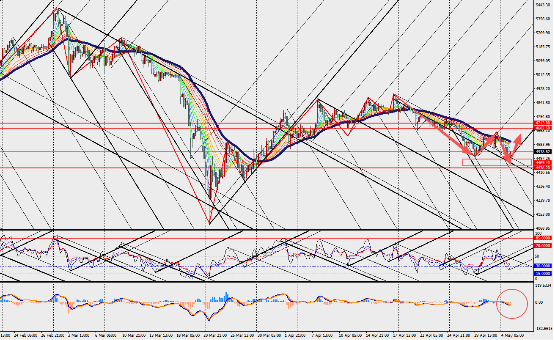
On the four-hour chart, gold is showing a rebound after its decline, with MACD lines and volume bars converging in a bullish divergence pattern.
Gold’s long-term allocation value remains intact. As a traditional hedge against inflation, geopolitical risk, and currency depreciation, gold continues to hold a unique role in periods of high uncertainty.
However, this episode highlights a critical point for investors: safe-haven assets do not rise unconditionally — their performance depends on the nature of the conflict and the macroeconomic transmission mechanism.