

UK GDP growth leap in Q1 may mask potential slowdown due to Iran war
- The United Kingdom's Gross Domestic Product is expected to have accelerated in Q1.
- The GDP is forecast to contract in March, which might raise concerns at the Bank of England.
- A weak economic outlook amid the war in Iran and growing political turmoil in the UK might hurt the Pound Sterling.
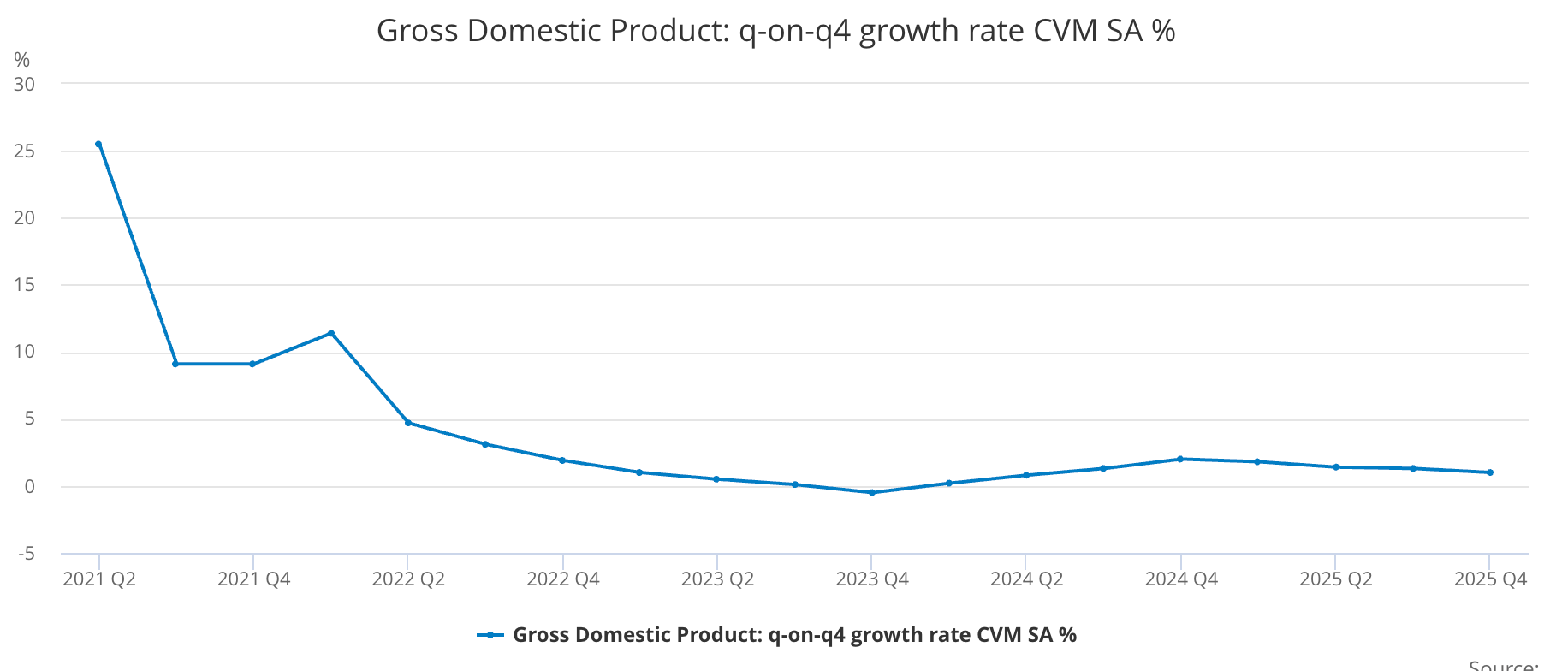
The United Kingdom’s (UK) Office for National Statistics will release the preliminary estimate of the first quarter’s Gross Domestic Product (GDP) report on Thursday. Market analysts have anticipated a 0.6% growth in the three months to March, after a meager 0.1% advance in the last quarter of 2025.
Quarterly GDP data, however, will be released alongside an array of UK indicators for March, which are expected to show less inspiring figures. The monthly GDP is foreseen contracting by 0.2%, with Manufacturing and Industrial Production falling, amid the war in Iran. If these figures are confirmed, the outlook of a softening economic activity with soaring inflationary pressures might pose a headache for the Bank of England (BoE). This, coupled with the increasing political uncertainty, might unleash a perfect storm for the British Pound (GBP).
UK Gross Domestic Product forecast: What numbers could tell us
The UK economy is expected to show a significant advance in the first quarter of the year, with GDP growth accelerating to 0.6% from 0.1% in the previous quarter. These numbers, however, need to be taken with caution, as the war in Iran seems to have brought economic growth to an abrupt halt at the end of the quarter.
The monthly Gross Domestic Product, which will be released at the same time on Thursday, is expected to show a 0.2% contraction in March, in what would be the worst reading in almost a year. Manufacturing Production is seen extending its decline with a 0.2% contraction in March following a 0.1% drop in February, while Industrial Production is expected to have shrunk at a 0.4% pace in March, after growing 0.5% in February, all in all confirming that the war in Iran and the energy shock stemming from it have crushed economic activity.
The Bank of England (BoE) left its Bank Rate unchanged at 3.75% after its April 30 monetary policy meeting, with one policymaker voting for a quarter-point rate hike, which left hopes of some monetary tightening alive. UK inflation surged to a 3.3% year-on-year level in March, adding pressure on the central bank to adopt a more restrictive policy. Thursday’s figures, however, might bring concerns about recession back to the table and put BoE policymakers on edge.
Beyond that, the local elections held on May 7 brought a sharp reversal for the Labour Party, cutting the ground from under Prime Minister Keir Starmer’s feet. Voices calling for resignation are mounting, increasing the risk of a void of power that might bring back concerns about fiscal slippage and send the GBP into a tailspin.
When will the UK release Q1 GDP, and how could it affect GBP/USD?
The UK will release the preliminary estimate of Q1 Gross Domestic Product (GDP) on Thursday at 06:00 GMT. The quarterly reading is expected to show upbeat figures, but looking in detail, additional data might show that economic activity plummeted after the start of Iran’s war.
The Pound has been losing ground this week, weighed by a growingly uncertain political scenario in the UK, with the position of Prime Minister Keir Starmer in the pillory. Against this background, the risk is of a negative surprise at Thursday’s data, especially in figures from March, as they will heighten concerns about the economic outlook if the Middle East conflict does not come to a swift end, which right now does not seem to be the case.
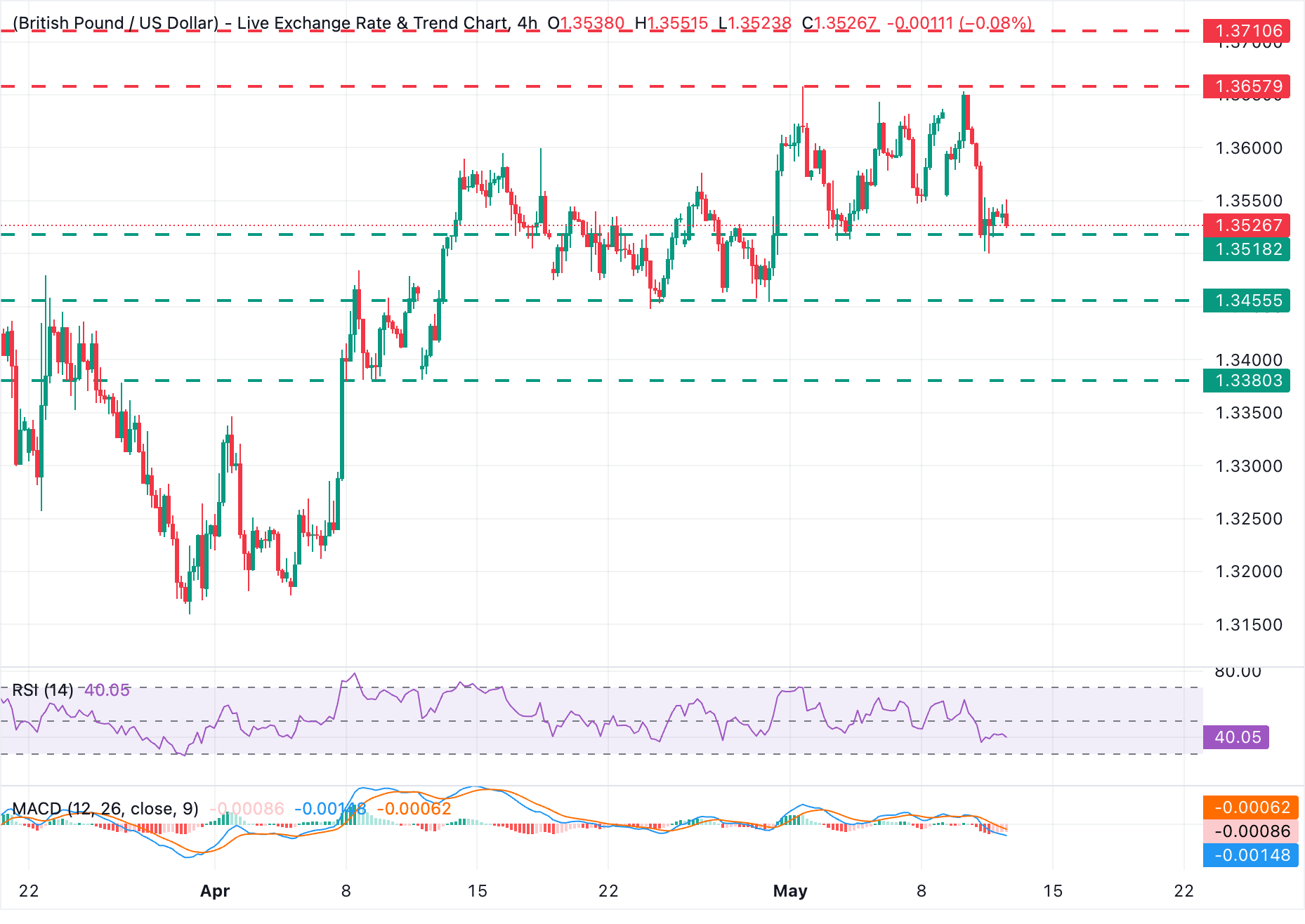
Guillermo Alcalá, FX Analyst at FXStreet, says: “GBP/USD is heading south after failure to break the resistance area around 1.3650. The pair remains contained within the last few weeks’ trading range, but the risk has shifted to the downside, with bears eyeing the bottom of the channel at around 1.3450. A confirmation below this level would bring the April 8 and 10 highs, at the 1.3480 area, into focus.”
“On the upside, an unlikely break of the 1.3650-1.3660 area, which has capped the pair several times in May, would clear the path towards the February highs between 1.3710 and 1.3730, ahead of the 2026 peak, at 1.3869, says Alcalá.”
Economic Indicator
Gross Domestic Product (QoQ)
The Gross Domestic Product (GDP), released by the Office for National Statistics on a monthly and quarterly basis, is a measure of the total value of all goods and services produced in the UK during a given period. The GDP is considered as the main measure of UK economic activity. The QoQ reading compares economic activity in the reference quarter to the previous quarter. Generally, a rise in this indicator is bullish for the Pound Sterling (GBP), while a low reading is seen as bearish.
Read more.Next release: Thu May 14, 2026 06:00 (Prel)
Frequency: Quarterly
Consensus: 0.6%
Previous: 0.1%
Source: Office for National Statistics
Economic Indicator
Gross Domestic Product (MoM)
The Gross Domestic Product (GDP), released by the Office for National Statistics on a monthly and quarterly basis, is a measure of the total value of all goods and services produced in the UK during a given period. The GDP is considered as the main measure of UK economic activity. The MoM reading compares economic activity in the reference month to the previous month. Generally, a rise in this indicator is bullish for the Pound Sterling (GBP), while a low reading is seen as bearish.
Read more.Next release: Thu May 14, 2026 06:00
Frequency: Monthly
Consensus: -0.2%
Previous: 0.5%
Source: Office for National Statistics














