

Ripple Price Forecast: XRP muted institutional demand, cooling retail interest clouds rebound prospects
- XRP defends support at $1.20 and rises above $1.23 on Wednesday despite risk-off sentiment amid Middle East tensions.
- XRP faces muted ETF demand amid fading retail interest, weighing on its recovery outlook.
- XRP rebounds after crashing to $1.20 but remains constrained below major downtrending moving averages.
Ripple (XRP) rebounds above $1.23 from support at $1.20 at the time of writing on Wednesday, as the broader cryptocurrency market pares losses triggered by escalating tensions in the Middle East.
Appetite for risk assets remains generally low as the United States (US) and Iran exchange fire amid a fragile ceasefire and peace negotiations. Despite US President Donald Trump stating that peace talks with Iran are progressing as usual, reports broadly suggest that Iranian negotiators had stopped communication in protest at Israel’s offensive in Lebanon.

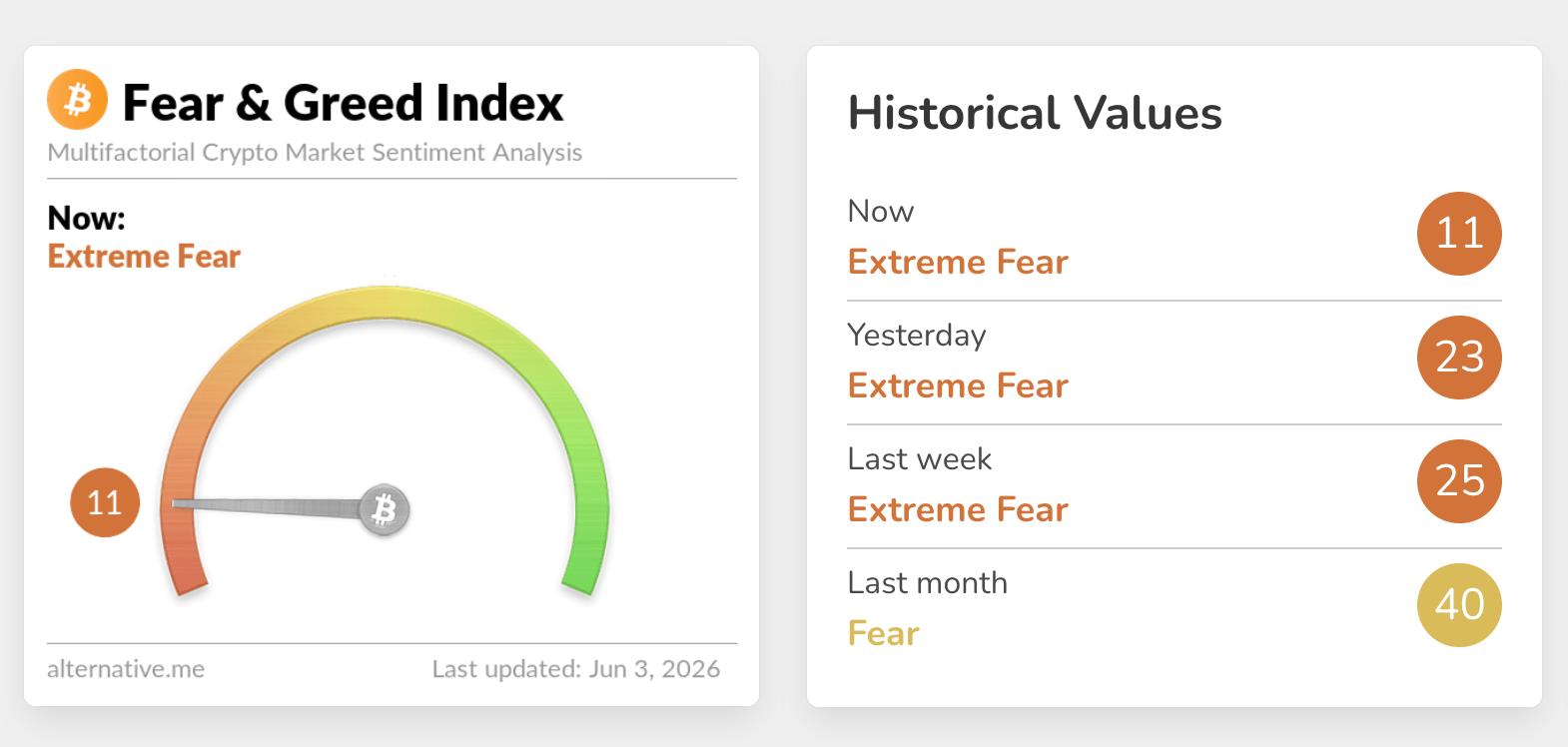
Meanwhile, crypto assets are under pressure, as evidenced by the crypto Fear & Greed Index, which is at 11 in the Extreme Fear territory on Wednesday, down from 23 the previous day. This slump suggests that risk-averse sentiment prevails and may continue to weigh on the appetite for cryptocurrencies.
XRP capital outflows reinforce risk-off market sentiment
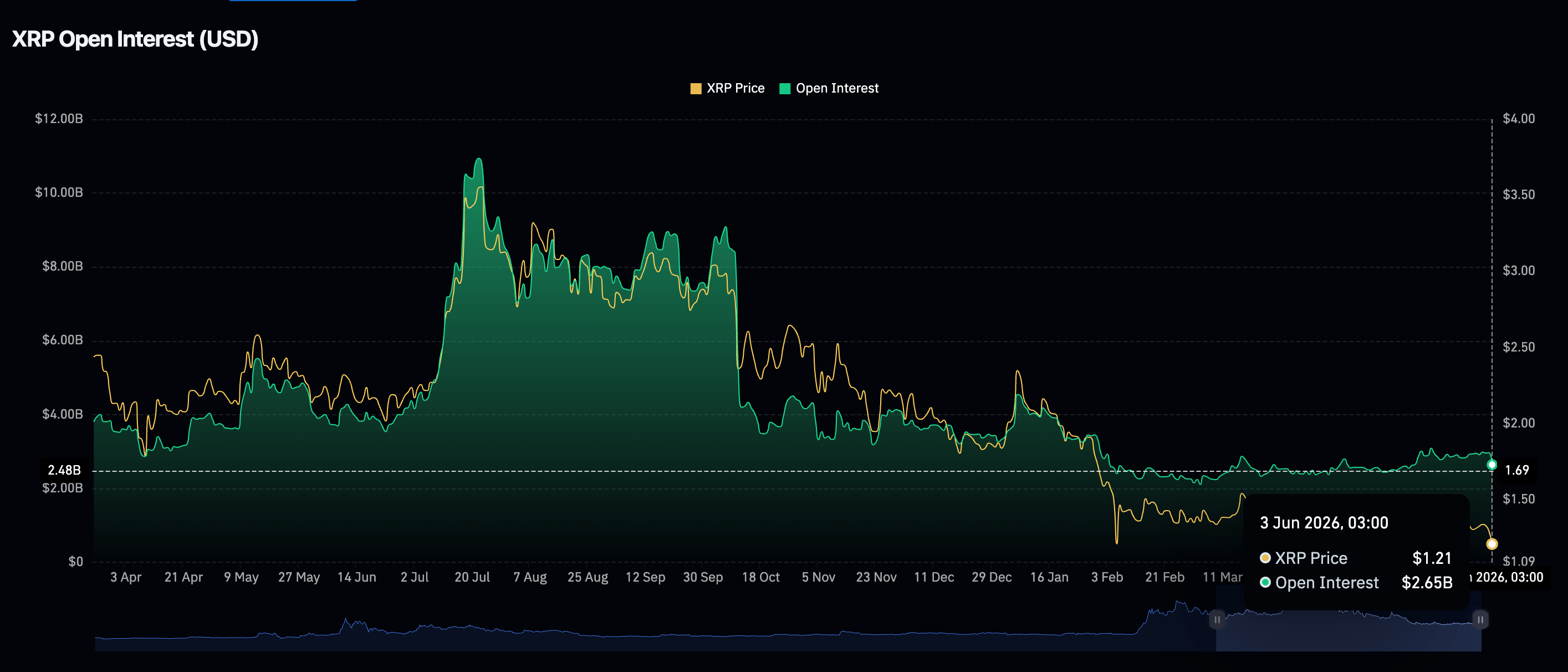
XRP derivatives cooled further with perpetual futures Open Interest (OI) falling to $2.65 billion on Wednesday, from $2.65 billion the day before. The OI, representing the notional value of outstanding futures and options contracts, is extending its correction from highs slightly above $3 billion in mid-May.
Moreover, it remains significantly below the record $10.94 billion in July, suggesting that appetite for derivatives remains suppressed. Unless investors start opening new positions aggressively and seeking risk exposure, it would be difficult to sustain the minor rebound.
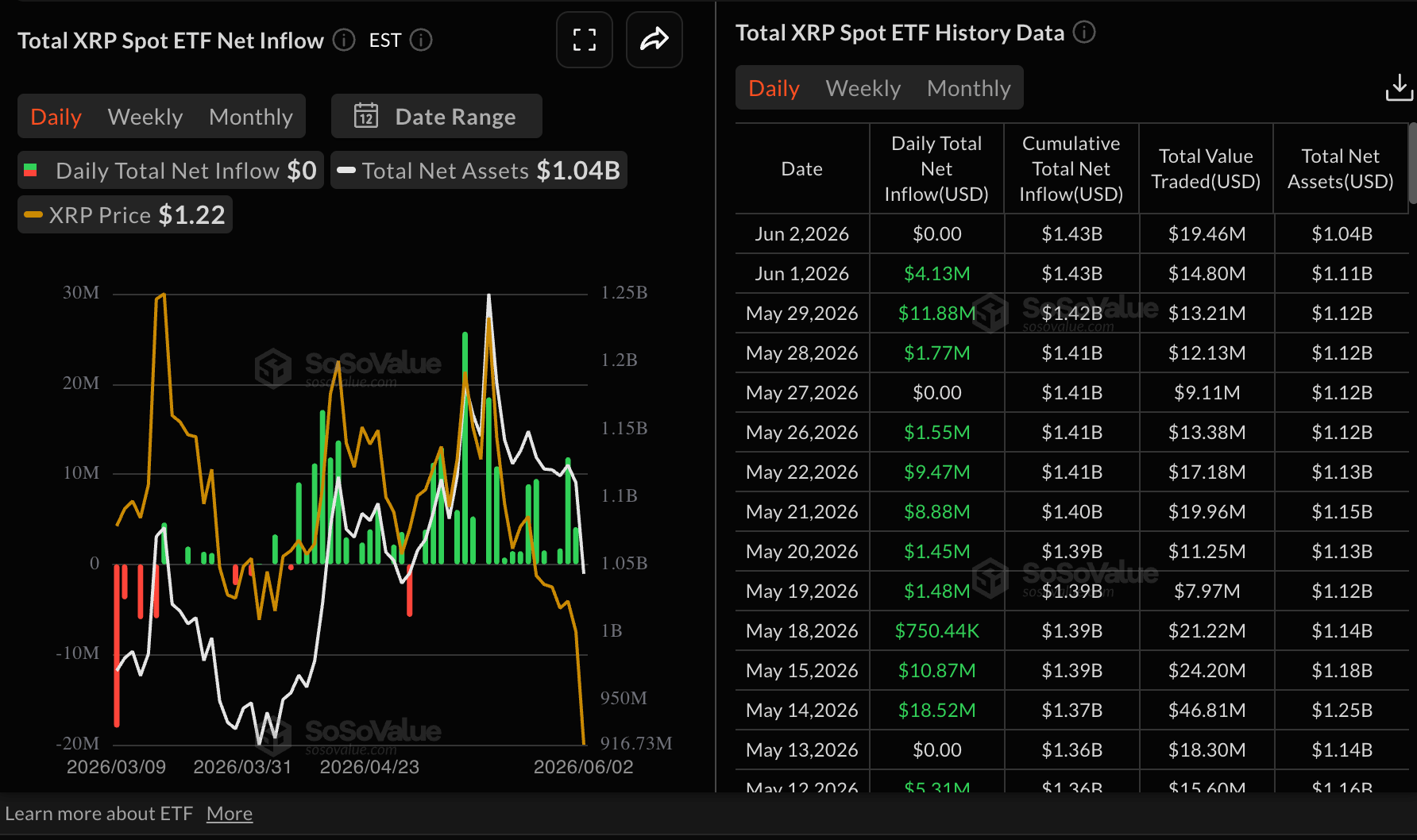
Institutional participation is similarly on the back foot, given that activity in spot Exchange-Traded Funds (ETFs) was muted on Tuesday, with US-listed ETFs closing with zero flows. According to SoSoValue, cumulative inflows stand at $1.43 billion while net assets under management average $1.04 billion.
Price analysis: XRP tests rebound strength
XRP trades above $1.23, while holding under a firm bearish bias. The pair also remains below the 50-day Exponential Moving Average (EMA) at $1.37 and the 100-day EMA at $1.44, while the 200-day EMA around $1.65 reinforces a broader downtrend backdrop.
At the same time, the SuperTrend indicator, currently aligned near $1.38, sits above spot and adds to the overhead supply zone, while the Moving Average Convergence Divergence (MACD) histogram stays in negative territory with a weak profile on the daily chart, suggesting that downside momentum is still present even as the Relative Strength Index (RSI) recovers from oversold levels toward the low-30s.
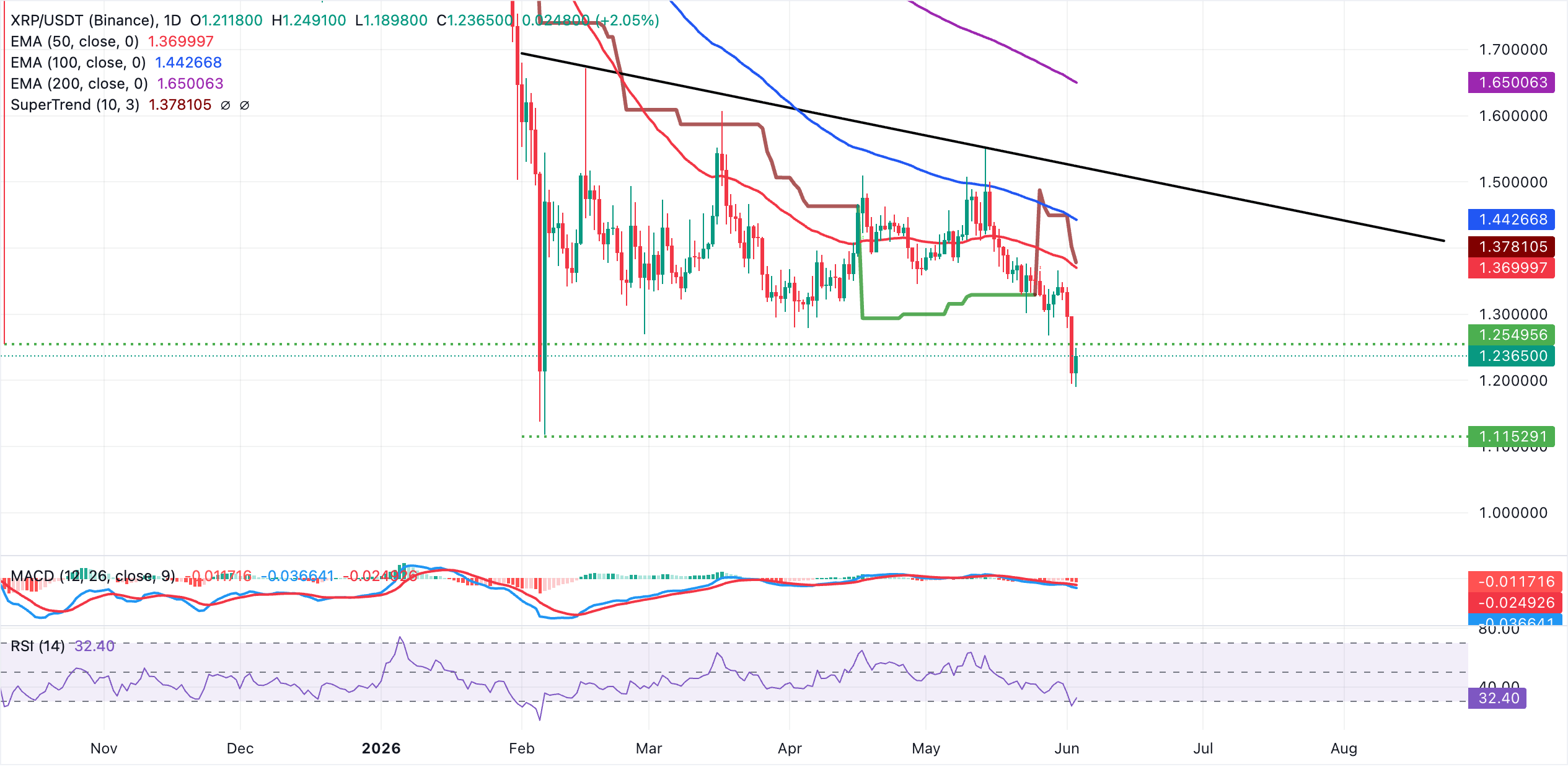
On the topside, initial resistance emerges from a confluence of short-term structures, with the 50-day EMA near $1.37 and the SuperTrend line around $1.38 forming the first cap that bulls would need to reclaim to ease immediate pressure. Beyond that area, the 100-day EMA at roughly $1.44 is the next key barrier ahead of the descending trendline break level near $1.5232, while the 200-day EMA around $1.65 marks a more distant hurdle that would need to be overcome to negate the prevailing bearish structure.
(The technical analysis of this story was written with the help of an AI tool.)
Crypto ETF FAQs
An Exchange-Traded Fund (ETF) is an investment vehicle or an index that tracks the price of an underlying asset. ETFs can not only track a single asset, but a group of assets and sectors. For example, a Bitcoin ETF tracks Bitcoin’s price. ETF is a tool used by investors to gain exposure to a certain asset.
Yes. The first Bitcoin futures ETF in the US was approved by the US Securities & Exchange Commission in October 2021. A total of seven Bitcoin futures ETFs have been approved, with more than 20 still waiting for the regulator’s permission. The SEC says that the cryptocurrency industry is new and subject to manipulation, which is why it has been delaying crypto-related futures ETFs for the last few years.
Yes. The SEC approved in January 2024 the listing and trading of several Bitcoin spot Exchange-Traded Funds, opening the door to institutional capital and mainstream investors to trade the main crypto currency. The decision was hailed by the industry as a game changer.
The main advantage of crypto ETFs is the possibility of gaining exposure to a cryptocurrency without ownership, reducing the risk and cost of holding the asset. Other pros are a lower learning curve and higher security for investors since ETFs take charge of securing the underlying asset holdings. As for the main drawbacks, the main one is that as an investor you can’t have direct ownership of the asset, or, as they say in crypto, “not your keys, not your coins.” Other disadvantages are higher costs associated with holding crypto since ETFs charge fees for active management. Finally, even though investing in ETFs reduces the risk of holding an asset, price swings in the underlying cryptocurrency are likely to be reflected in the investment vehicle too.














