AMD Posts Strong Q3 Results; Market Looks to Its Deepening Collaboration with OpenAI
AMD reported robust results for the third quarter of fiscal 2025: revenue came in at approximately $9.2 billion, up about 36% year over year. Non-GAAP diluted EPS was around $1.20. Data-center revenue reached roughly $4.3 billion, up about 22% YoY. The client and gaming segments surged, generating around $4.0 billion in revenue—an increase of roughly 73% YoY.
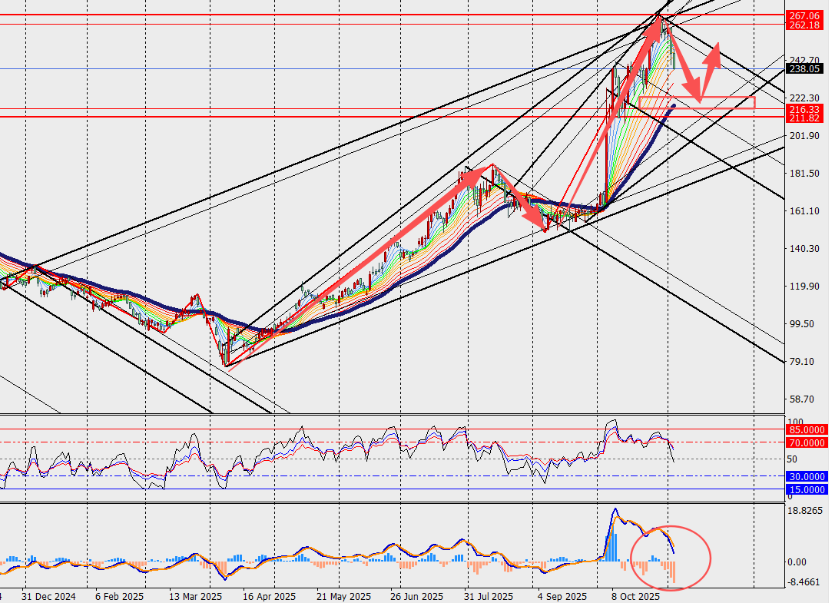
Despite the strong headline numbers, the market showed caution on valuation and the durability of the growth path; shares fell after the release, suggesting good news may have been priced in and investors remain watchful on sustainability.

For the next quarter (Q4), the company guides revenue to about $9.6 billion ± $300 million, above consensus.
On the technology front, AMD will host its FY2025 Analyst Day in November, where it plans to outline multiple roadmaps: CPUs (e.g., Zen 6 architecture, EPYC “Venice” series), GPUs/AI accelerators (e.g., Instinct MI500 family, UDNA 6 architecture), and integrated systems (e.g., Helios rack-scale solutions). These disclosures will be critical for assessing AMD’s ability to scale, its R&D depth, and the breadth of its product ecosystem.
Strategically, AMD has signed a multi-year, large-scale agreement with OpenAI: AMD will supply OpenAI with GPUs in the multimillion-unit range to accelerate its AI infrastructure build-out, and OpenAI has the option to acquire up to a 10% equity stake in AMD. This partnership is seen as a pivotal step for AMD in challenging NVIDIA Corporation across AI hardware.
Looking ahead, AMD is navigating a growth transition from traditional PCs and gaming toward data centers and AI infrastructure, with compelling technology and market opportunities. Risks remain, including scaling the supply chain, manufacturing yields, competition with giants like NVIDIA, and export-control/geopolitical uncertainties.
Market Take:
For investors, AMD combines “strong current execution” with “potential future breakout.” Recent earnings and partnerships provide tangible support, but elevated valuation and already-baked-in growth expectations should not be overlooked.