

British Pound remains depressed near 1.3300 despite upbeat UK Retail Sales data
- GBP/USD is trading flat around 1.3310, about 1% down on the week.
- The unexpected increase in
- UK Retail Sales has failed to lift the Pound.
- The safe-haven US Dollar is trading higher across the board amid growing geopolitical risks and new trade tariffs
The British Pound (GBP) remains pinned near three-week lows against the US Dollar (USD) on Friday, trading near 1.3300 and on track for a 1% weekly decline. The upbeat UK Retail Sales data seen earlier on Friday has failed to lift the Pound, weighed heavily by risk-averse markets and increasing fiscal concerns in the UK.
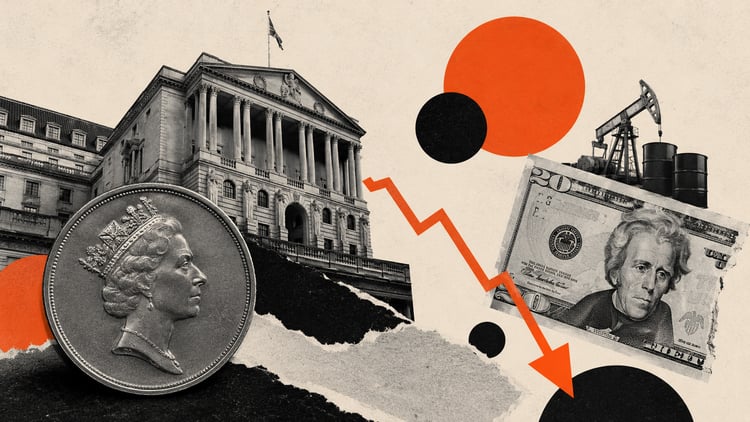
Data released by National Statistics on Friday showed an unexpected 1% increase in retail consumption in June, beating the market consensus, which had anticipated a 0.3% decline. Year-over-year, Retail Sales increased 4.2%, almost twice the 2.3% increment forecasted by market experts.
UK data, however, has failed to offset the US Dollar's strength amid the risk-averse market mood. Reports of attacks on Saudi vessels in the Red Sea have pushed Brent Oil to levels near $100, fuelling inflationary concerns across the globe and sending US Treasury yields to multi-month highs. If that was not enough, the Trump administration announced new tariffs of 10 to 12% on 60 trading partners, as temporary 10% global tariffs expire, further souring investors' sentiment.
Sterling strength seen on weak foundations
The Sterling, on the other hand, has been suffering from weaknesses of its own this week, with investors growing increasingly wary that Prime Minister Andrew Burnham’s spending plans might endanger the UK's fiscal stability.
In that sense, analysts at ING argue that the recent bout of Pound strength is unlikely to prove durable, stressing that “Sterling’s rally has been driven more by positioning, carry and potentially some M&A flows than by a lasting improvement in UK fundamentals.”
ING experts warn that “Sterling’s summer rally (...) looks to be built on weak foundations,” with “UK short-dated rates likely to drift lower and fiscal risks set to return ahead of the autumn.” Against that backdrop, ING expects “sterling to hand back recent gains.”
Economic Indicator
Retail Sales (MoM)
The Retail Sales data, released by the Office for National Statistics on a monthly basis, measures the volume of sales of goods by retailers in Great Britain directly to end customers. Changes in Retail Sales are widely followed as an indicator of consumer spending. Percent changes reflect the rate of changes in such sales, with the MoM reading comparing sales volumes in the reference month with the previous month. Generally, a high reading is seen as bullish for the Pound Sterling (GBP), while a low reading is seen as bearish.
Read more.Last release: Fri Jul 24, 2026 06:00
Frequency: Monthly
Actual: 1%
Consensus: -0.3%
Previous: 1.2%
Source: Office for National Statistics
Economic Indicator
Retail Sales ex-Fuel (MoM)
The Retail Sales ex-fuel data, released by the Office for National Statistics on a monthly basis, measures the volume of sales of goods by retailers in Great Britain directly to end customers excluding automotive fuel. Changes in Retail Sales are widely followed as an indicator of consumer spending. Percent changes reflect the rate of changes in such sales, with the MoM reading comparing sales volumes in the reference month with the previous month. Generally, a high reading is seen as bullish for the Pound Sterling (GBP), while a low reading is seen as bearish.
Read more.Last release: Fri Jul 24, 2026 06:00
Frequency: Monthly
Actual: 1.1%
Consensus: -0.4%
Previous: 1.2%
Source: Office for National Statistics











