

Here’s why RWA, AI, and privacy tokens are outperforming Bitcoin
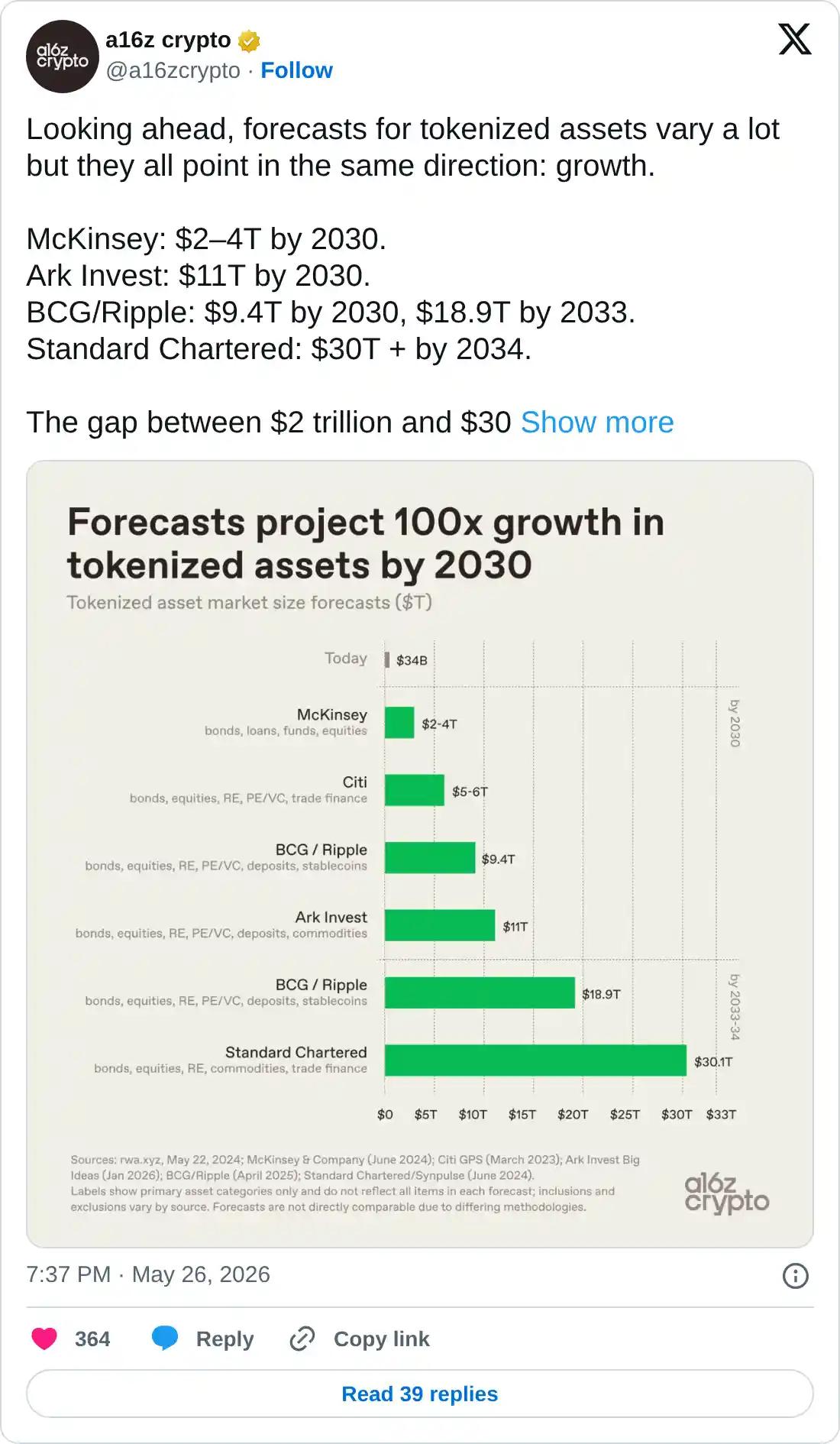
- Tokenization of real-world assets could expand to up to $30 trillion by 2030.
- AI-, memory-, and compute-focused crypto tokens mirror the rally in NVIDIA and other chip stocks.
- Privacy coins are back in demand amid growing surveillance concerns.
Tokenized Real-World Assets (RWAs), Artificial Intelligence (AI), and privacy are the most trending narratives in the crypto market, outperforming Bitcoin (BTC) and other major altcoins. The key factors building the new bullish narratives are growing government surveillance, adoption of tokenized RWAs, and the rally in chip stocks.
Investors are pulling away from the old guards
Institutional demand for Bitcoin and Ethereum (ETH) grows weak with roughly $1.26 billion and $216 million in outflows last week, while both cryptocurrencies are down roughly 40% and 60%, respectively, from their all-time highs.
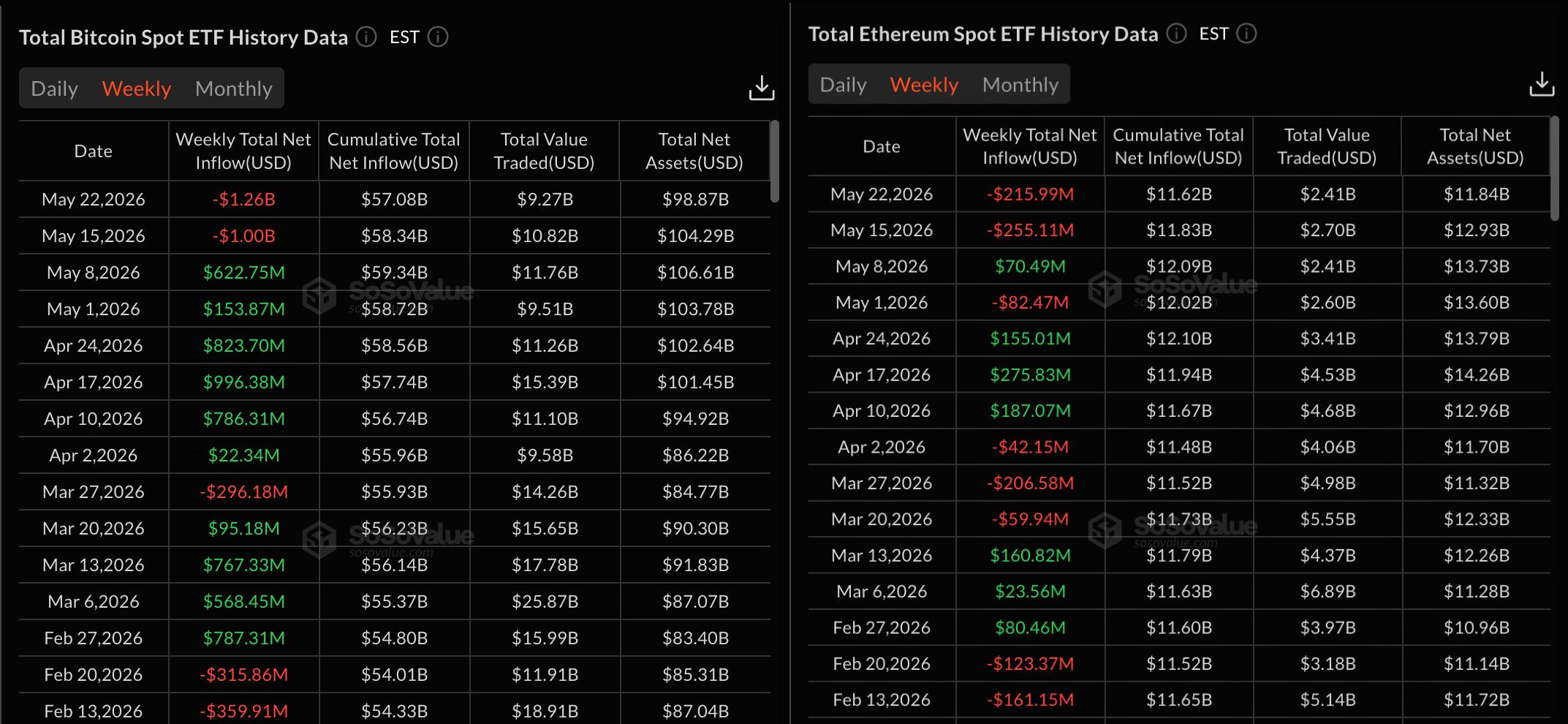
On the other hand, Hyperliquid (HYPE), Ripple (XRP), and Solana (SOL) recorded inflows of around $72 million, $22 million, and $15 million, respectively, suggesting that investors are rebalancing their capital to altcoins.
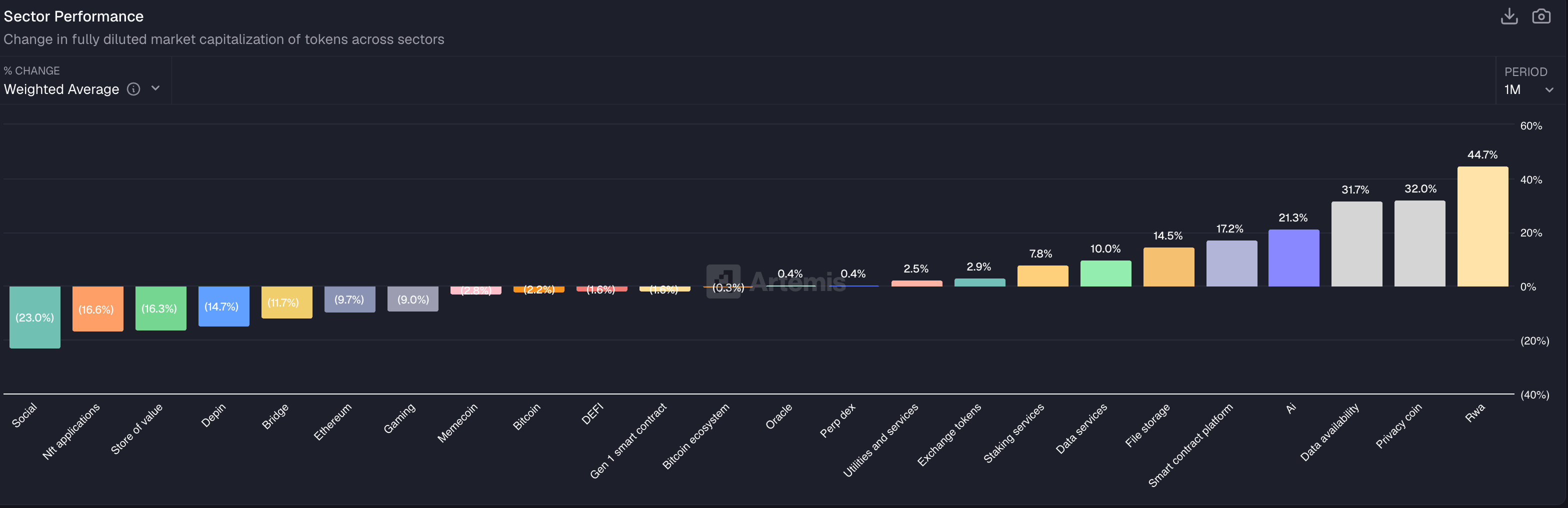
Although institutional inflows are limited to blue-chip crypto, investor interest is shifting toward sectors such as privacy, RWAs, and AI. Artemis data show that RWAs, AI, and privacy tokens are the leading segments over the last month, with gains of roughly 22% to 45% so far.
Hype for RWAs is real
Tokenization of real-world assets is a growing sector in the cryptocurrency space, with a Distributed Asset Value (DAV) of $33.84 billion as of Wednesday, down from its $34.95 billion high on May 11, excluding stablecoins. This includes over $15 billion in US Treasury debt, $7 billion in commodities, $1.50 billion in equities, and the rest is private credit or real estate.
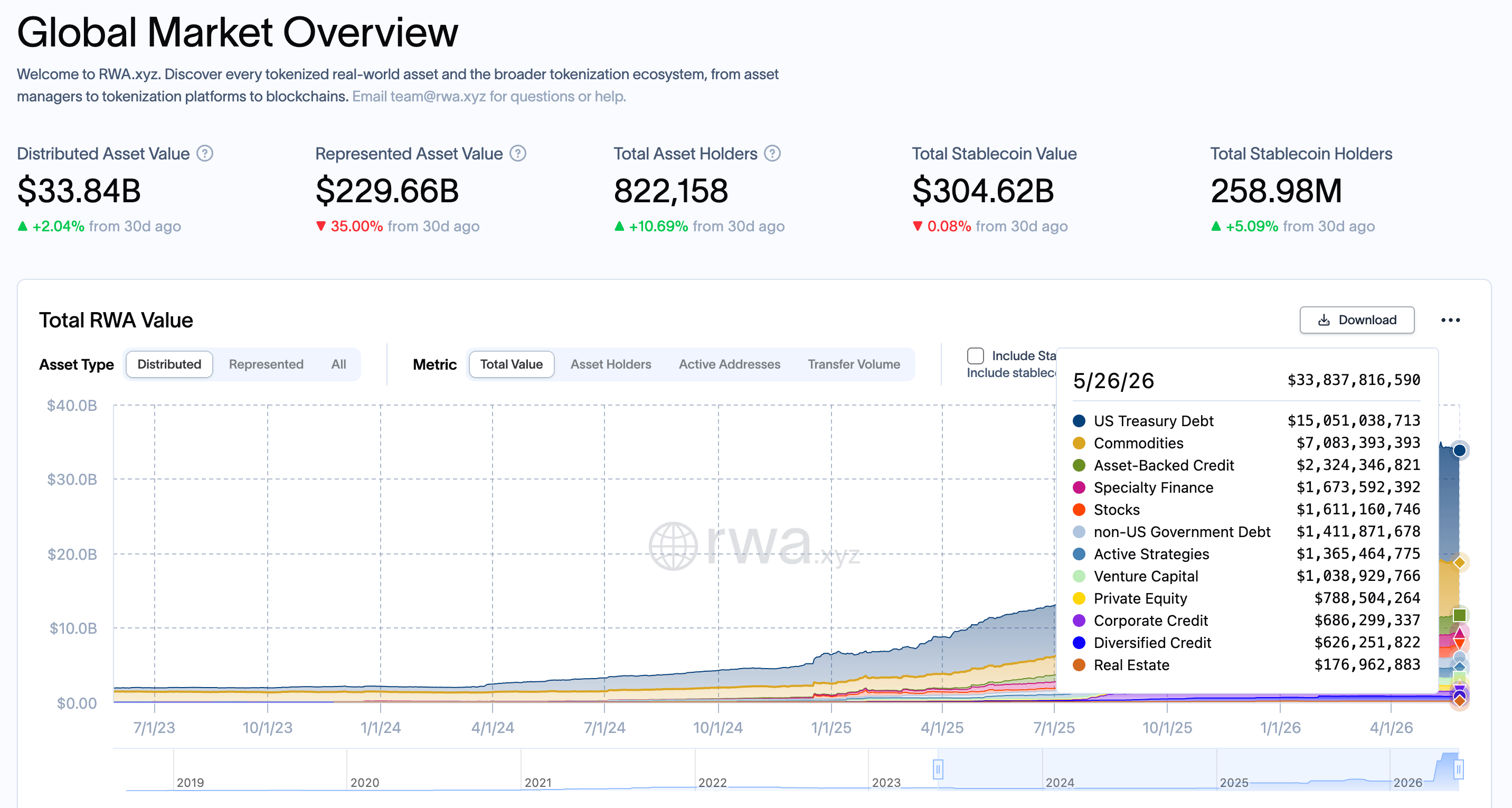
Tokenized equities, with a DAV of $1.61 billion and a monthly transfer volume of $3.60 billion, are among investors' leading interests in the US, the largest crypto market by volume.

Ondo, with over 50% gains so far this month, is the largest tokenizer of US stocks and one of the largest tokenizers of US debt. Ondo is part of the Industry Working Group of the Depository Trust & Clearing Corporation (DTCC) to advance tokenization, in partnership with BlackRock, Goldman Sachs, JPMorgan, Franklin Templeton, Morgan Stanley, Bank of America, Citadel Securities, NYSE Group, Circle, Fireblocks, Robinhood, and more.
The asset tokenization market is expected to expand in the coming years as markets shift toward more transparent, 24/7 active, and decentralized platforms. McKinsey expects the RWA market to reach up to $4 trillion by 2030, including bonds, loans, funds, and equities. With the inclusion of private credit and commodities, Ark Invest predicts a $11 trillion valuation by 2030, while Standard Chartered targets over $30 trillion by 2034.
Rally in NVIDIA and South Korean chip stocks pumps AI tokens
Global chip makers are trading at record high levels. Samsung and SK Hynix Inc are leading the South Korean market rally, while the US-based NVIDIA recorded $81.6 billion in revenue and $58.3 billion in profit in the first quarter of FY2027. AI tokens, including NEAR Protocol (NEAR), Bittensor (TAO), and Render (RENDER), extend their recovery, mirroring the chip stocks rally as a global surge in computing demand fuels gains, as previously reported by FXStreet.
Regulated adoption of crypto fuels demand for privacy coins
Privacy-focused coins are one of the outperforming sectors of the crypto market as trust in government wanes amid growing surveillance concerns. The expansion of AI-driven data tracking and tighter exchange regulations fuels the need for financial anonymity.
Zcash (ZEC) and Dash (DASH) have emerged as the best-performing privacy coins, with gains of roughly 1,400% and 100%, respectively, over the past year. The rally is backed by Zcash’s compliance with the Digital Asset Market Clarity (CLARITY) Act. Dash’s roadmap also includes a plan to integrate Zcash’s Orchard Shielded Pool in May, shifting its infrastructure from the CoinJoin (mixing) method to the zk-SNARKs (shielded) method and potentially achieving compliance with the CLARITY Act.
On the other hand, Monero (XMR) remains muted due to high levels of criminal activity and its failure to comply with the CLARITY Act.
Tokenization, AI, and privacy emerge as real-world, demand-driven narratives, reflecting market maturity and suggesting that the next major cycle could be driven by utility rather than speculation.











