

The US Dollar Index sells the hold and ignores the hawks
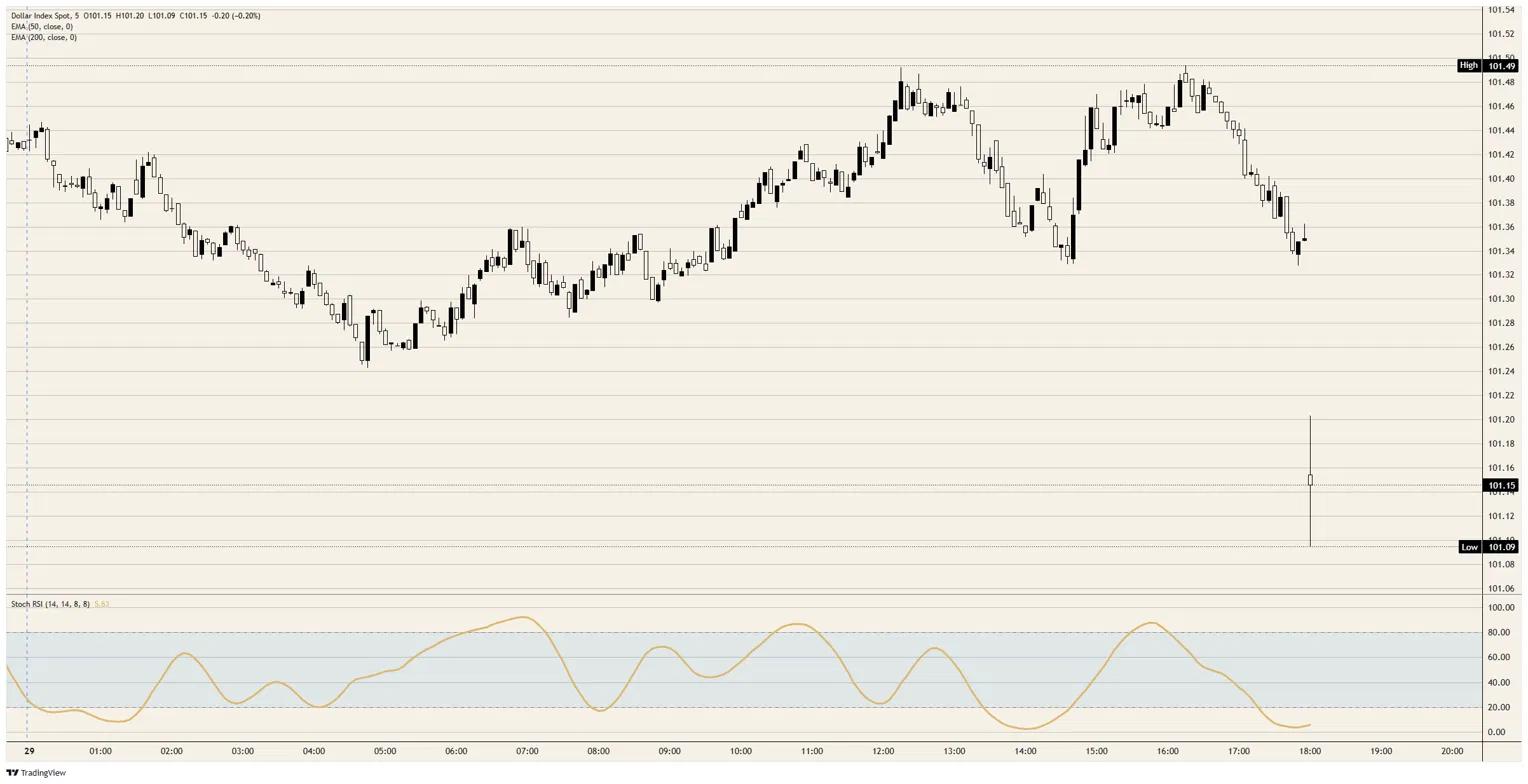
- DXY prints a session low just above the 101.00 handle on the Federal Reserve hold, four tenths of a point beneath a session high short of 101.50.
- The Chair's press conference at 18:30 GMT is the only forward-looking item of the day, with no projections attached to this meeting.
A 9-3 vote held the federal funds target range at 3.50% to 3.75% at 18:00 GMT, the three dissenters all preferring an immediate quarter-point increase. That is the most hawkish vote record of this chairmanship and the Dollar was sold on it regardless, the index sliding from just short of 101.50 to the 101.00 handle inside a single five-minute candle. The hawkish surprise that was supposed to bid the currency did the opposite.

Futures pricing carried better than a third of a hike into the decision, and a hold refunds that premium whatever the vote split says. The briefing at 18:30 GMT is where it can be reclaimed, because the statement blames energy and other supply shocks for elevated inflation while three voters treat the same shock as grounds to move now. September pricing near three-quarters for at least one increase is the number under pressure.
DXY 5-minute chart
Fed FAQs
Monetary policy in the US is shaped by the Federal Reserve (Fed). The Fed has two mandates: to achieve price stability and foster full employment. Its primary tool to achieve these goals is by adjusting interest rates. When prices are rising too quickly and inflation is above the Fed’s 2% target, it raises interest rates, increasing borrowing costs throughout the economy. This results in a stronger US Dollar (USD) as it makes the US a more attractive place for international investors to park their money. When inflation falls below 2% or the Unemployment Rate is too high, the Fed may lower interest rates to encourage borrowing, which weighs on the Greenback.
The Federal Reserve (Fed) holds eight policy meetings a year, where the Federal Open Market Committee (FOMC) assesses economic conditions and makes monetary policy decisions. The FOMC is attended by twelve Fed officials – the seven members of the Board of Governors, the president of the Federal Reserve Bank of New York, and four of the remaining eleven regional Reserve Bank presidents, who serve one-year terms on a rotating basis.
In extreme situations, the Federal Reserve may resort to a policy named Quantitative Easing (QE). QE is the process by which the Fed substantially increases the flow of credit in a stuck financial system. It is a non-standard policy measure used during crises or when inflation is extremely low. It was the Fed’s weapon of choice during the Great Financial Crisis in 2008. It involves the Fed printing more Dollars and using them to buy high grade bonds from financial institutions. QE usually weakens the US Dollar.
Quantitative tightening (QT) is the reverse process of QE, whereby the Federal Reserve stops buying bonds from financial institutions and does not reinvest the principal from the bonds it holds maturing, to purchase new bonds. It is usually positive for the value of the US Dollar.










