United States Dollar Index drops to near $77.50 due to Japanese FX interventions
- Joint US-Japan Yen intervention spending reached $70-80 billion, pressuring the US Dollar against major peers.
- De-escalation signals between Washington and Tehran eased risk aversion, further dampening Greenback demand.
- Geopolitical uncertainty persists as Iranian officials denied requesting a pause, keeping financial markets on guard.
The US Dollar Index (DXY), which measures the value of the US Dollar (USD) against six major currencies, is losing ground after three days of gains and trading around 101.50 during the Asian session on Tuesday.
Dollar resilience persists despite joint US-Japan intervention and softer oil

ING’s Chris Turner argues that, “in theory, the Dollar should be broadly weaker today” after US and Japanese authorities confirmed joint FX intervention and with Japan “probably having sold $70-80 billion over the last three days.” He adds that lower oil prices ought also to be weighing on the Dollar, following reports from US President Donald Trump that “negotiation, rather than military firepower, is Washington's preferred method of engaging with Iran.” Yet, as Turner notes elsewhere, the Dollar’s broader performance remains surprisingly firm, underscoring how ongoing expectations for a Fed rate hike continue to offset what would normally be clear headwinds for the currency.
Adding to the Dollar's downward pressure was a temporary relief in market risk aversion driven by prospective diplomatic progress between Washington and Tehran. Sentiment shifted after US President Donald Trump announced a pause on planned military strikes. In a post on Truth Social, President Trump stated that Iran and regional partners had requested time to negotiate a deal aimed at fully reopening the Strait of Hormuz and resolving concerns over Iran's nuclear program.
However, financial markets maintained a cautious stance as Iranian officials quickly refuted Washington’s characterization of the situation. Reporting via Iran’s Mehr news agency, officials dismissed the claim that Tehran requested a pause as "nothing but a new lie". They reiterated that Iranian military forces remain on high alert and prepared for any scenario, leaving geopolitical uncertainty elevated across global markets.
Barkin’s “close call” on rates keeps Fed tone cautiously hawkish
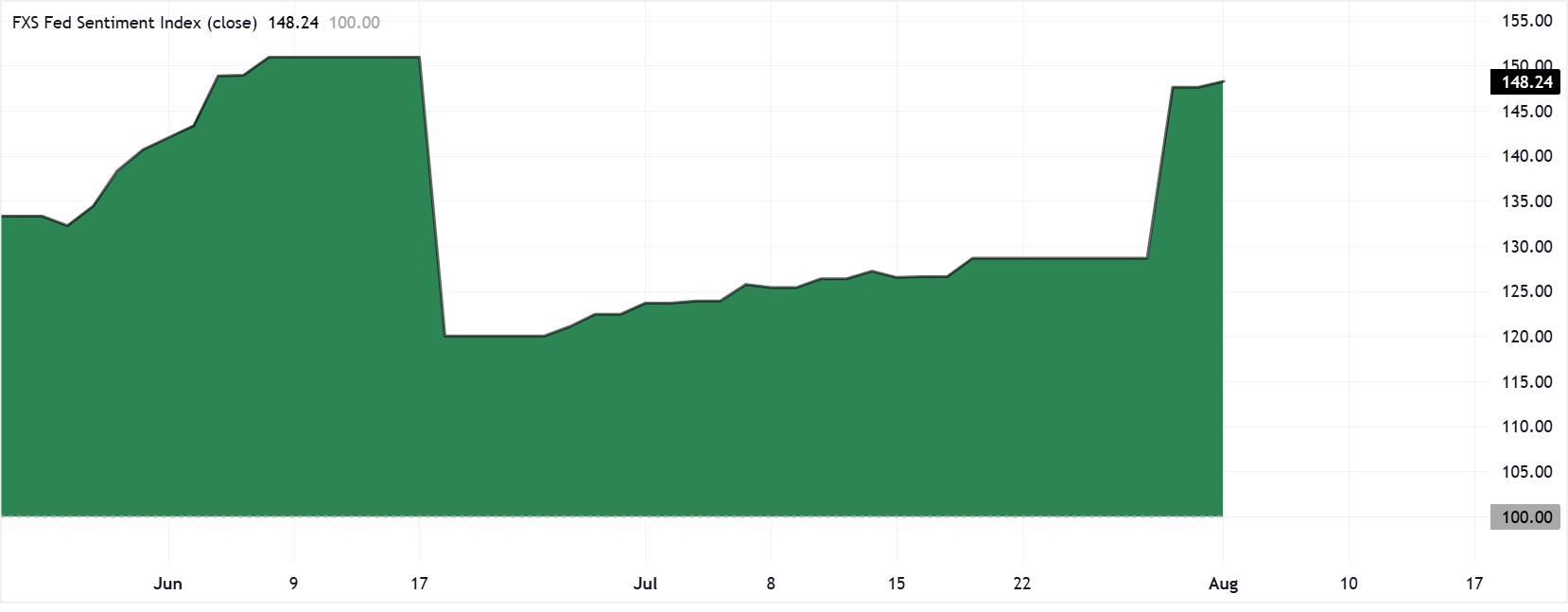
Fed’s Barkin delivered a cautiously hawkish message on Friday, with an FXS Speechtracker score of 6.2/10, modestly above the 5.4/10 historical average and signaling slightly stronger-than-usual concern on policy tightness. Calling it a “close call” on whether rates are high enough, expressing uncertainty about joining recent hike dissents, and skepticism that the labor market has strengthened all point meaningfully to a Fed still open to further tightening if inflation proves sticky. Barkin’s comment that price increases are moving unevenly through the economy underscores an environment where the Dollar remains supported by lingering policy-hike optionality, even if conviction is not absolute relative to the established baseline.
The FXS Fed Sentiment Index slipped by 0.46 points to 148.24, indicating a mild pullback in hawkish intensity despite remaining firmly above the neutral 100 mark. This configuration suggests that, while the overall Fed stance tracked by the FXS Speechtracker stays clearly hawkish, the latest communication reflects slightly less aggressive tightening bias, rather than a shift toward dovish territory.