

Trump Signals Preferred Fed Nominee – Could Dovish Hassett Become the Next Federal Reserve Chair? Magnificent Seven Stocks Rally, Except Tesla
Date Published: 3 Dec 2025 | Date Modified: 3 Dec 2025


POPULAR ARTICLES

Trump has effectively “endorsed” his preferred candidate for the next Federal Reserve Chair, and markets are interpreting this as a strong indication that monetary policy could become more accommodative going forward. Consequently, most interest rate–sensitive technology stocks rallied, with the Nasdaq outperforming the broader market.
On Tuesday U.S. Eastern time, Trump convened a cabinet meeting and announced:
“We will nominate a new Federal Reserve Chair early next year.”
This statement clarifies the timeline for what is typically an extended appointment process. Trump further disclosed that, following consultations with Treasury Secretary Besent and Commerce Secretary Lutnik, the initial shortlist of approximately ten candidates has been narrowed down to a single frontrunner.
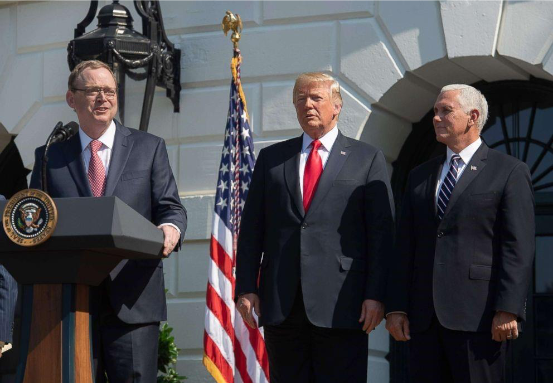
Shortly after the meeting, at a public event, Trump addressed Kevin Hassett, who was present, and remarked significantly:
“I believe we have a future Fed Chair right here. He’s a highly respected individual. Thank you, Kevin.”
This comment serves as an almost explicit endorsement and aligns closely with media reports from a few days prior that had already identified Hassett as the “leading candidate.”
However, the outcome remains uncertain. Given Trump’s well-known unpredictable decision-making approach, nothing is finalized until the formal nomination is submitted to the Senate, and changes remain possible. Reportedly, other finalists include current Federal Reserve Governors Christopher Waller and Michelle Bowman, former Governor Kevin Warsh, and BlackRock executive Rick Rieder.
Fundamentally, this leadership change represents far more than a personnel shift; it will directly influence the trajectory of U.S. monetary policy in the coming years. For months, Trump has pressured the Fed to reduce interest rates, publicly criticizing current Chair Jerome Powell as “too slow and overly cautious,” even labeling him a “stubborn bull.” It is evident that Trump anticipates a more “aligned” Chair who will oversee a faster and more aggressive easing cycle.
Whoever is ultimately nominated will still require Senate confirmation. If the nominee is an external candidate to the current Fed system, they could receive a 14-year term as Governor starting February next year, granting policy influence extending beyond a single presidential term.
Tesla the Only Loser Among the “Magnificent Seven” as Apple Hits a New High
Led by Apple and Nvidia, most mega-cap tech stocks provided the primary upward momentum for the market. The semiconductor sector was notably strong, with the Philadelphia Semiconductor Index surging 1.83%. Intel (INTC) jumped over 8% to a new yearly high, driven by better-than-expected orders for its next-generation AI server chips and announcements of expanded manufacturing capacity at its U.S. facilities. Synopsys (SNPS) also rallied sharply following a strategic partnership with Nvidia.
Aerospace giant Boeing (BA) surged more than 10%, marking its largest single-day gain since April, after issuing a positive outlook on restoring positive cash flow next year.
In stark contrast, electric vehicle leader Tesla was the only stock in the group to close lower, declining 0.21%. Although no significant negative news specific to Tesla emerged that day, market analysts cite several potential factors for the decline:
Ongoing absorption of prior selling pressures
Concerns about slowing growth in the EV sector —particularly in the Chinese market— and unresolved questions about Tesla’s valuation persist. The substantial trading volume of $29.598 billion in Tesla shares underscores the intense battle between bulls and bears at current price levels, heightening volatility.
Macro policy expectations
On the same day, Trump’s announcement regarding “planning to name the new Fed Chair in early 2026” and his clear indication favoring the dovish candidate Hassett attracted significant market attention.
Markets interpret a potentially more accommodative monetary policy stance as particularly beneficial for unprofitable, high-growth technology companies. Conversely, for companies like Tesla that have already achieved substantial scale but now face growth constraints, the marginal upside is perceived as more limited.
Residual bearish factors
Recent negative catalysts —such as prominent “Big Short” investor Michael Burry reiterating his short position and weak European sales figures— coincided with Tesla’s share price testing a critical resistance zone. This timing intensified technical selling pressure and helps explain why Tesla declined despite a supportive environment for tech stocks overall.
Technical Analysis
Tesla’s share price remains above a key support range at $404––$408, with short-term moving averages in a bullish configuration and the RSI within a healthy range. This suggests limited immediate downside risk. The isolated decline on December 2 likely represents a technical pullback ahead of major resistance, rather than the onset of a significant reversal.
That said, sustaining an upside breakout will be challenging. The stock remains well below its historical highs and continues to encounter resistance from a long-term descending trendline and overhead supply from previously trapped shareholders. Without significant positive surprises in fundamentals —such as quarterly delivery numbers or meaningful advances in Full Self-Driving (FSD) technology—, it will be difficult for the price to mount an immediate and sustained rally.
For the bullish scenario, the share price must hold above $430 and then break out on strong volume through the $433––$440 resistance zone. If successful, the next upside target would be the previous high around $480––$490. A confirmed breakout there could open the door to levels above $500.
On the downside, failure to maintain the $425––$428 support area could lead to a retreat toward the key support band at $404––$408. A decisive break below this level would likely signal a deeper medium-term correction.
In summary, while short-term technical indicators remain intact, Tesla’s share price is being influenced by multiple factors including macroeconomic expectations, sector competition, and its own evolving narrative. Consequently, its technical outlook is likely to remain more volatile and uncertain compared to many other mega-cap technology stocks.

More than a million users rely on FXStreet for real-time market data, charting tools, expert insights, and forex news. Its comprehensive economic calendar and educational webinars help traders stay informed and make calculated decisions. FXStreet is supported by a team of about 60 professionals, split between the Barcelona headquarters and various global regions.
Read More








