What Is Pre-Market Trading and Why Is It Important?
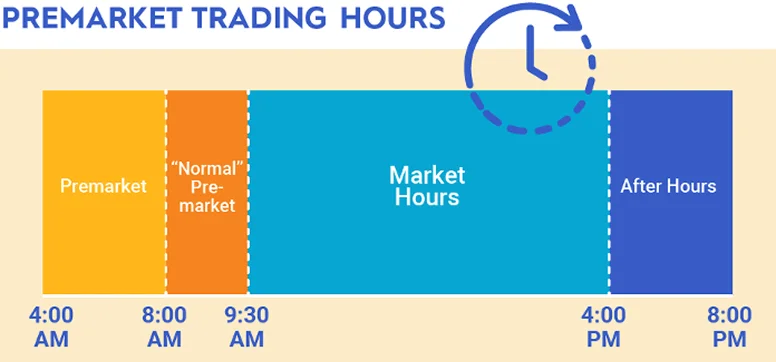
Pre-market trading involves buying and selling stocks or financial instruments before the market opens at 9:30 a.m. ET.
The pre-market session runs from 4 a.m. to 9:30 a.m. ET.
This session allows investors to react to overnight news and market developments.
Pre-market trading gives insight into how the market might behave when the regular session begins.
It helps investors capitalize on price movements triggered by major announcements.
 Key Drivers of Price Movements in Pre-Market and After-Hours Trading
Economic Indicators
Key reports, like the Employment Situation Summary, are released at 8:30 a.m. ET.
These reports can cause significant price movements before the market opens.
Investors monitor economic reports to understand market direction.
Earnings Reports
Earnings season increases volatility in pre-market and after-hours sessions.
Large deviations from analyst expectations can result in substantial price swings.
Traders can profit from earnings announcements but must manage the risks of volatility.
Geopolitical Events
Major events, such as political or natural disasters, can happen anytime.
Pre-market and after-hours trading allow investors to react to these developments before the regular session.
Traders can position themselves to take advantage of price movements or manage risk.
How to Use Pre-Market Trading for Early Positioning
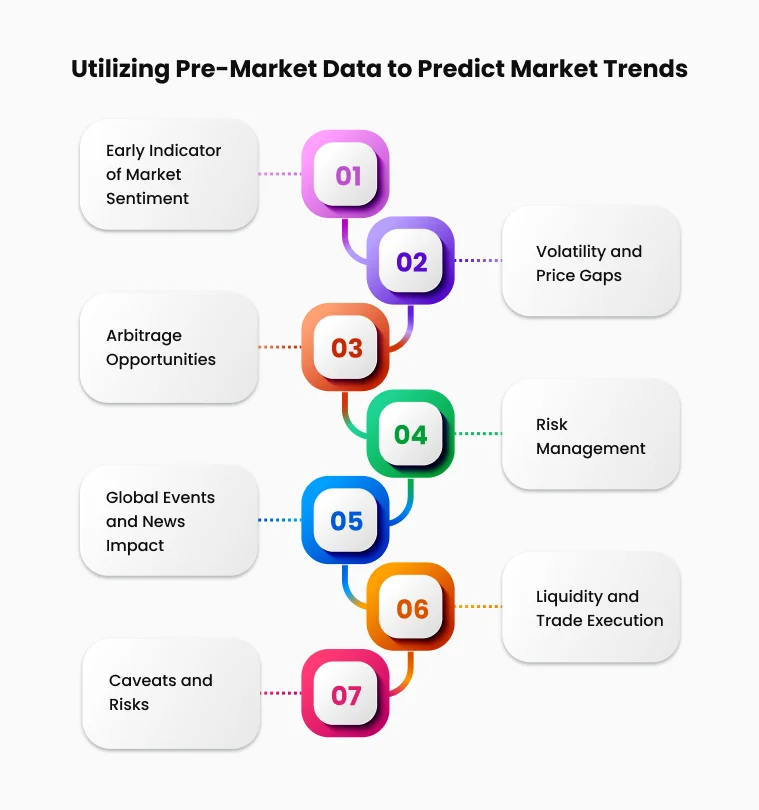
Monitoring economic reports and earnings announcements can provide trading opportunities.
Traders can anticipate market movements by staying informed about upcoming events.
For example, better-than-expected earnings in pre-market can offer early upward movement opportunities.
Traders can capitalize on negative news or missed economic expectations by reacting early.
How After-Hours Trading Can Offer Additional Opportunities
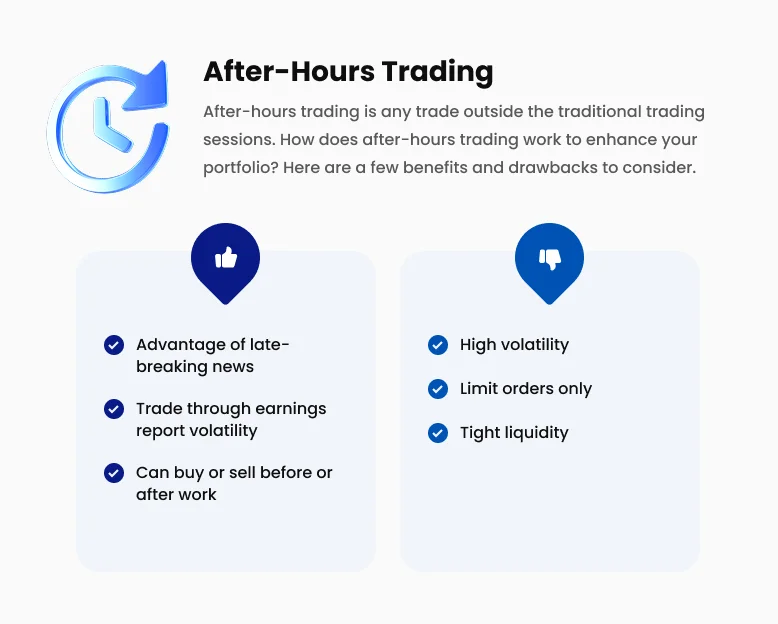
After-hours trading occurs after the market closes, from 4 p.m. to 8 p.m. ET.
Investors can react to late-breaking news, earnings reports, or global developments after regular hours.
After-hours trading is crucial during earnings season when companies release results after the market closes.
Traders can immediately act on price movements driven by earnings reports or news releases.
This session allows traders to manage risk or seize opportunities before the next trading day.
Risks and Considerations in Pre-Market and After-Hours Trading
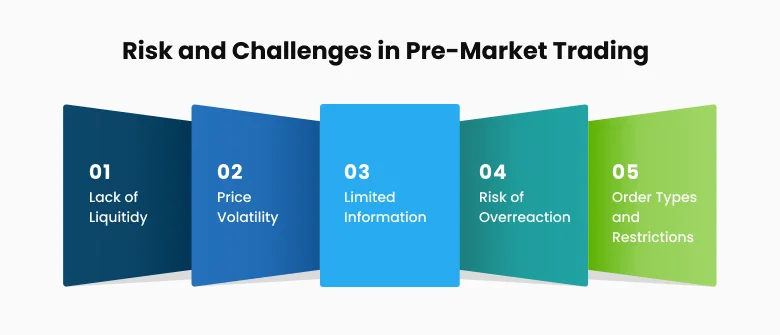
Low Liquidity
There are fewer buyers and sellers in these sessions compared to regular hours.
Bid-ask spreads may widen, making it harder to execute trades at favorable prices.
Increased Volatility
Limited participants can lead to larger price swings during pre-market and after-hours trading.
Traders should be prepared for rapid changes in market direction.
Brokerage Limitations
Not all brokers offer access to pre-market and after-hours trading.
Some brokers may limit the types of orders you can place during these sessions.
Verifying your broker’s capabilities for trading outside regular hours is essential.
Take Control of Your Trading with TMGM
Pre-market and after-hours trading provide opportunities to react to important market events outside regular hours.
Traders can develop effective strategies for these sessions by understanding price drivers and risks.
TMGM’s platform allows 24-hour trading access, enabling you to trade global markets beyond traditional market hours.
Start trading today by visiting TMGM’s platform and take advantage of extended trading hours.