[TMGM Financial Breakfast] Gold Rebounds Near 4,500 as Iran Talks Show Progress, but Trump’s Stance Caps Bullish Momentum
Last Friday, Tehran unexpectedly submitted a new peace proposal through Pakistan as a mediator. The news quickly boosted market optimism about ending the Iran conflict, prompting some safe-haven flows to unwind.
However, instead of collapsing amid easing tensions, gold showed notable resilience, recovering all of its earlier losses. This “dip-then-rebound” pattern reflects how the current pricing logic for gold has become increasingly complex.
Positive developments in negotiations with Iran helped gold recover from its losses. More importantly, a potential end to the conflict could allow the Federal Reserve to resume rate cuts, leading to a weaker U.S. dollar — a supportive factor for gold.

This highlights a key contradiction in the current gold pricing mechanism. If geopolitical tensions ease, short-term safe-haven demand declines, which is bearish for gold. But if de-escalation creates room for rate cuts, the resulting weaker dollar and lower real yields could become catalysts for a new upward trend in gold over the medium to long term. The market appears to be shifting its focus from the first wave of safe-haven unwinding to this second-layer logic.
Developments over the weekend further increased uncertainty. Iran stated on Sunday that it had received a response from the U.S. regarding its latest proposal. However, U.S. President Donald Trump struck a less optimistic tone. On Saturday (May 2), he said on social media that while he would review Iran’s proposal soon, he found it hard to imagine it being accepted, arguing that Iran had not yet paid a sufficient price for its actions over the past decades.
This strong rhetoric contrasts sharply with earlier market expectations of a quick breakthrough in negotiations. This state of “hope without confirmation” is exactly the environment gold tends to favor — not enough to trigger a full-scale safe-haven surge, but sufficient to provide underlying support.
Market Interpretation:
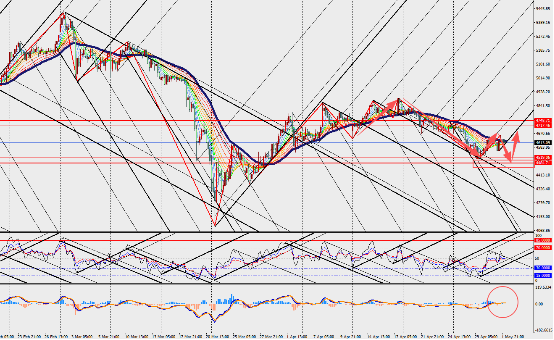
On the four-hour chart, gold is rebounding within a range, with MACD lines and volume bars expanding above the zero axis but with declining momentum.
At present, gold pricing is clearly focused on two key variables. The first is the trajectory of the Iran situation, which will determine the balance between short-term safe-haven demand and medium-term rate-cut expectations. The second is U.S. economic data, which will shape the Federal Reserve’s policy path and ultimately drive gold’s next move.