

Has the Pressure Finally Become Too Much? Amazon CEO Admits Trump’s Tariffs Are Hitting Merchants and Consumers
By Michael Rodriguez
Date Published: 21 Jan 2026 | Date Modified: 21 Jan 2026


POPULAR ARTICLES

Amazon has acknowledged that President Trump’s aggressive tariff policies are now showing up in the prices of some goods sold on its platform with sellers actively exploring how to absorb or pass on the resulting increase in costs.
Amazon’s CEO has stated that the tariffs imposed by US President Donald Trump have begun to show up in the prices of certain products, and that sellers are weighing how to digest the additional cost shock.
Previously, Amazon and many of its third-party merchants tried to get ahead of the tariffs by stockpiling inventory before they took effect, in an effort to lower costs and keep prices down for consumers. However, most of that inventory was already depleted by last autumn.
Some of the tariff costs are now gradually being reflected in product prices. Some sellers have chosen to pass higher costs directly on to consumers via price increases; others are opting to absorb part of the costs themselves in order to support demand; and some are taking a mixed approach. The impact of these decisions is now becoming increasingly visible.
These remarks stand in stark contrast to the tone last year. Back then, several months after Trump announced large-scale tariff hikes, Amazon had said it had not yet seen a clear rise in prices.
By April last year, some sellers were likely forced to pass tariff-related costs onto consumers because many businesses simply didn’t have a 50% profit margin buffer to absorb such cost increases.
Previously, multiple Amazon merchants had said that after tariffs drove up import costs, they were considering or had already raised the prices of some products.
In August last year, a major retail trade association warned that the trade war triggered by Trump would continue to affect companies’ inventory ordering plans into the following spring, potentially leading to higher prices, fewer products on shelves and job losses.
On Tuesday, Amazon said it is working hard to keep prices as low as possible for consumers, but in some cases, price increases may be unavoidable.
As is well known, operating margins in the retail sector are typically only in the mid-single digits. When costs rise by 10%, companies have very little room to absorb those losses.
Market Commentary:
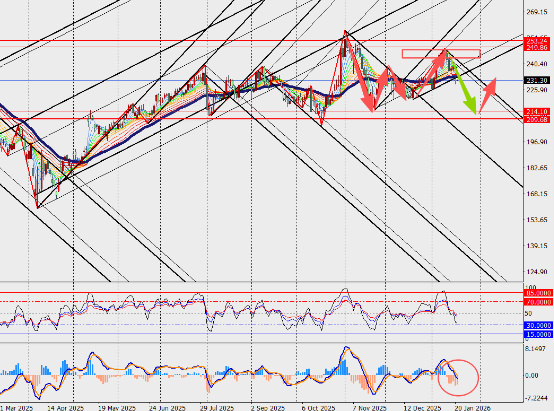
Despite the tariff headwinds, consumers overall remain fairly resilient, with spending levels holding up. However, tariffs have already begun to influence purchasing behaviour to some extent. Amazon has observed that some consumers are shifting toward cheaper products and are increasingly hunting for discounts, while others are postponing purchases of higher-priced, non-essential items.

More than a million users rely on FXStreet for real-time market data, charting tools, expert insights, and forex news. Its comprehensive economic calendar and educational webinars help traders stay informed and make calculated decisions. FXStreet is supported by a team of about 60 professionals, split between the Barcelona headquarters and various global regions.
Read More








