

DXY firms near session highs as the Fed delivers split hold
- The Fed held the federal funds rate at 3.50% to 3.75% and offered no signal on when rates may shift next.
- The 8-4 vote drew the most FOMC dissents since October 1992, with three members rejecting the easing bias.
- The Fed cited high uncertainty over Middle East developments and hardened its inflation language to 'elevated.'
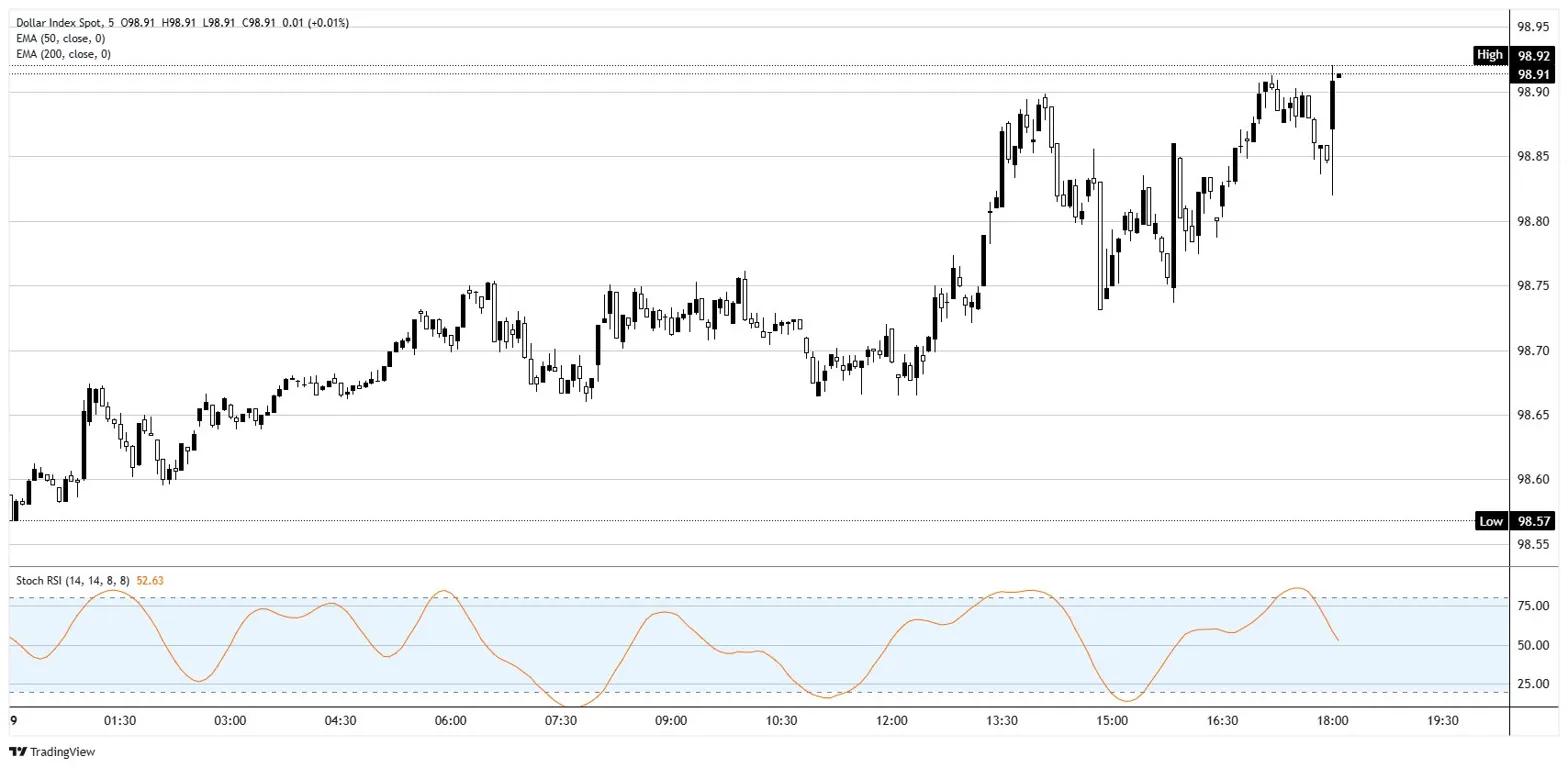
DXY edged higher by 0.3% on Wednesday, rising from a session low near 98.57 to trade close to 98.91 in the wake of the FOMC decision. The session showed a steady stairstep advance through European and US hours, with a fresh leg up after the announcement pushing price within a fraction of the intraday high around 98.92.
The Federal Reserve (Fed) held the federal funds rate at 3.50% to 3.75% for a third consecutive meeting, hardening its characterization of inflation to 'elevated' from 'somewhat elevated' while citing higher global energy prices and a high level of uncertainty around Middle East developments. The Federal Open Market Committee (FOMC) offered no signal on when policy may shift next, saying it would carefully assess incoming data, the evolving outlook, and the balance of risks. The 8-4 vote drew the most dissents since October 1992: Stephen Miran preferred a 25 basis points cut, while Beth Hammack, Neel Kashkari, and Lorie Logan voted to hold but opposed the easing bias inserted into the statement.
The split message produced an immediate US Dollar bid as traders weighed the hawkish-leaning dissent against the dovish tilt of the easing-bias language, with the post-decision leg supporting a session-long advance.
DXY 5-minute chart
Fed FAQs
Monetary policy in the US is shaped by the Federal Reserve (Fed). The Fed has two mandates: to achieve price stability and foster full employment. Its primary tool to achieve these goals is by adjusting interest rates. When prices are rising too quickly and inflation is above the Fed’s 2% target, it raises interest rates, increasing borrowing costs throughout the economy. This results in a stronger US Dollar (USD) as it makes the US a more attractive place for international investors to park their money. When inflation falls below 2% or the Unemployment Rate is too high, the Fed may lower interest rates to encourage borrowing, which weighs on the Greenback.
The Federal Reserve (Fed) holds eight policy meetings a year, where the Federal Open Market Committee (FOMC) assesses economic conditions and makes monetary policy decisions. The FOMC is attended by twelve Fed officials – the seven members of the Board of Governors, the president of the Federal Reserve Bank of New York, and four of the remaining eleven regional Reserve Bank presidents, who serve one-year terms on a rotating basis.
In extreme situations, the Federal Reserve may resort to a policy named Quantitative Easing (QE). QE is the process by which the Fed substantially increases the flow of credit in a stuck financial system. It is a non-standard policy measure used during crises or when inflation is extremely low. It was the Fed’s weapon of choice during the Great Financial Crisis in 2008. It involves the Fed printing more Dollars and using them to buy high grade bonds from financial institutions. QE usually weakens the US Dollar.
Quantitative tightening (QT) is the reverse process of QE, whereby the Federal Reserve stops buying bonds from financial institutions and does not reinvest the principal from the bonds it holds maturing, to purchase new bonds. It is usually positive for the value of the US Dollar.














