

[Financial Breakfast] New Fed Chair Could Be Unveiled This Week – A Pick Wall Street Can Live With
By Abel Gao
Date Published: 19 Jan 2026 | Date Modified: 19 Jan 2026


POPULAR ARTICLES

The suspense over who will become the next Chair of the Federal Reserve may be resolved as soon as this week. Multiple signals suggest that Kevin Hassett, previously seen as the leading “dovish” contender, is now close to being ruled out, while former Fed Governor Kevin Warsh has rapidly emerged as the frontrunner.
According to multiple sources in Washington, the final decision on the next Fed Chair is likely to be announced this week. Kevin Hassett, the White House economic adviser who was widely considered the top candidate, has suddenly seen his prospects dim. In contrast, former Fed Governor Kevin Warsh, who has deep roots on Wall Street, has become the strongest contender for the role. For Wall Street, which has been closely tracking the process, this shift is hardly a surprise and is even seen by many institutional investors as a “good outcome” that allows them to breathe a little easier—for now.
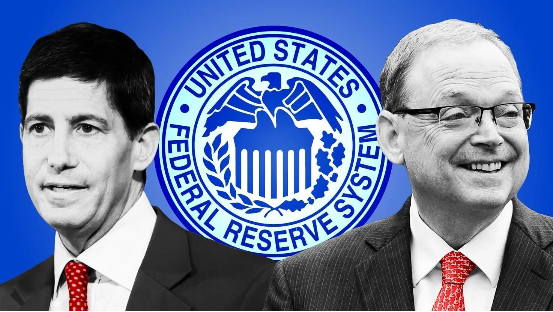
Hassett Fades, Warsh Pulls Ahead
Just a few weeks ago, the race for the Fed’s top job still looked wide open. Alongside Hassett and Warsh, current Fed Governor Christopher Waller and senior figures from financial giants such as BlackRock were also under consideration. Hassett, thanks to his close ties with the current administration and his consistently dovish stance on monetary policy in public comments, had been labeled by markets as the “most dovish” candidate and was once viewed as the most likely successor to Jerome Powell.
Recently, however, the winds have shifted. At a recent White House event, Trump publicly praised Hassett, but then added a telling remark: “To be honest, if you want to know how I really feel, I actually hope you stay right where you are.” Markets interpreted this as the clearest signal yet. Hassett, regarded as the most dovish of the candidates and an advocate of aggressive rate cuts, appears to be effectively out of the running. His exit has paved the way for Warsh—whose stance is more balanced and who has extensive financial-market experience—to stand out as the leading choice.
Kevin Warsh’s résumé reads like it was tailor-made for this moment. He worked at Morgan Stanley and understands the inner workings of financial markets in granular detail. At just 35, he was appointed a Fed Governor and played a direct role in managing the 2008 global financial crisis, giving him first-hand experience of decision-making under extreme pressure at the heart of the central bank. On top of that, his father-in-law has been a close friend of Trump for many years, which is seen as a sign that Warsh can both understand Trump’s political priorities and still maintain a degree of policy independence grounded in his professional background.
For Wall Street, Warsh represents a form of predictable “rationality.” His deep ties to the financial sector mean his decisions are likely to fully account for market implications, rather than being driven purely by academic theory. More importantly, his policy leanings are generally seen as “hawkish” or at least “moderately hawkish.” In public remarks, Warsh has stressed that the Fed’s independence and credibility are crucial, and he has warned about the potential side effects of ultra-loose monetary policy maintained for too long.
Markets expect that if Warsh takes the helm at the Fed, he will be inclined to prioritise fully taming inflation first, and then adjusting interest rates in an orderly fashion—rather than launching an aggressive rate-cutting cycle simply to stimulate growth. This cautious approach is precisely what many institutional investors, who are worried about asset bubbles and financial stability, would like to see.
Potential Market Impacts and Outlook
If Warsh is ultimately nominated and confirmed, his policy path could have varied implications across asset classes.
For the US dollar, the greenback could receive support in the near term. A Fed that puts inflation control front and centre and is in no rush to cut rates aggressively may reduce policy divergence with other major central banks, thereby limiting expectations of a sharp dollar depreciation.
For US equities, stocks may face some short-term pain but benefit from healthier adjustments over the longer run. A reset of overly dovish expectations could help deflate parts of the valuation bubble, while a credible commitment to fighting inflation would support an extended economic cycle and lay a more solid foundation for a longer-lasting bull market.
For emerging-market capital flows, pressure could ease somewhat. If the Fed slows its pace of easing in the name of fighting inflation, the risk of chaotic dollar outflows and abrupt shifts in global liquidity may decline, giving emerging markets a more stable external financial environment.
Overall, if Warsh does become the next Fed Chair, markets are likely to price in a Fed that is more cautious on inflation and less inclined toward rapid, aggressive rate cuts—an outcome that, for now, Wall Street appears quite comfortable with.

More than a million users rely on FXStreet for real-time market data, charting tools, expert insights, and forex news. Its comprehensive economic calendar and educational webinars help traders stay informed and make calculated decisions. FXStreet is supported by a team of about 60 professionals, split between the Barcelona headquarters and various global regions.
Read More








