

Ripple Price Forecast: XRP capped below $1.50 supply area despite growing ETF demand
- XRP faces increasing selling pressure, extending its decline from below $1.45 on Tuesday.
- XRP ETF demand surged to $25 million on Monday, reflecting sustained investor interest despite broader market volatility.
- The 50-day EMA continues to limit XRP’s advance below $1.50, with the RSI decline signaling increasing potential for further downside.
Ripple (XRP) scales downward, trading at $1.45 at the time of writing on Tuesday. XRP is currently trading about 3% below its weekly open at $1.47 and approximately 4% below its monthly high of $1.51, highlighting mounting overhead resistance.
XRP demand holds firm across retail and institutions
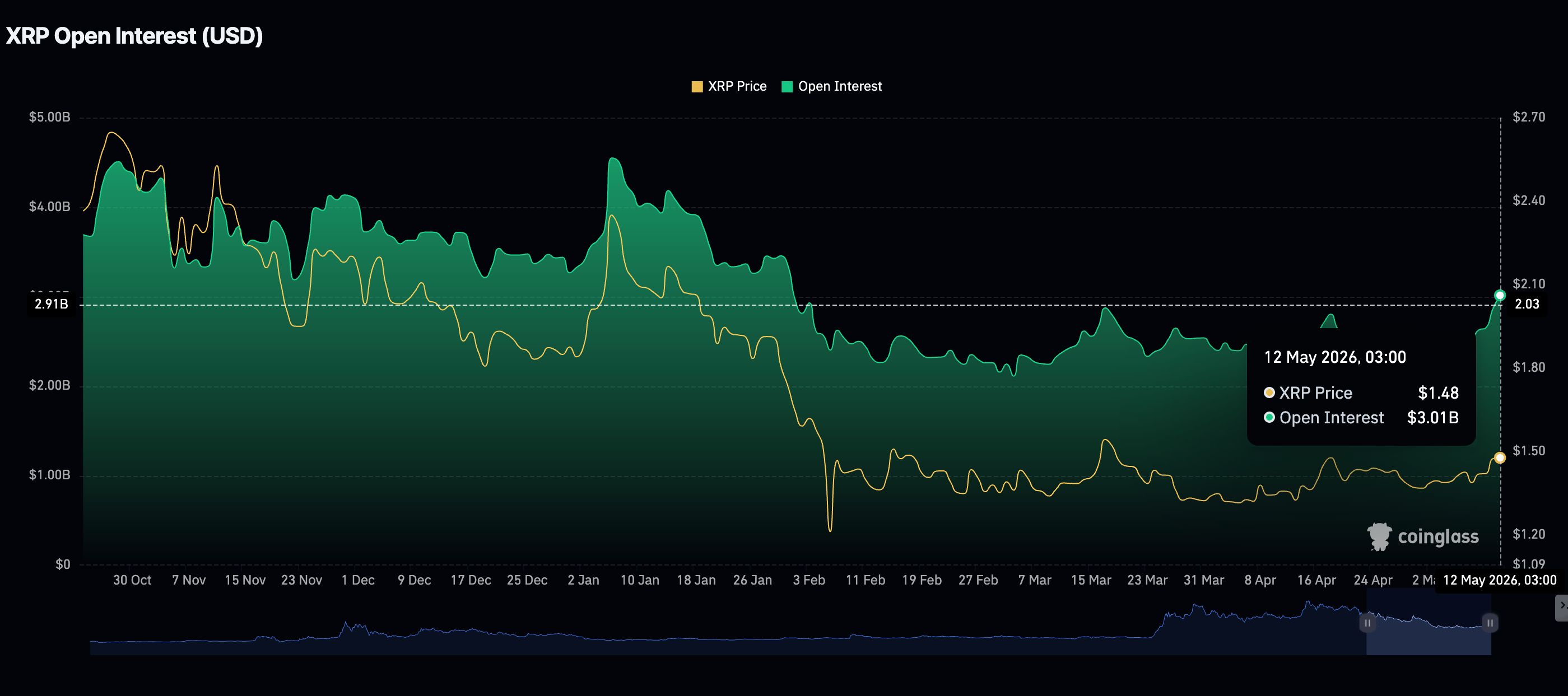
The XRP derivatives market continues to steadily increase, with futures Open Interest (OI) reaching a three-month high of $3.01 billion on Tuesday, up from $2.87 billion the previous day.
OI has climbed 30% from its yearly low of $2.11 billion recorded in early March. Further gains would solidify retail investor dominance and bolster the probability of a sustained recovery as risk appetite grows.
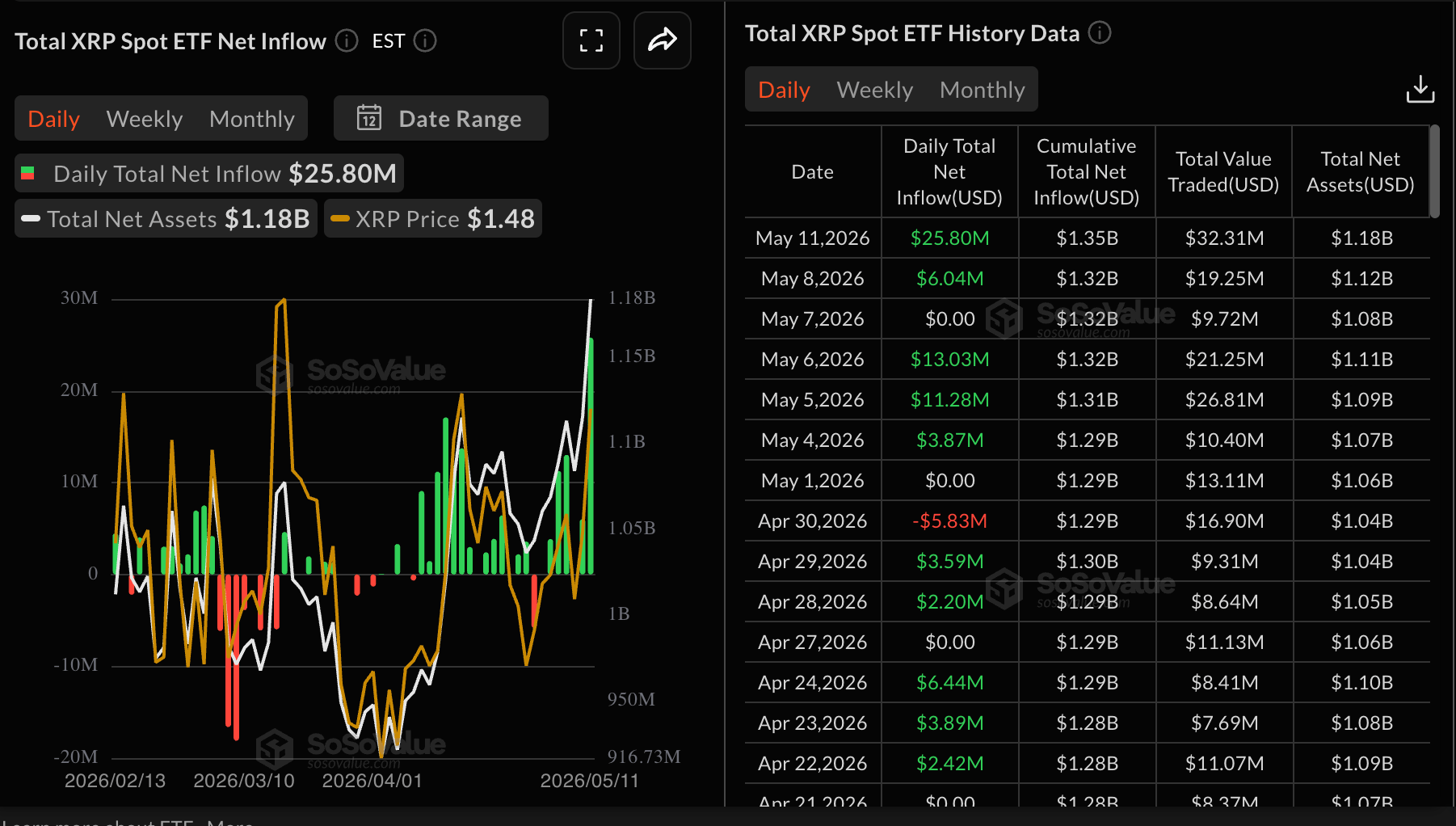
US-listed XRP spot Exchange-Traded Funds (ETFs) have also gained traction since Friday, with inflows nearing $26 million on Monday. Cumulative inflows stand at $1.35 billion, with net assets under management averaging $1.18 billion, according to SoSoValue.
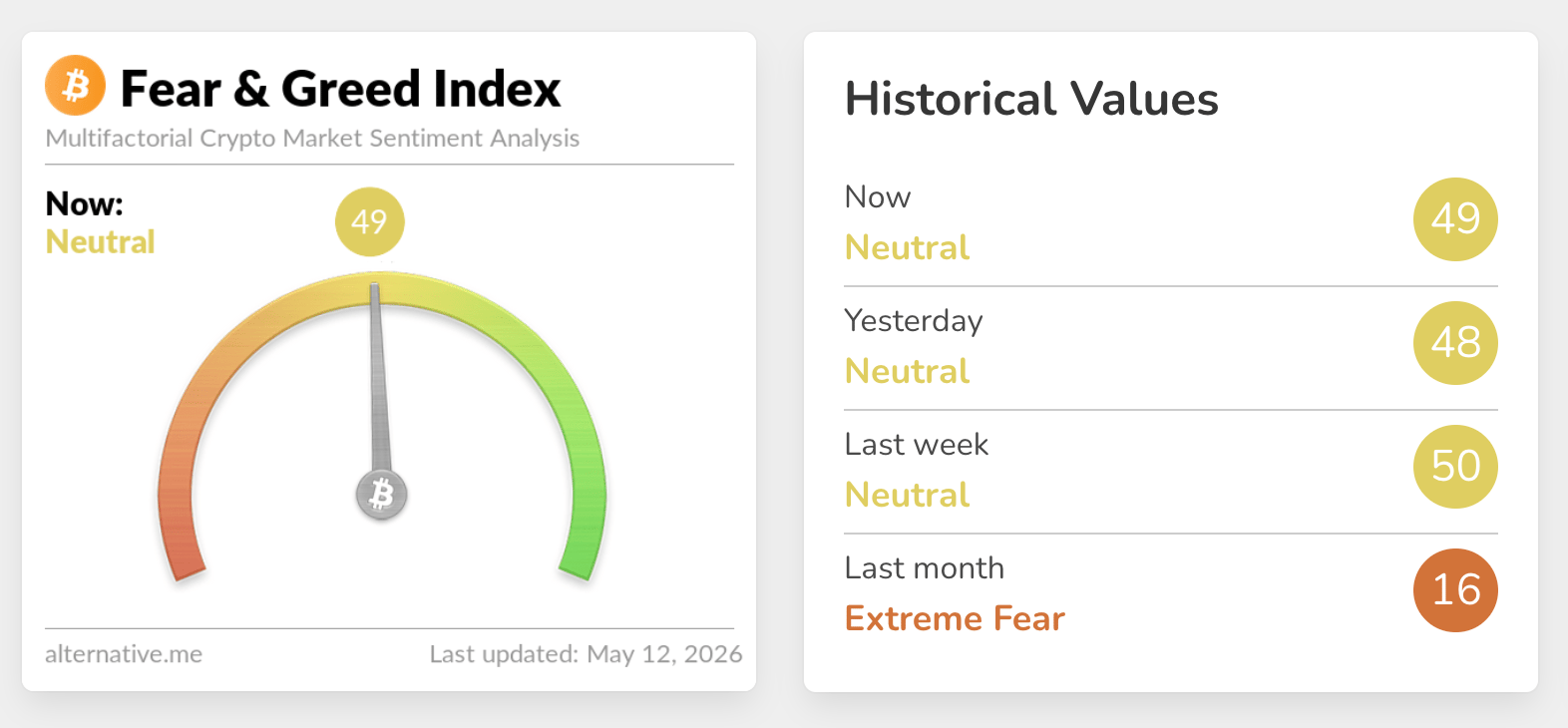
The surge in institutional and retail interest aligns with steady market sentiment, as reflected by the Crypto Fear & Greed Index rising to 49 in the fear territory on Tuesday, up from 48 the previous day.
Technical outlook: XRP extends correction as technical weakness builds
XRP trades at $1.45, holding above the 50-day Exponential Moving Average (EMA) at $1.42 and the latest SuperTrend support at $1.33, hinting at a mildly constructive tone. Still, the broader structure remains capped, as price remains below the 100-day EMA at $1.50 and well below the 200-day EMA at $1.71.
On the daily chart, the Moving Average Convergence Divergence (MACD) histogram is marginally positive and rising, while the Relative Strength Index (RSI) hovers near 57, suggesting improving but not yet overextended upside momentum within this still medium-term constrained backdrop.
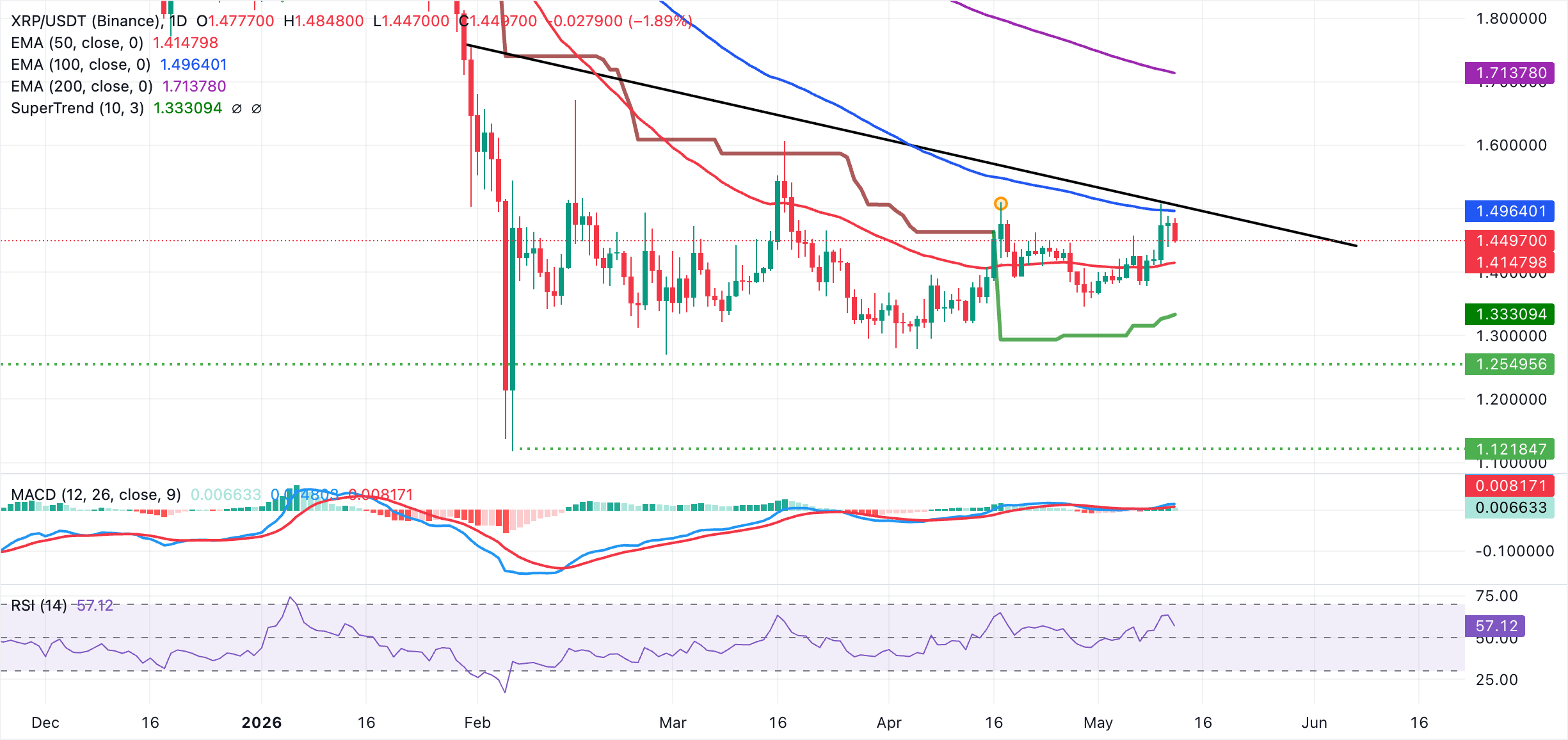
On the topside, initial resistance is seen at the 100-day EMA around $1.50, with a downward resistance trendline at a similar level. A daily close above this confluence would open the way toward the higher barrier at the 200-day EMA around 1.71. On the downside, immediate support is aligned with the daily low at $1.44, followed by firmer demand at the 50-day EMA at $1.41. A break below that demand cluster would expose the next SuperTrend support region near $1.33.
(The technical analysis of this story was written with the help of an AI tool.)
Ripple FAQs
Ripple is a payments company that specializes in cross-border remittance. The company does this by leveraging blockchain technology. RippleNet is a network used for payments transfer created by Ripple Labs Inc. and is open to financial institutions worldwide. The company also leverages the XRP token.
XRP is the native token of the decentralized blockchain XRPLedger. The token is used by Ripple Labs to facilitate transactions on the XRPLedger, helping financial institutions transfer value in a borderless manner. XRP therefore facilitates trustless and instant payments on the XRPLedger chain, helping financial firms save on the cost of transacting worldwide.
XRPLedger is based on a distributed ledger technology and the blockchain using XRP to power transactions. The ledger is different from other blockchains as it has a built-in inflammatory protocol that helps fight spam and distributed denial-of-service (DDOS) attacks. The XRPL is maintained by a peer-to-peer network known as the global XRP Ledger community.
XRP uses the interledger standard. This is a blockchain protocol that aids payments across different networks. For instance, XRP’s blockchain can connect the ledgers of two or more banks. This effectively removes intermediaries and the need for centralization in the system. XRP acts as the native token of the XRPLedger blockchain engineered by Jed McCaleb, Arthur Britto and David Schwartz.














