

Three reasons that could challenge Dogecoin long-term demand despite its disinflationary model
- Dogecoin claims that its disinflationary model of issuing 5 billion DOGE tokens annually is heading inflation towards 3.1% from 3.6%.
- The model relies on sustained demand from its community and institutions backing its ETFs.
- Limited real-world utility beyond serving as a tipping currency could further reduce demand for Dogecoin.
Dogecoin (DOGE) is the largest meme coin, with a market capitalization of $14.27 billion at the time of writing on Wednesday, accounting for over 0.50% of the $2.49 trillion overall cryptocurrency market. Unlike Bitcoin (BTC), Dogecoin's tokenomics has no maximum supply and issues roughly 5 billion DOGE tokens per year, which raises the risk of hyperinflation.

Dogecoin defends its fixed issuance in a recent X post, claiming that inflation will decline gradually to 3.1% from 3.6% as the total DOGE supply increases. The assumption backing the claim is a steady demand for the meme coin, driven by its strong community, which uses DOGE for tipping across multiple projects, by institutions building on DOGE-focused Exchange Traded Funds (ETFs), and by its extended utility in Decentralized Finance (DeFi) services and the real world.
However, these assumptions could pose long-term challenges for the DOGE price.
Disinflation is not deflation
Disinflation is not the same as deflation. The steady release of 5 billion DOGE tokens per year will reduce inflation relative to the rising total supply, whereas deflation requires burning tokens to reduce supply.
The model aligns with Dogecoin's vision of providing a real currency for utilitarian and practical purposes rather than just hoarding. Moreover, it incentivizes miners' participation to secure the network.
However, the disinflationary model does not guarantee a cap on the supply pressure. This consistent, fixed minting of DOGE during periods of low demand could be a persistent downside pressure.
Institutions remain on the sidelines
Dogecoin often found itself at the center of corporate attention, such as Tesla accepting DOGE and SpaceX planning to put the first Dogecoin on the moon. However, the actual demand from institutional and corporate investors remains muted.
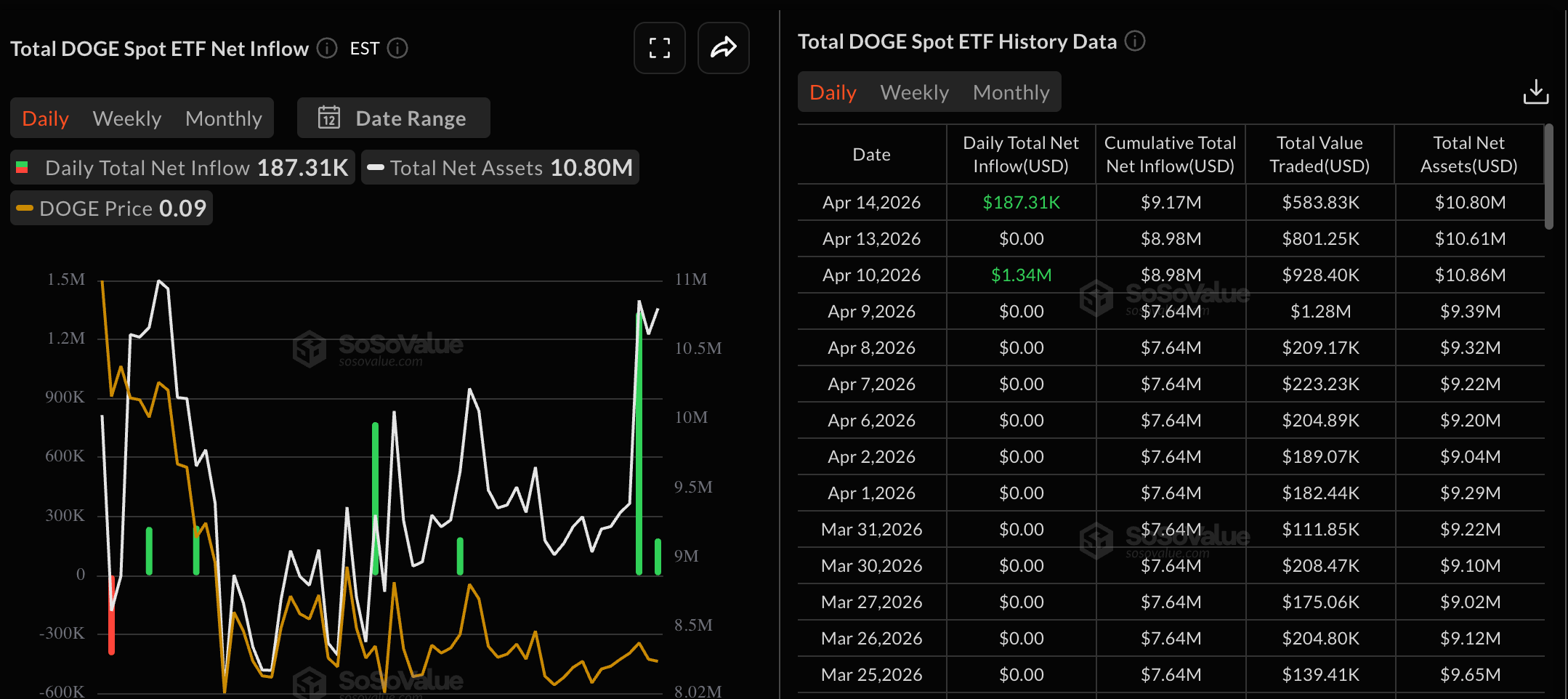
DOGE spot ETFs have recorded 15 days of inflows since their inception on November 24, with a total net asset worth of $10.80 million. With 79 days of net zero flows and two daily net outflows, institutional interest in DOGE is muted.
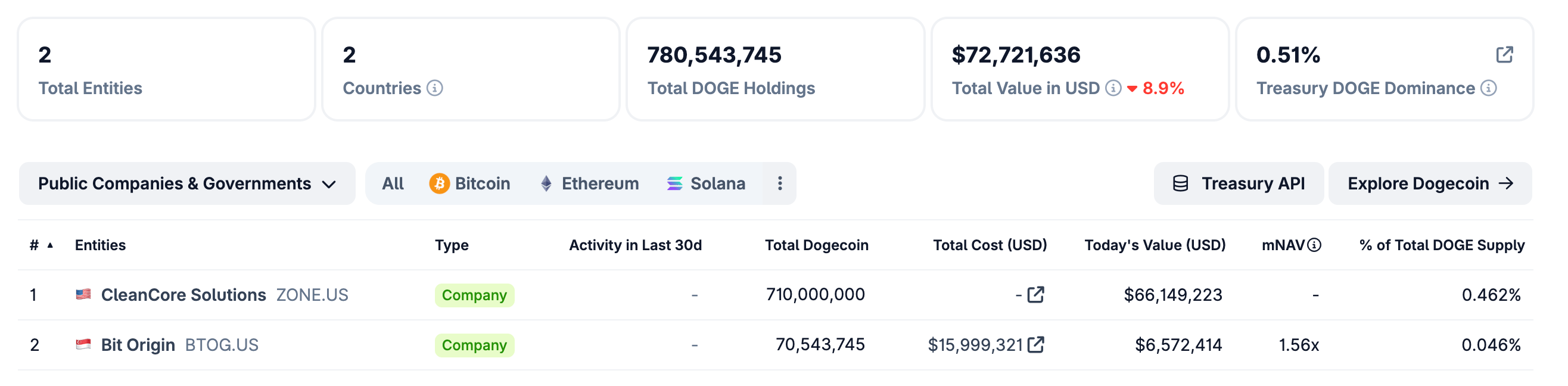
On the other hand, the Dogecoin Treasury Holdings hold just over 780.54 million DOGE, accounting for 0.51% of the DOGE supply. Institutional support for DOGE is a critical next step toward evolving it into the global financial system, which could also tackle the steady demand problem necessary to sustain the disinflationary model.
Limited real-world utility
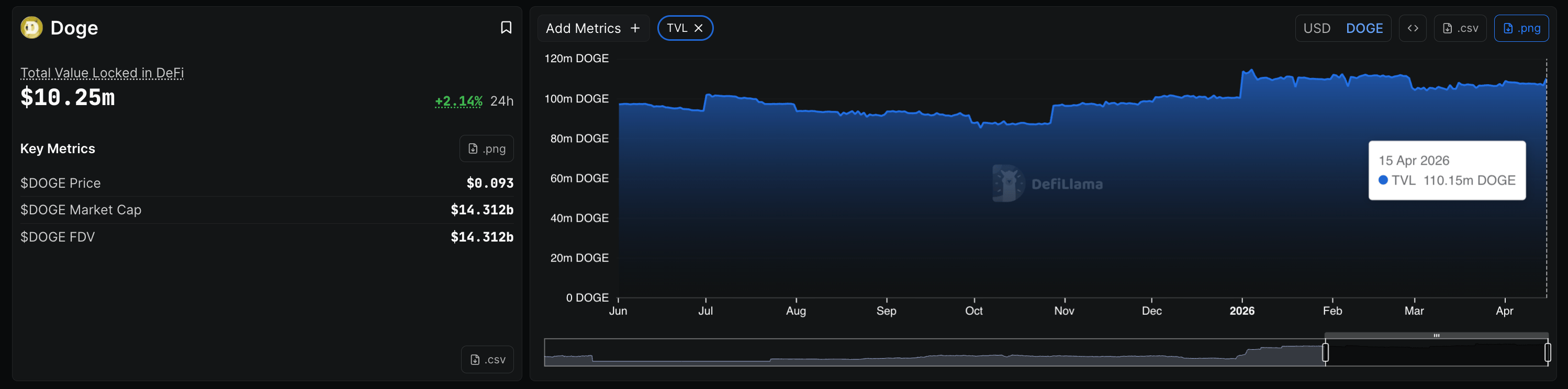
Dogecoin lacks utility in the DeFi and real world. Doginals and DRC-20, like Bitcoin’s Ordinals and BRC-20, lack mainstream adoption. The staking rewards for DOGE are below 5% ARR, despite its Total Value Locked (TVL) reaching 110.15 million DOGE.
Tesla has ended DOGE payments, while retail adoption has been minimal since its initial success, such as funding the Jamaican bobsled team, water wells in Kenya, and the Dogecoin car.
Taking it all together, the expansion of DOGE in the institutional space, with increased utility, is necessary for the disinflationary model to have a positive impact on the spot price.














