Oil Stays Calm While Gold and Silver Soar: A Deep Dive into the Venezuela Shock – From Market Reaction to Sino–US Geopolitical Chess
By Abel Gao
Updated: 5 Mar 2026


POPULAR ARTICLES

The US military operation in Venezuela has not only reshaped the political landscape of Latin America, it has also triggered a rare divergence in asset prices. Crude oil – which traditionally spikes during crises – has remained surprisingly subdued, while gold, silver and other precious metals have surged sharply.
Over the weekend, global investors witnessed a highly unusual event in modern international relations:
the United States launched a military raid on the sovereign state of Venezuela and forcibly took control of President Nicolás Maduro and his wife. US President Donald Trump subsequently declared that the US would “manage” Venezuela and explicitly stated that it would be deeply involved in the development of the country’s oil resources.
The move quickly drew widespread condemnation from the international community. Many countries criticised it as setting an “extremely dangerous precedent”, prompting an emergency meeting of the UN Security Council.
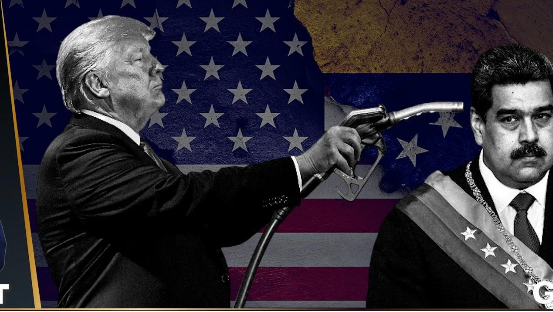
However, compared with the explosive nature of the incident itself, the immediate reaction in financial markets is what every investor should pay close attention to. The traditional “geopolitical risk = higher oil prices” logic has temporarily failed. In its place, markets have shown a cool reassessment of broader fundamentals, along with a primal flight to safety in the face of uncertainty.
To understand this divergence, we first need to return to the core of the Venezuela event.
Mapping the Core of the Venezuela Shock
This turn of events did not come out of nowhere, but its speed and form still far exceeded market expectations. The key points can be summarised as follows:
- Direct action:
In the early hours of 3 January, US forces launched large-scale strikes on Caracas and other locations in Venezuela, and successfully seized President Maduro and his wife, transferring them to the United States. Trump said he watched the operation in real time, “like watching a TV show.” - Open intentions:
Washington has made no effort to hide its economic motives. Trump and senior officials have repeatedly stated in public that the US will temporarily “manage” Venezuela and ensure that major US oil companies lead the future development of the country’s vast oil reserves.
The US Attorney General has claimed Maduro faces multiple drug-related charges, but most analysts believe that “anti-drug” is merely a pretext – the core objective is oil. - Strategic shift:
This operation marks a radical shift in US foreign and security policy. Trump declared that “America’s dominance in the Western Hemisphere will never again be questioned,” and one of his top advisers even hinted at interest in Greenland. This has been widely interpreted as a sign that Washington is pulling its strategic focus back to the Western Hemisphere and is now more willing to use force, openly and aggressively, to secure its interests. - Regional shock:
Led by Colombia and Brazil, six Latin American countries swiftly issued a strongly worded joint statement condemning the US action as a blatant violation of international law and a “highly dangerous precedent.”
Such rapid, unified messaging is both rare and telling: it highlights a strong sense of collective alarm and sovereignty anxiety among South American nations when facing intervention by a great power.
South America: The “Rare Metals Warehouse” of the World
South America is far from a “normal” resource base. It is effectively a strategic warehouse for the global energy transition and high-end manufacturing.
Chile and Peru together supply nearly 40% of the world’s copper.
Bolivia, Argentina and Chile form the “Lithium Triangle”, holding more than half of global lithium reserves.
Brazil is a major producer of niobium, tantalum and platinum-group metals.
These resources are the lifeblood of electric vehicles, renewable-energy equipment and cutting-edge electronics. Any political turmoil or retaliatory policies that spread across this region would directly threaten the stable production and export of these strategic commodities.
Investors fear that an escalation in tensions could lead to:
A freeze in mining investment
Export controls
A rise in resource-nationalism policies
Such concerns over long-term supply security have become another key force driving up traditional safe-haven assets like gold and silver. This logic is different from pure panic buying: it is rooted in a deeper fear that the industrial arteries of the global economy could be choked off.
Oil Falls Instead of Rising, but Gold and Silver Take Off
International Crude Oil: Falling When It “Should” Rise
Oil has not rallied as many might expect. Reasons include:
Venezuela’s current output is under 1 million barrels per day, less than 1% of global supply, meaning any interruption can relatively easily be offset by other producers.
The US has signalled its intention to restore Venezuelan production. Markets therefore expect future supply to increase, which actually weighs on prices.
The International Energy Agency (IEA) forecasts record oversupply in global oil markets in 2026, while OPEC+ has postponed further output hikes. Fundamentally, the market is extremely well supplied.
In the short term, oil faces a dilemma:
If domestic chaos leads to deeper output declines or US sanctions expand, there may be a brief risk premium.
But the more likely scenario is a slow recovery in Venezuelan capacity under US direction.
Goldman Sachs notes that if Venezuela’s output rises by 400,000 barrels per day by the end of 2026, the average annual Brent price could be pushed down to around USD 54. In the longer term, the return of a Venezuela with potential output of up to 3 million barrels per day will hang over global oil prices like a “Sword of Damocles.”
More importantly, this episode signals an accelerated “bloc-isation” of global energy supply chains – the old system based on economic efficiency and globalisation is giving way to a new system organised around geopolitical alliances.
Gold and Silver: Sharp Rallies
Geopolitical upheaval fuels uncertainty, sending money rushing into gold for protection.
Gold prices were already up about 65% in 2025, the best annual performance in more than four decades.
Geopolitical risk is reinforcing a long-term bull market underpinned by rate-cut expectations and central bank gold purchases.
As long as the political outlook in Venezuela remains uncertain – including the relationship between the US and any proxy government, the possibility of domestic resistance, and the degree of international intervention – gold is likely to stay well supported.
On a deeper level, Washington’s willingness to trample international norms in pursuit of resources may undermine confidence in the dollar-centric credit system. That, in turn, could encourage central banks and investors to hold more gold as a hedge against sovereign credit risk. Gold’s monetary role will be re-examined again and again in this turmoil.
Silver typically shows greater volatility than gold. With a clear safe-haven driver, its upside moves are often larger. On top of that, markets are already betting that a US-driven rebuilding of Venezuela could eventually support global industrial activity – offering potential long-term support for silver’s industrial demand.
Silver is likely to continue behaving as “Mr. Elastic”:
It will move largely in tandem with gold,
but with more violent swings.
Any sign of further escalation could send silver prices sharply higher. At the same time, investors must beware:
If the situation unexpectedly stabilises quickly, or
if a prolonged slump in energy prices triggers deflationary pressure globally,
then silver – with its stronger industrial character – could suffer deeper pullbacks than gold.
Deeper Geopolitical Chess Between the US and China
This episode is not an isolated military adventure. It starkly reveals Washington’s deep strategic anxiety in the face of China’s systemic rise and may trigger a chain of far-reaching geopolitical and economic consequences.
America’s blatant disregard for international rules can indeed be read as a sign of impatience from a hegemon in relative decline. Its core goals are twofold:
Directly control Venezuela’s massive oil reserves, attempting to reshape the global energy map and reinforce its grip on energy pricing.
More importantly, weaken China’s growing economic and geopolitical influence in Latin America.
China has already become the most important trading partner and investor for many Latin American countries. By using force to “reassert dominance” in its traditional backyard, the US is trying to Disrupt China’s cooperation with “Global South” nations and Squeeze China’s strategic room for manoeuvre.
This shows that US foreign economic policy has now been fully subordinated to national-security objectives, with economic and financial tools systematically weaponised.
Of course, China will not easily abandon its long-term plans in Latin America. In addition to deepening trade and infrastructure ties in the region, China is likely to:
Increase investment in alternative resource hubs (such as Africa and Central Asia) to hedge South American supply-chain risks.
More importantly, this event will serve as a powerful catalyst for de-dollarisation. Washington’s practice of using the dollar system as a geopolitical weapon has already raised red flags globally. This latest, naked grab for resources will further accelerate efforts by major economies – including China – to:
Promote local-currency settlement,
Increase gold reserves, and
Build independent payment systems.
In many ways, the surge in gold prices is an early reflection of the looming restructuring of the global monetary and credit order.

Abel Gao brings over 11 years of experience as a financial analyst to TMGM, with expertise in advanced chart analysis and statistical modeling of global markets. As a Trading Strategy Team Mentor, he combines traditional charting techniques with modern analytical methods to provide insights that support traders in developing systematic strategies. In addition to analysis, Abel mentors both beginner and experienced traders, and his reports and commentary are widely used as educational resources within TMGM’s trading community.
Read More