

Trade The World
Fed's Powell: Labour market has significant downside risks
By FXStreet Team
Date Published: 10 Dec 2025 | Date Modified: 10 Dec 2025


POPULAR ARTICLES
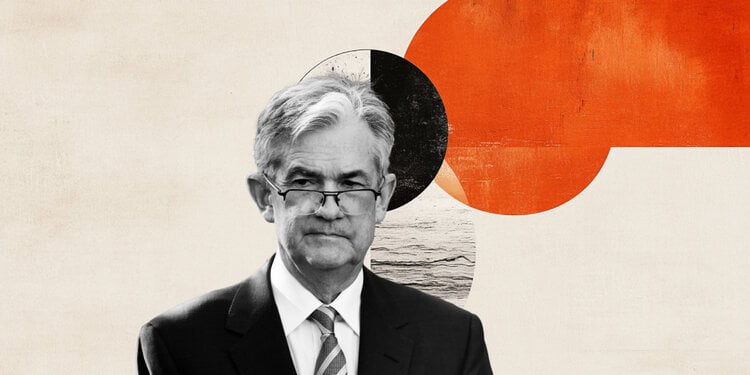
At the usual post-meeting press conference, Fed Chair Jerome Powell explained why policymakers decided to lower the Federal Funds Target Range (FFTR) to 3.50%–3.75% after the December meeting and took questions from reporters about the move.
At the usual post-meeting press conference, Fed Chair Jerome Powell explained why policymakers decided to lower the Federal Funds Target Range (FFTR) to 3.50%–3.75% after the December meeting and took questions from reporters about the move.
Powell's press conference highlights
The end of the government shutdown informs projections of a swing to higher growth next year.
Implication of Fed forecasts is higher productivity.
Our two goals are a bit in tension.
Everyone at the table agrees inflation is too high.
Fairly broad support for today's decision.
The effects of rate cuts so far are only beginning to come in.
“Extent and timing” phrase points out we’ll carefully evaluate incoming data.
Well positioned to wait to see how the economy evolves.
Consumers continue to spend.
Some people feel we should stop here and wait.
I don't think a rate hike is anyone's base case. I am not hearing that.
The division is between holding rates steady from here vs. cutting.
Some people feel we should cut once or more; don't think a rate hike is anyone's base case next move.
Don't expect a sharper downturn in employment with rates in a plausible range of neutral.
We have made progress this year in non-tariff-related inflation.
In October, said that there was no certainty of a December rate cut, and that was indeed correct.
Why we moved today is due to the gradual cooling in the labour market.
We think there's a negative 20,000 in payrolls per month.
We think job gains have been overstated by 60k in recent months.
Evidence is growing that services inflation has come down, and goods inflation is entirely due to tariffs.
It doesn't feel like a hot economy.
This is a unique situation with tension between our 2 goals.
We're now in the high end of the range for neutral.
If there are no new tariff announcements, inflation from goods should peak in Q1.
Nothing is happening in long rates that suggests concern about inflation in the long run.
Labour market has significant downside risks.
People care a lot about the labour market.
If you get away from tariffs, inflation is in the low 2s.
Tariffs are likely to be one-time price increases.
If we didn’t have to worry about the labour market, the policy rate would be higher.
This section below was published at 19:00 GMT to cover the Federal Reserve's policy decisions and the immediate market reaction.
At its December meeting, the Federal Reserve (Fed) lowered its interest rates by 25 basis points, bringing the Federal Funds Target Range (FFTR) down to 3.50%–3.75%, right in line with what markets were expecting.
Highlights from the FOMC statement
Fed signals rate-cut pause by adding 'extent and timing' to describe its approach to additional adjustments to the policy rate.
Economy has been expanding at a moderate pace, job gains have slowed and the unemployment rate has edged up.
Inflation has moved up from earlier in the year and remains somewhat elevated.
Uncertainty about the outlook remains elevated.
Attentive to risks on both sides of the dual mandate, judges that downside risks to employment have risen.
Will begin reserve-management purchases of treasury bills beginning on december 12.
First reserve-management purchase operation round to buy about $40 billion in treasury bills.
Initial treasury-bill buying to be elevated 'for a few months'.
Pace of future reserve-management purchases likely 'significantly reduced'.
Ends operational limit on standing overnight repo operations.
Vote in favour of the policy decision was 9–3, with Miran preferring a half-percentage-point cut and Goolsbee and Schmid preferring no cut.
Key takeaways from the Summary of Economic Projections (SEP)
Fed officials' median view of the fed funds rate at end-2025 is 3.6% (prev 3.6%).
Fed officials' median view of the fed funds rate at end-2026 is 3.4% (prev 3.4%).
Fed officials' median view of the fed funds rate at end-2027 is 3.1% (prev 3.1%).
Fed officials' median view of the fed funds rate at end-2028 is 3.1% (prev 3.1%).
Fed officials' median view of the fed funds rate in the longer run is 3.0% (prev 3.0%).
Fed projections imply 25 bps of rate cuts in 2026, and another 25 basis points of rate cuts in 2027.
Fed projections show wide divergence of views for the appropriate path of rates in 2026 and beyond.
Fed policymakers see a 4.4% unemployment rate at end-2026 versus 4.4% in September projections.
Fed policymakers see end-2026 PCE inflation at 2.4% versus 2.6% in September; core seen at 2.5% versus 2.6%.
Fed policymakers see 2.3% GDP growth in 2026 versus 1.8% in September, and see longer-run growth at 1.8% versus 1.8% in September.
Market reaction to Fed policy announcements
The US Dollar remains on the back foot, setting aside part of the recent uptick and sending the US Dollar Index (DXY) back to the sub-99.00 region amid declining US Treasury yields across the spectrum.
US Dollar Price Today
The table below shows the percentage change of US Dollar (USD) against listed major currencies today. US Dollar was the strongest against the Canadian Dollar.
| USD | EUR | GBP | JPY | CAD | AUD | NZD | CHF | |
|---|---|---|---|---|---|---|---|---|
| USD | -0.38% | -0.40% | -0.44% | -0.23% | -0.27% | -0.28% | -0.56% | |
| EUR | 0.38% | -0.02% | -0.05% | 0.15% | 0.10% | 0.09% | -0.18% | |
| GBP | 0.40% | 0.02% | -0.02% | 0.17% | 0.12% | 0.11% | -0.16% | |
| JPY | 0.44% | 0.05% | 0.02% | 0.19% | 0.15% | 0.15% | -0.14% | |
| CAD | 0.23% | -0.15% | -0.17% | -0.19% | -0.04% | -0.07% | -0.33% | |
| AUD | 0.27% | -0.10% | -0.12% | -0.15% | 0.04% | -0.01% | -0.30% | |
| NZD | 0.28% | -0.09% | -0.11% | -0.15% | 0.07% | 0.00% | -0.28% | |
| CHF | 0.56% | 0.18% | 0.16% | 0.14% | 0.33% | 0.30% | 0.28% |
The heat map shows percentage changes of major currencies against each other. The base currency is picked from the left column, while the quote currency is picked from the top row. For example, if you pick the US Dollar from the left column and move along the horizontal line to the Japanese Yen, the percentage change displayed in the box will represent USD (base)/JPY (quote).
This section below was published at 10:00 GMT as a preview of the Federal Reserve's policy announcements.
- The US Federal Reserve is expected to cut the policy rate at the last meeting of 2025.
- The revised Summary of Economic Projections and Fed Chair Powell’s comments will be key as a rate cut is largely priced in.
- The US Dollar could stay on the back foot unless the Fed delivers a hawkish surprise.
The United States (US) Federal Reserve (Fed) will announce its interest rate decision on Wednesday, with markets widely expecting the US central bank to deliver a final 25 bps cut for 2025. While the move is widely priced in, this may be overshadowed by the vote itself as dissent within the Committee is anticipated from both hawks and doves.
Along with its interest rate decision, the Fed will also publish the Monetary Policy Statement, alongside the revised Summary of Economic Projections (SEP), following the December policy meeting on Wednesday.
The CME FedWatch Tool shows that investors are pricing in about a 90% probability of a 25 bps reduction in December to the 3.5%-3.75% range, but see a high likelihood of a policy hold in January. The last SEP, published in September, showed that policymakers’ projections implied a 25 bps reduction in 2026.
According to a recently-conducted Reuters poll, 89 of 108 economists have predicted that the Fed will opt for a 25 bps cut in December. Additionally, half of the polled economists saw the US central bank cutting the policy rate by another 25 bps to the range of 3.25%-3.5% in the first quarter of 2026.
While economists expect modest revisions in the growth and inflation projections, the market’s attention will be on Fed Chair Jerome Powell’s words and tone, which will try to reflect the divergent opinions of a deeply divided committee.
In the post-meeting press conference, Powell will also likely be asked about his potential successor next year, US President Donald Trump’s chief economic adviser Kevin Hassett. Markets expect Hassett to steer the policy towards a looser path if chosen as the new chair.
TD Securities analysts see the Fed adopting a hawkish tone after cutting the policy rate.
“We expect the FOMC to cut another 25bp. The decision to remain on an easing path will be equally or more contentious than October's, and we look for the final rate cut of the year to result in decidedly more hawkish guidance. We expect the Board at large to fully support the decision to ease in December, while hawkish regional Fed presidents are likely to show dissent,” they explain.
When will the Fed announce its interest rate decision and how could it affect EUR/USD?
The Fed is scheduled to announce its interest rate decision and publish the revised SEP at 19:00 GMT. This will be followed by Fed Chair Jerome Powell's press conference starting at 19:30 GMT.
The rate decision itself is unlikely to trigger a significant market reaction, but the voting pattern could be important as it could highlight a division of opinion among policymakers. In case the rate cut is decided with a slim majority, the USD could stay resilient against its peers, causing EUR/USD to stretch lower.
Investors will also scrutinize the details of the SEP. In case new projections point to at least two or more rate cuts next year, this could be assessed as a sign of a looser policy moving forward and hurt the USD. Conversely, the USD could gather strength and drag EUR/USD lower if the SEP shows a single cut in 2026, which is what the September SEP showed.
In the post-meeting press conference, Chair Powell’s remarks on inflation dynamics, the labor market and the policy outlook will be watched closely. Although Powell is unlikely to comment on his potential replacement, he could warn against prematurely cutting rates and help the USD hold its ground. Furthermore, Powell’s tone could be seen as hawkish if he adopts an optimistic tone about the labor market, while emphasizing the possibility of inflation rising again or not falling as anticipated.
On the flip side, the USD could come under renewed selling pressure and open the door for a leg higher in EUR/USD in case Powell voices his concerns about worsening conditions in the labor market, citing the concerning trend seen in private sector payrolls. Earlier this month, the Automatic Data Processing (ADP) reported that private employers shed 32,000 jobs in November.
Commenting on the potential impact of the Fed event on the USD’s valuation, “we expect the December Fed meeting to bring a hawkish Fed cut which could see the recent USD selloff take a momentary breather,” say TD Securities analysts. “Beyond that, we continue to see a moderation in the USD sentiment and continued weakness. Our quant macro framework's trading weight in the Dollar is also moderating from a combination of market and macro factors,” they added.
Eren Sengezer, European Session Lead Analyst at FXStreet, provides a short-term technical outlook for EUR/USD:
“EUR/USD clings to a bullish stance in the short-term outlook, as it manages to hold above the 20-day, 50-day and 200-day Simple Moving Averages (SMAs). Additionally, the Relative Strength Index (RSI) indicator stays near 60 on the same chart.”
“The 100-day SMA aligns as a pivot point near 1.1650. Once that level is confirmed as support, bulls could show interest. In this scenario, 1.1730 (static level) could act as an interim resistance level ahead of 1.1918 (September 17 high). On the downside, the Fibonacci 23.6% retracement level of the January-September uptrend and the 200-day SMA form a key support level area at 1.1480-1.1460 ahead of 1.1240 (Fibonacci 38.2% retracement).”
Interest rates FAQs
Interest rates are charged by financial institutions on loans to borrowers and are paid as interest to savers and depositors. They are influenced by base lending rates, which are set by central banks in response to changes in the economy. Central banks normally have a mandate to ensure price stability, which in most cases means targeting a core inflation rate of around 2%. If inflation falls below target the central bank may cut base lending rates, with a view to stimulating lending and boosting the economy. If inflation rises substantially above 2% it normally results in the central bank raising base lending rates in an attempt to lower inflation.
Higher interest rates generally help strengthen a country’s currency as they make it a more attractive place for global investors to park their money.
Higher interest rates overall weigh on the price of Gold because they increase the opportunity cost of holding Gold instead of investing in an interest-bearing asset or placing cash in the bank. If interest rates are high that usually pushes up the price of the US Dollar (USD), and since Gold is priced in Dollars, this has the effect of lowering the price of Gold.
The Fed funds rate is the overnight rate at which US banks lend to each other. It is the oft-quoted headline rate set by the Federal Reserve at its FOMC meetings. It is set as a range, for example 4.75%-5.00%, though the upper limit (in that case 5.00%) is the quoted figure. Market expectations for future Fed funds rate are tracked by the CME FedWatch tool, which shapes how many financial markets behave in anticipation of future Federal Reserve monetary policy decisions.
Inflation FAQs
Inflation measures the rise in the price of a representative basket of goods and services. Headline inflation is usually expressed as a percentage change on a month-on-month (MoM) and year-on-year (YoY) basis. Core inflation excludes more volatile elements such as food and fuel which can fluctuate because of geopolitical and seasonal factors. Core inflation is the figure economists focus on and is the level targeted by central banks, which are mandated to keep inflation at a manageable level, usually around 2%.
The Consumer Price Index (CPI) measures the change in prices of a basket of goods and services over a period of time. It is usually expressed as a percentage change on a month-on-month (MoM) and year-on-year (YoY) basis. Core CPI is the figure targeted by central banks as it excludes volatile food and fuel inputs. When Core CPI rises above 2% it usually results in higher interest rates and vice versa when it falls below 2%. Since higher interest rates are positive for a currency, higher inflation usually results in a stronger currency. The opposite is true when inflation falls.
Although it may seem counter-intuitive, high inflation in a country pushes up the value of its currency and vice versa for lower inflation. This is because the central bank will normally raise interest rates to combat the higher inflation, which attract more global capital inflows from investors looking for a lucrative place to park their money.
Formerly, Gold was the asset investors turned to in times of high inflation because it preserved its value, and whilst investors will often still buy Gold for its safe-haven properties in times of extreme market turmoil, this is not the case most of the time. This is because when inflation is high, central banks will put up interest rates to combat it. Higher interest rates are negative for Gold because they increase the opportunity-cost of holding Gold vis-a-vis an interest-bearing asset or placing the money in a cash deposit account. On the flipside, lower inflation tends to be positive for Gold as it brings interest rates down, making the bright metal a more viable investment alternative.

FXStreet
More than a million users rely on FXStreet for real-time market data, charting tools, expert insights, and forex news. Its comprehensive economic calendar and educational webinars help traders stay informed and make calculated decisions. FXStreet is supported by a team of about 60 professionals, split between the Barcelona headquarters and various global regions.
Read More








