

Trade The World
Pi Network Price Forecast: PI flashes bearish potential as selling pressure mounts
By Vishal Dixit
Date Published: 8 Jan 2026 | Date Modified: 8 Jan 2026


POPULAR ARTICLES

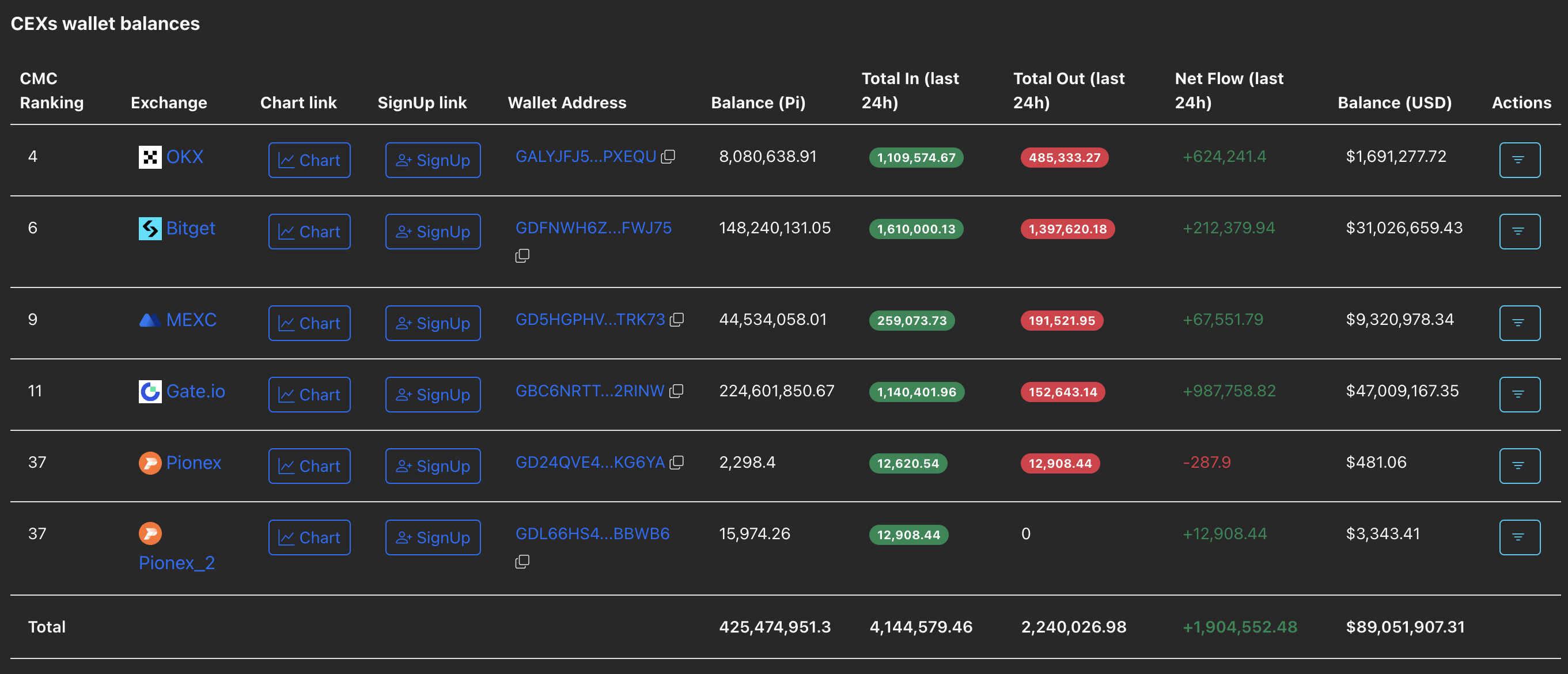
Pi Network trades above $0.2000 at press time on Thursday, following a nearly 2% decline the previous day. Centralized Exchanges (CEXs) have received 1.90 million PI tokens over the last 24 hours, suggesting risk-off sentiment among holders.
- Pi Network tests the 20-day EMA near $0.2000, psychological support, following a nearly 2% decline on Wednesday.
- Around 1.90 million PI were deposited into CEXs over the last 24 hours, suggesting increased selling pressure.
- The technical outlook for PI remains bearish as bullish momentum wanes.
Pi Network trades above $0.2000 at press time on Thursday, following a nearly 2% decline the previous day. Centralized Exchanges (CEXs) have received 1.90 million PI tokens over the last 24 hours, suggesting risk-off sentiment among holders. The technical outlook for the PI token remains bearish, with a risk of a cross below the 20-day Exponential Moving Average (EMA).
Large deposits fuel selling pressure
PiScan data shows over 1.90 million PI tokens were deposited on PI-listed CEXs, adding to the supply pressure. Typically, large deposits on CEXs are considered a sell-off move and indicate a decline in investors’ confidence. A steady inflow into CEXs could further intensify selling pressure.
Technical outlook: Could Pi Network extend its decline below $0.20?
Pi Network tests the 20-day EMA at $0.2092, reversing from the 50-day EMA at $0.2166, suggesting renewed supply pressure from the higher EMA. The Relative Strength Index (RSI) declines to 48, crossing below the halfway line, indicating dominant selling pressure and further downside potential before reaching the oversold zone.
Additionally, the Moving Average Convergence Divergence (MACD) takes a lateral shift as green histogram bars decline, indicating a decrease in bullish momentum. If MACD crosses below the signal line, it would indicate renewed bearish momentum.
If Pi Network declines further, the October 11 and September 22 lows at $0.1996 and $0.1842, respectively, could serve as support levels.
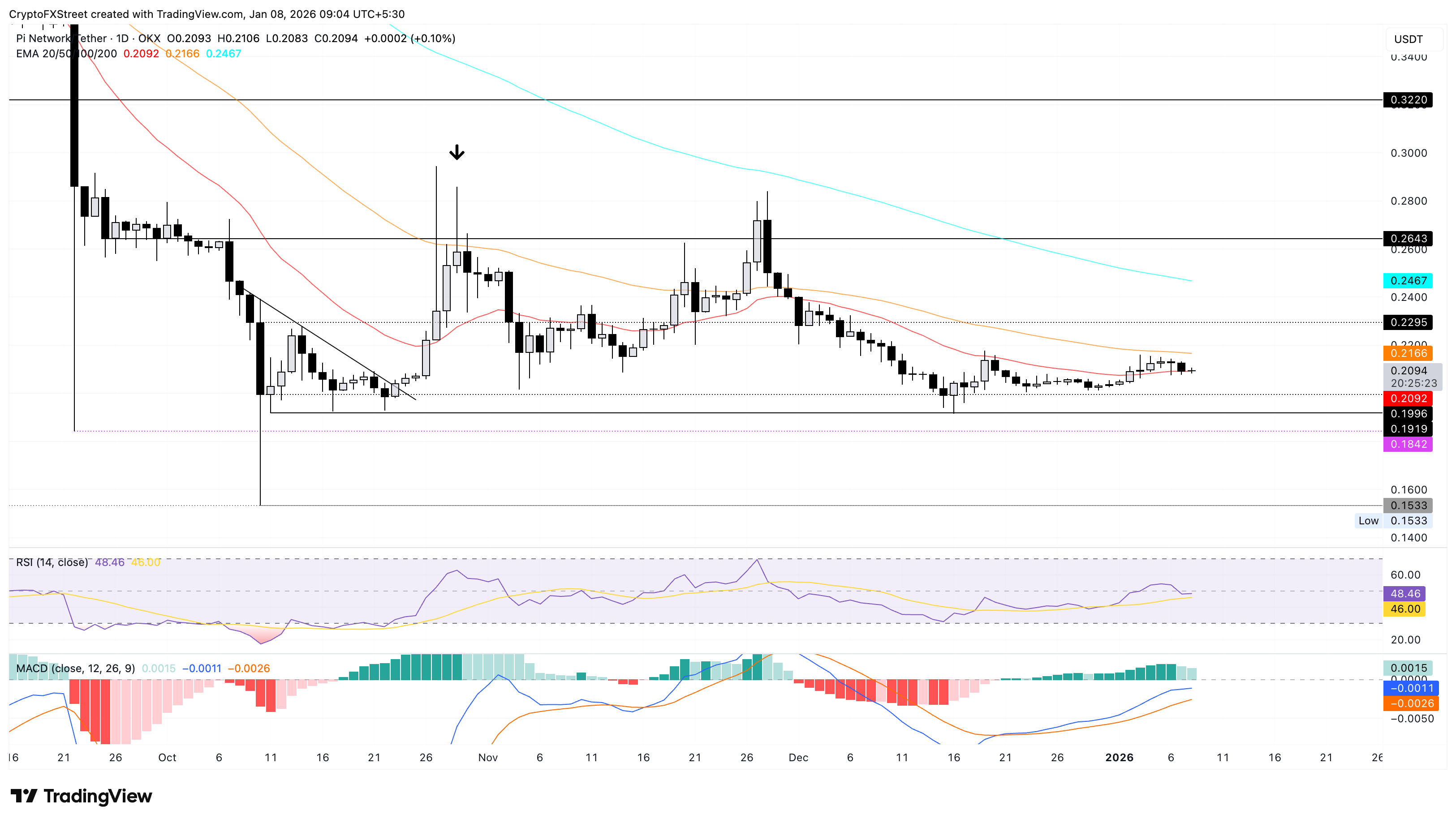
However, if PI clears the 50-day EMA at $0.2166, it could target the $0.2295 level, last tested on December 5.
Bitcoin, altcoins, stablecoins FAQs
Bitcoin is the largest cryptocurrency by market capitalization, a virtual currency designed to serve as money. This form of payment cannot be controlled by any one person, group, or entity, which eliminates the need for third-party participation during financial transactions.
Altcoins are any cryptocurrency apart from Bitcoin, but some also regard Ethereum as a non-altcoin because it is from these two cryptocurrencies that forking happens. If this is true, then Litecoin is the first altcoin, forked from the Bitcoin protocol and, therefore, an “improved” version of it.
Stablecoins are cryptocurrencies designed to have a stable price, with their value backed by a reserve of the asset it represents. To achieve this, the value of any one stablecoin is pegged to a commodity or financial instrument, such as the US Dollar (USD), with its supply regulated by an algorithm or demand. The main goal of stablecoins is to provide an on/off-ramp for investors willing to trade and invest in cryptocurrencies. Stablecoins also allow investors to store value since cryptocurrencies, in general, are subject to volatility.
Bitcoin dominance is the ratio of Bitcoin's market capitalization to the total market capitalization of all cryptocurrencies combined. It provides a clear picture of Bitcoin’s interest among investors. A high BTC dominance typically happens before and during a bull run, in which investors resort to investing in relatively stable and high market capitalization cryptocurrency like Bitcoin. A drop in BTC dominance usually means that investors are moving their capital and/or profits to altcoins in a quest for higher returns, which usually triggers an explosion of altcoin rallies.

FXStreet
More than a million users rely on FXStreet for real-time market data, charting tools, expert insights, and forex news. Its comprehensive economic calendar and educational webinars help traders stay informed and make calculated decisions. FXStreet is supported by a team of about 60 professionals, split between the Barcelona headquarters and various global regions.
Read More








