

Trading
Explore a wide range of markets with competitive pricing, deep liquidity, and advanced trading tools.
Learn More 
Platform
Trade seamlessly with TMGM's powerful platform, built for speed, precision, and a superior trading experience.
Learn More Trading Platform
Academy
Learn the fundamentals of trading with beginner-friendly resources, including guides, webinars, and market insights.
Learn More News & Analysis
Get real-time market updates and expert analysis to stay ahead of trading opportunities
Learn More News & Analysis
About
Learn what sets TMGM apart — our global presence, regulatory strength, and commitment to innovation in trading.
Learn More Why Choose TMGM
Sponsorship
Oil Trading
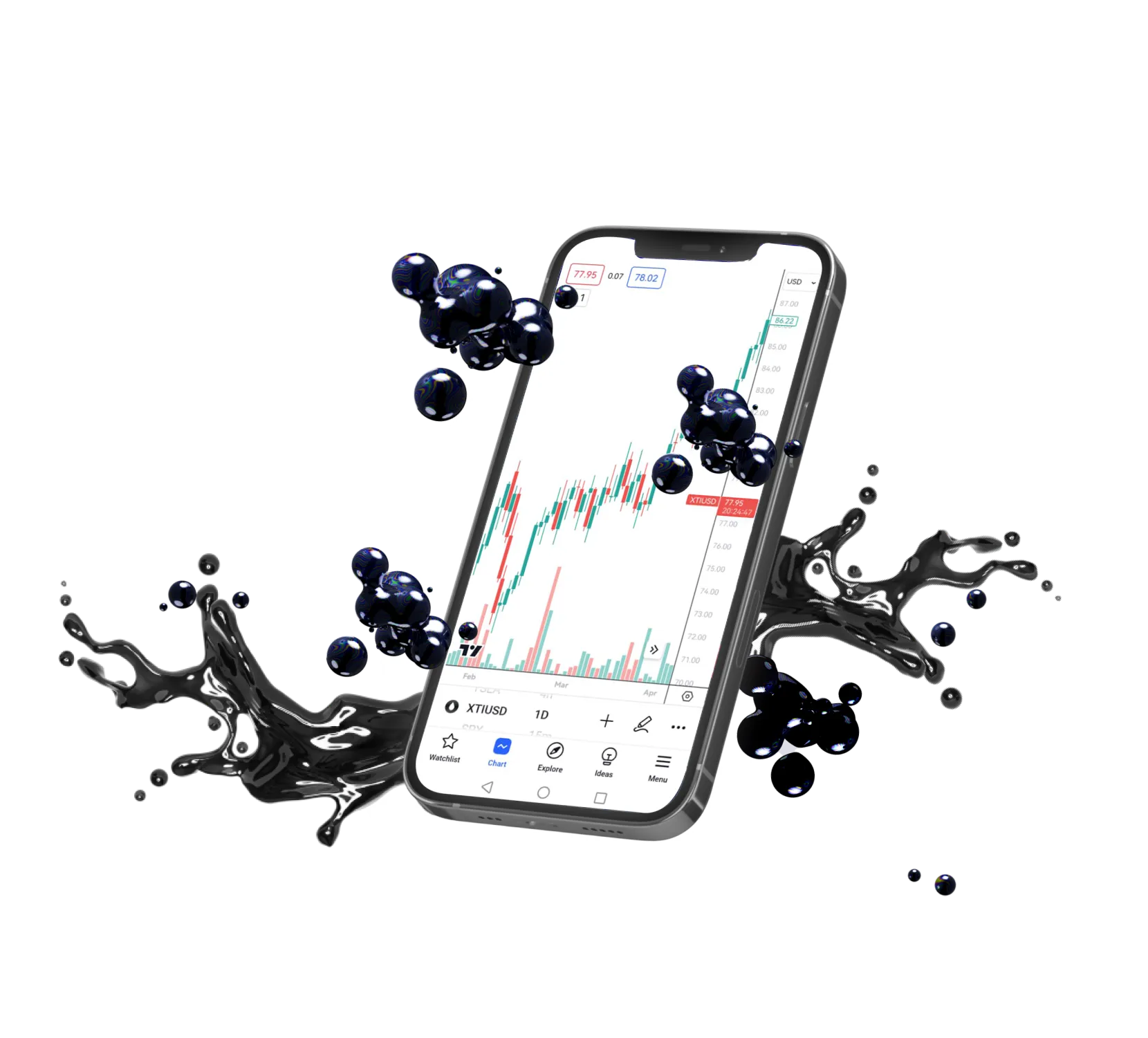
Trade Brent crude (XBRUSD) and WTI crude (XTIUSD) with low spreads and leverage up to 1:200. TMGM's oil trading platform supports both MT4 and MT5, with fast execution and real-time pricing. Go long or short, 23/5.
Open Account

Why Trade crude oil?
Crude oil gives you access to one of the world's most liquid markets. You can access the oil market 23/5, trade both rising and falling prices, and open positions with leverage on a smaller deposit.
With TMGM, you benefit from:
Ultra-tight spreads and fast execution.

Leverage of up to 1:200 for maximum flexibility.

Access to powerful trading platforms like MetaTrader 4 and MetaTrader 5
Ultra-tight spreads and fast execution.
Leverage of up to 1:200 for maximum flexibility.
Access to powerful trading platforms like MetaTrader 4 and MetaTrader 5
Trade Brent and WTI on TMGM
Buy or sell both benchmarks from a single account with spreads from 0.2 pips, no requotes, and fully regulated execution.

How Oil Trading Works
Oil trading works by speculating on the price of Brent Crude (XBRUSD) or WTI Crude (XTIUSD) without taking physical delivery.
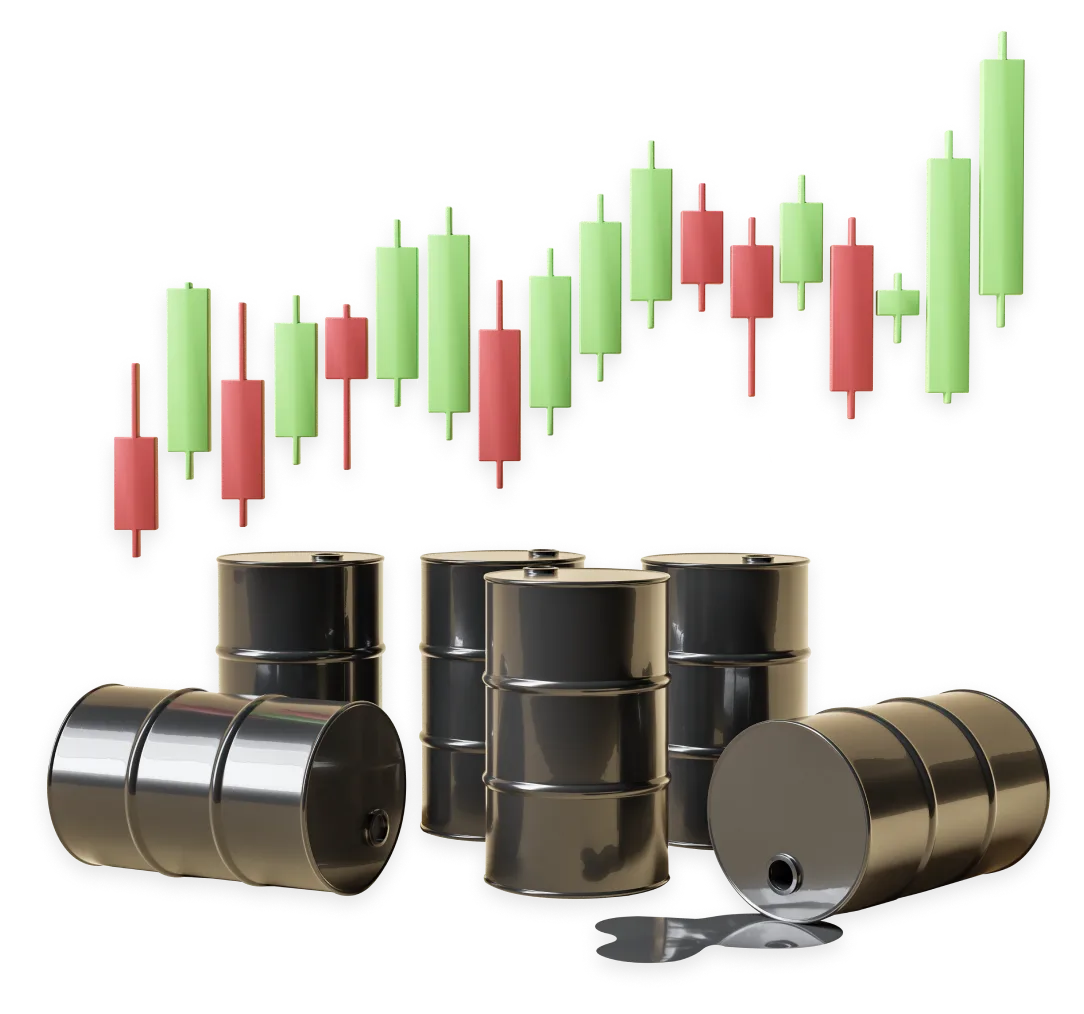
You go long if you expect the price to rise or go short if you expect it to fall. Your profit or loss equals the difference between your entry price and exit price, calculated on the full position size.
Oil prices react to weekly EIA inventory reports, OPEC+ production decisions, and geopolitical supply disruptions, creating short-term trading opportunities in both directions.
Why trade crude oil on TMGM?

Trade Oil Markets
Diversify your portfolio with access to the largest oil markets.

Spreads from 0.2 Pips
Take advantage of ultra-tight spreads powered by TMGM's proprietary Aggregation Engine.

10+ Tier 1 Liquitidy Providers
Benefit from deep liquidity and top-tier providers for the best rates and reliable execution.

NY4 Servers
Enjoy lightning-fast execution with TMGM's strategically located NY4 servers.

Up to 1:200 Leverage
Amplify your market exposure with leverage of up to 1:200.

All Strategies Allowed
A wide range of trading strategies are supported at TMGM, provided all activities comply with the Client Agreement.

No Requotes
Experience zero requotes thanks to deep liquidity and fast execution speeds.

Trusted & Regulated Broker
With ASIC, VFSC, FSA and FSC licenses, TMGM ensures your funds are safe and secure.
Learn about oil trading with TMGM

What is Oil Trading: How It Works, Ways to Trade
Oil trading is the buying and selling of crude oil and oil-linked instruments to profit from price movements. Traders trade the oil market through derivatives or exchange-traded products, rather than taking physical delivery of barrels. Brent Crude and West Texas Intermediate (WTI) are the 2 primary benchmarks used to price oil globally.
Oil trading works by taking a position based on price direction. Traders go long if they expect oil prices to rise and go short if they expect prices to fall. On most CFD platforms, oil prices are derived from the front-month futures contract for the relevant benchmark. Profit or loss is determined by the difference between the entry and exit price.
You can trade oil through 5 main instruments: oil CFDs, oil futures, oil options, oil ETFs, and oil stocks. Each product differs in contract structure, margin requirements, and directness of oil price exposure. Many retail traders start with oil CFDs because they provide direct exposure to benchmark prices, allow two-way trading, and avoid the physical delivery obligations and rollover costs associated with futures contracts.
Continue reading
2026-07-22 03:54:24
How to Trade Crude Oil (Brent and WTI)
A seven-step guide to trading Brent and WTI crude oil without owning physical barrels. It covers oil price drivers, the differences between the two benchmarks, platform and account setup, long and short order execution, position sizing, stop-losses and take-profits. It also explains how to manage inventory reports, OPEC+ announcements, margin, contract expiry and rollover before closing and reviewing a trade.
Continue reading
2026-09-14 10:20:29

Oil Trading Hours: Best Time to Trade Crude Oil (Brent and WTI)
Oil (Brent and WTI) trades 23 hours a day, five days a week, from 23:00 UTC (18:00 EST) Sunday to 22:00 UTC (17:00 EST) Friday across four regional sessions: Sydney, Tokyo, London, and New York.
The best time to trade oil is during the London-New York overlap (13:00 to 17:00 UTC), where liquidity peaks, spreads are tightest, and price movements are most consistent. The London session on its own is the second-best window, followed by the New York session and the Asian session.
Across the trading week, Wednesday and Thursday produce the highest and most consistent activity for oil traders. Wednesday is anchored by the EIA Weekly Petroleum Status Report at 15:30 UTC. Tuesday carries more weight than it does for most instruments because of the API inventory report at 21:30 UTC. Monday is the lowest-volume day, and Friday activity depends on whether NFP or the Baker Hughes rig count is scheduled.
Continue reading
2026-07-22 03:55:22
Oil Trading FAQs – Your Questions Answered
What is crude oil?
+
Why do people trade crude oil?
+
What affects crude oil prices?
+
What are the crude oil trading hours?
+
How much money do I need to start trading crude oil?
+
Get Started!
Sign up and access the Global Markets in less than 3 minutes

Connect With Us












The information provided on this website is of a general nature only and does not constitute personal financial advice. Before acting on any information on this website, you should consider the suitability of the information in relation to your objectives, financial situation and needs. Investing in CFDs and FX Margin Contracts carries significant risks and is not suitable for all investors. You may lose more than your initial deposit. You do not own, or have, any interest in the underlying asset. We recommend that you seek independent advice and ensure you fully understand the risks involved before trading. It is important that you read and consider the disclosure document before you acquire any product listed on the website. The information and advertisements offered on this website are not intended for use by any person in any country or jurisdiction where such use would be contrary to local laws and regulations. The Products and Services offered on this website are not intended for residents of the United States, Malaysia and Thailand.
TMGM is authorized and regulated in various jurisdictions.
Trademax Australia Limited, trading as TMGM, is regulated by the Australian Securities and Investments Commission (ASIC), AFSL no. 436416 and is located at Level 28, One International Tower, 100 Barangaroo Avenue, 2000 Sydney, NSW Australia.
Email: support@tmgm.com.au
Trademax Global Limited, trading as TMGM, is authorized and regulated by the Vanuatu Financial Services Commission (VFSC), registration number 40356 and registered at 1276, Kumul Highway, Port Vila, Vanuatu, Republic of Vanuatu.
Email: support@tmgm.com
Trademax Global Markets (SE) Limited, trading as TMGM, is authorized and regulated by the Financial Services Authority (FSA) of Seychelles, with license number SD224. The company is registered at Office No 13, Providence Estate ABIS Centre, Mahe, Seychelles.
Email: support@tmgm.com
Trademax Global Markets (International) Pty Ltd, trading as TMGM, is authorized and regulated by the Financial Services Commission, Mauritius (FSC) with license no. GB22201012, and registered at 33, Edith Cavell Street C/o IQ EQ Fund Services (Mauritius) Ltd Port Louis, 11324 Mauritius.
Email: support@tmgm.com
Copyright © TMGM. All rights reserved