[TMGM Financial Breakfast] Gold Declines Amid Conflict — A Liquidity Rotation and the Intermittent Collapse of the Safe-Haven Narrative
In the first week of March 2026, the global gold market is not merely experiencing a price pullback — it is undergoing a repricing battle. This week’s high-volume selloff has poured cold water on bullish sentiment. When greed overtakes fear in capital markets and liquidity turns against the most profitable assets, gold ceases to function as a haven and instead becomes the most convenient source of cash for institutions.
Over the past two years, gold managed to ignore the surge in U.S. Treasury yields largely because central banks were buying aggressively, almost regardless of cost. However, in 2026, this core support has begun to show cracks.

Central bank reserve management is fundamentally a balance-sheet exercise. As gold’s share of total reserves rises sharply due to soaring prices — in some emerging market economies approaching or exceeding twenty percent — continuing to chase higher levels no longer aligns with prudent financial risk management.
Public data suggest that major official buyers have quietly shifted from active price supporters to passive bidders at lower levels. This strategic retreat in demand has left gold vulnerable during short-selling waves, as large-scale buyers are absent to absorb selling pressure. Capital is always profit-seeking; safe-haven demand is often temporary. In March 2026, global liquidity appears to be migrating from defensive assets toward productivity-driven assets.
With the widespread deployment of artificial intelligence across industrial sectors, global equity markets are experiencing unprecedented wealth-creation momentum. The Nasdaq and emerging technology indices are hitting new highs driven by earnings growth. The opportunity cost of holding gold is no longer just foregone interest — it now includes missing out on what many view as a generational growth cycle. Institutions are reallocating portfolios, selling range-bound gold positions and shifting capital toward technology stocks with projected growth rates exceeding twenty percent.
This week’s sharp and seemingly irrational declines in gold reflect a chain reaction triggered by the unwinding of global leverage. It underscores a harsh reality: the more liquid gold is, the more vulnerable it can become during crises. In hedge fund portfolios, when sudden equity or bond market volatility triggers margin calls, managers often cannot liquidate deeply underwater or illiquid positions. Instead, they sell assets with the largest unrealized gains and highest liquidity — gold becomes the first choice. This week’s selloff represents longs raising cash to protect other risk exposures.
Market Interpretation:
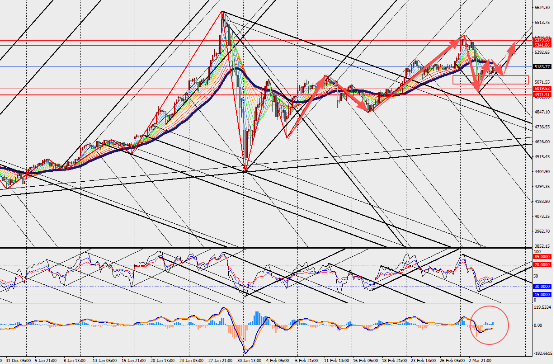
On the four-hour chart, gold is attempting a rebound within a volatile range, with MACD lines and histogram expanding below the zero axis. Investors should closely monitor upcoming nonfarm payroll data for signs that U.S. Treasury yields may rise further. If real rates remain firm, downside pressure on gold could extend toward the 5,100 level.
Until large institutional liquidation subsides, any premature dip-buying could fall into another liquidity trap.