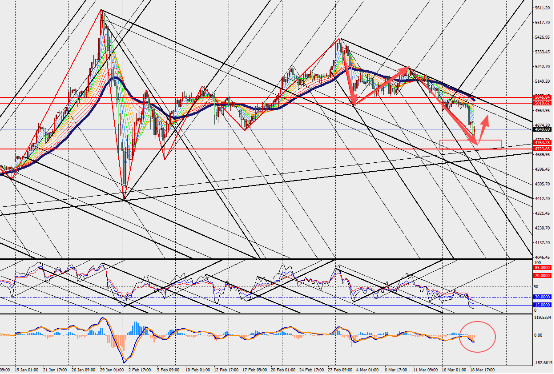
Gold Plunges Nearly 4% as Middle East Conflict Escalates and Fed Turns Hawkish, Losing Safe-Haven Appeal
Spot gold experienced intense volatility, at one point nearing the $4,800 mark. On one hand, the rapid escalation of geopolitical conflict in the Middle East—particularly the attack on Iran’s massive South Pars gas field and the subsequent chain of retaliations—kept oil prices above $100, heightening inflation concerns and dampening expectations for Fed rate cuts. On the other hand, the Federal Reserve held interest rates steady at 3.50%–3.75% and signaled persistent inflation and a cautious approach to easing, driving a surge in the U.S. dollar and jointly pressuring gold prices.

At its latest meeting, the Fed maintained its policy rate as expected, while the dot plot indicated that policymakers foresee only one rate cut in 2026, unchanged from the December projection. More importantly, Chair Powell acknowledged during the press conference that uncertainty stemming from the Iran conflict makes the policy path highly unclear, with economic impacts potentially ranging from minimal to significant—no one truly knows.
Markets interpreted this as a clearly hawkish signal. Expectations for rate cuts have been significantly pushed back, with interest rate futures now pricing the first cut as late as April 2027. A stronger dollar raises the cost of gold for non-dollar investors, while higher yields increase the opportunity cost of holding non-yielding assets like gold, prompting investors to shift toward income-generating assets.
In theory, such intense geopolitical risk should strongly drive safe-haven flows into gold, pushing prices higher. However, the reality has been the opposite. Gold briefly surged at the onset of the conflict but quickly reversed. The reason lies in the nature of the oil price spike—it has not merely triggered safe-haven demand but has also fueled strong inflation expectations. Rising energy costs are feeding into the Producer Price Index (PPI), with U.S. February PPI already exceeding expectations, and the war further amplifying this pressure.
Investors are increasingly concerned that if inflation spirals out of control, the Fed may be forced to maintain high rates or even consider further hikes. This scenario is particularly damaging for non-yielding assets like gold. As a result, the safe-haven premium from geopolitical tensions has been rapidly offset by inflation-driven monetary tightening concerns, causing gold to behave more like a risk asset than a traditional hedge.
Market Interpretation:
This decline in gold does not indicate a failure of its safe-haven function, but rather reflects the market’s balancing act between war-driven inflation and monetary policy constraints. In the short term, the dual pressure of high interest rates and a strong dollar is likely to dominate price action. However, the persistent uncertainty surrounding the Iran conflict remains a latent catalyst. Should external conditions shift, gold could stage a sharp rebound. Investors should remain cautious and seek long-term allocation opportunities amid volatility.