

Crypto Overview: Bitcoin tops $80,000 as Hormuz risks ebb – Privacy coins rally
- Bitcoin hits $80,000 on Monday after five consecutive weekly inflows.
- Market pressure eases as the US could guide Oil tankers through the Strait of Hormuz.
- Privacy coins, including Dash and Zcash, have led gains over the last 24 hours.
The broader cryptocurrency market is gaining strength, with Bitcoin trading above $80,000 at press time on Monday. US President Donald Trump said the US Navy could provide safe passage for oil tankers, alleviating the risk linked to the Strait of Hormuz blockade. Meanwhile, privacy coins Dash (DASH) and Zcash (ZEC) are leading gains over the last 24 hours, emerging as top performers.

Trump eases institutional and retail sentiment
Donald Trump said in a social media post on Monday that the US could guide ships of neutral countries out of the restricted Strait of Hormuz waterways. Trump did not mention the exact plan to guide these tankers, but the US Central Command said on Sunday to would provide military support in attempts to restore passage through Hormuz.
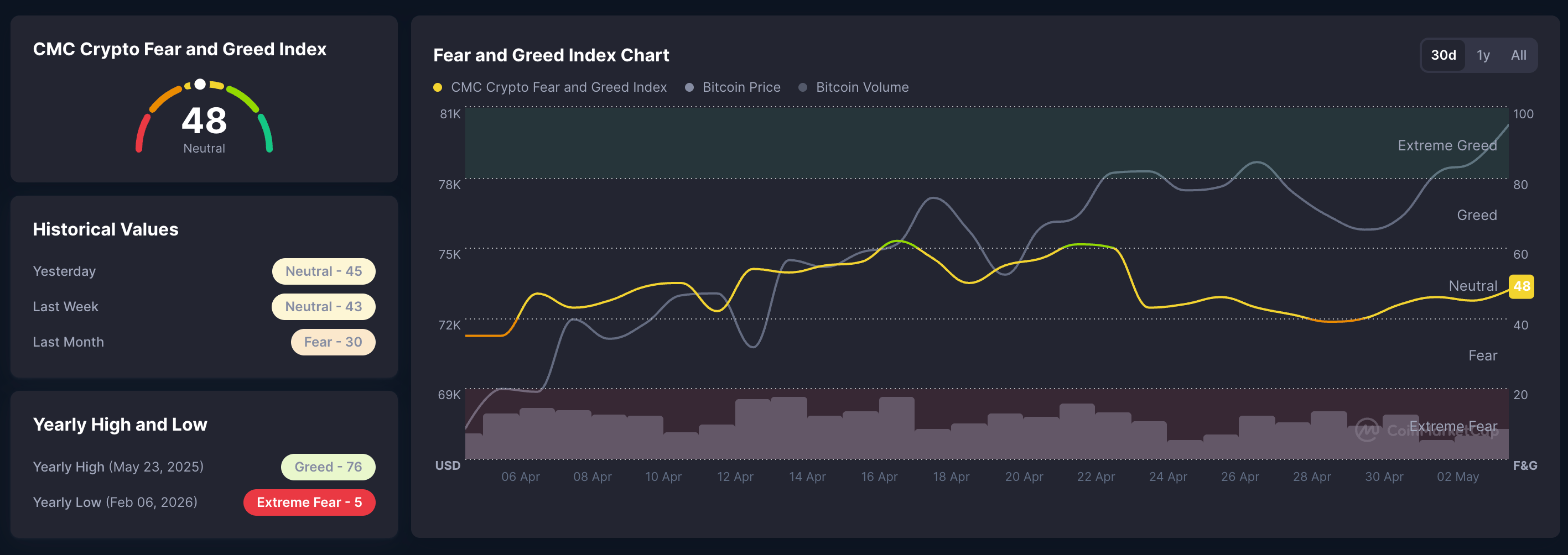
Bitcoin extends gains above $80,000 at the time of writing on Monday as broader market risk-off sentiment wanes. CoinMarketCap’s Crypto Fear and Greed Index rises to 48 in neutral territory, signaling reduced fear among investors.
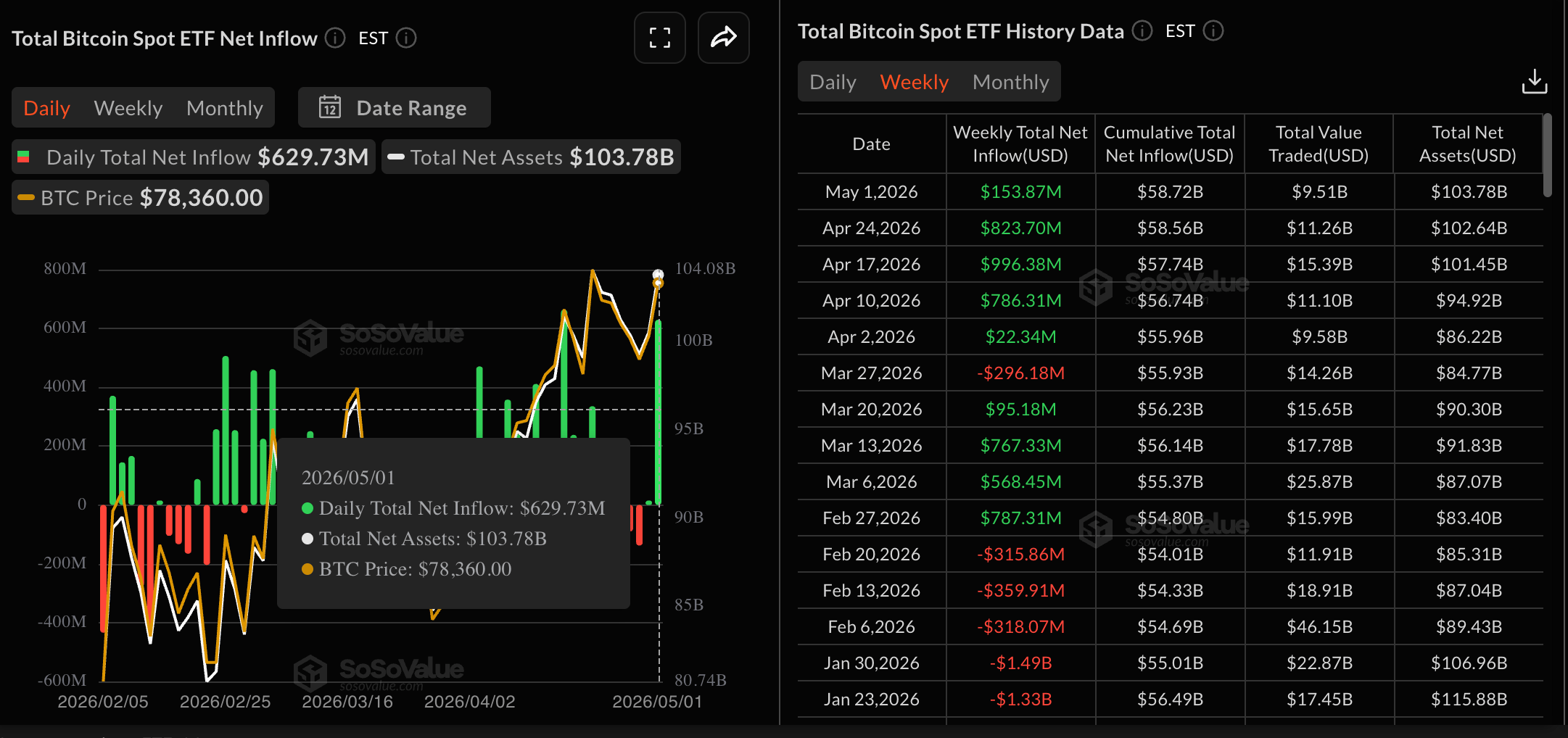
On the other hand, institutional demand for Bitcoin is holding steady, with spot Exchange Traded Funds (ETFs) recording $629.73 million in inflows on Friday, marking its fifth straight week of inflows. Sustained ETF inflows could fuel Bitcoin's recovery above $80,000.
How high could Bitcoin go?
Bitcoin is holding a clear bullish bias as the price extends above the 50-day Exponential Moving Average (EMA) at $74,451. The pair is now approaching an overhead resistance trendline near $81,000, close to the 200-day EMA near $83,161, which emerges as the next key topside barrier.
The positive Moving Average Convergence Divergence (MACD) crosses above its signal line while the Relative Strength Index (RSI) at 65 reinforces the idea of firm upward momentum rather than immediate overbought stress.
On the downside, immediate support is seen at the 50-day EMA around $74,451, with the prior trendline break region near $69,020 offering a deeper structural floor should a corrective pullback unfold.
Will privacy coins outperform the crypto market?
Dash extends gains above $40 at press time on Monday, extending a bullish near-term bias after breaking decisively above the 50-day and 200-day EMAs at $36.32 and $38.85, respectively. The privacy coin trades above a long-term descending trendline, around $40.44, and requires a daily close to confirm the breakout.
The RSI at 69 is pushing toward overbought territory, hinting that upside momentum is strong but stretched. At the same time, the MACD rises after a crossover above the signal line on Saturday, indicating renewed bullish momentum.
A potential breakout of the trendline could face resistance at the R1 and R2 Pivot Points at $45.77 and $56.16, respectively.
On the downside, initial support is seen near the long-term downtrend line around $40.44, followed by the 200-day EMA at $38.85 and the 50-day EMA at $36.32, which together define a broad demand area on pullbacks.
In the case of Zcash, the privacy coin trades above $400 on Monday, maintaining a clear bullish bias as price holds well above the 50-day EMA near $319.95 and the 200-day EMA around $280.10, keeping the broader uptrend intact. The upward-sloping support trendline, currently coming in around the $328.60 break area, reinforces this constructive structure.
At the same time, the elevated RSI near 72 suggests strong but stretched upside momentum, while the MACD histogram remains positive as the average lines extend higher, hinting that buyers still retain control despite the overbought conditions.
The recovery run in Zcash could face overhead resistance near the $500 psychological level, followed by the December 29 high at $560.
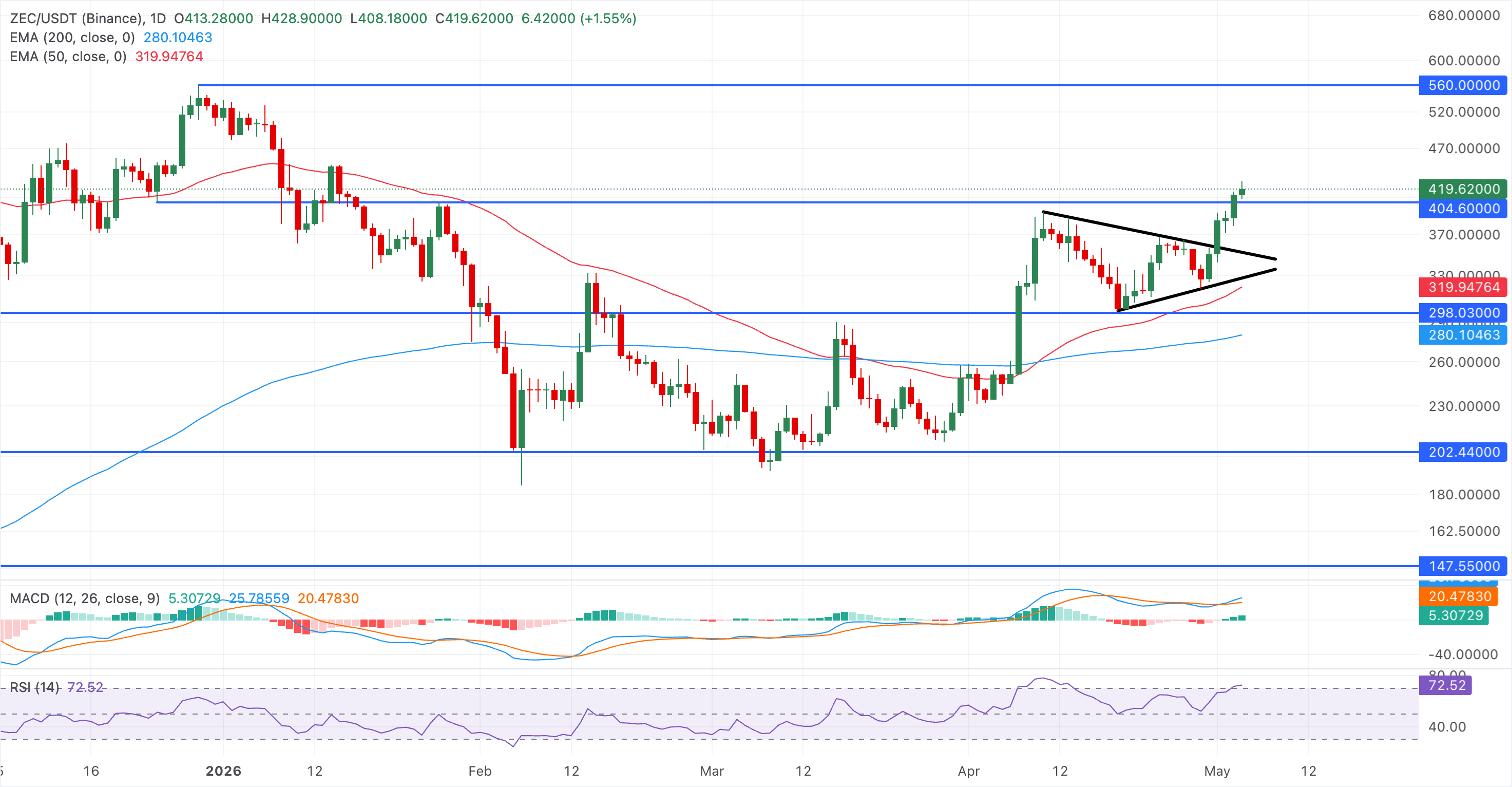
On the downside, initial support is seen at the rising trendline region around $328.60, where prior reactions clustered, followed by the 50-day EMA near $319.95, which should act as a secondary demand zone on deeper pullbacks.
(The technical analysis of this story was written with the help of an AI tool.)














