

Trading
Explorez une large gamme de marchés avec des prix compétitifs, une liquidité profonde et des outils de trading avancés.
En savoir plus 
Plateforme
Tradez en toute fluidité avec la plateforme puissante de TMGM, conçue pour la vitesse, la précision et une expérience de trading supérieure.
En savoir plus Plateforme de trading
Outils de trading
Académie
Apprenez les fondamentaux du trading avec des ressources adaptées aux débutants, incluant des guides, des webinaires et des analyses de marché.
En savoir plus Actualités et analyses
Obtenez des mises à jour de marché en temps réel et des analyses d'experts pour anticiper les opportunités de trading
En savoir plus Actualités et analyses
À propos
Découvrez ce qui distingue TMGM — notre présence mondiale, notre solidité réglementaire et notre engagement envers l'innovation dans le trading.
En savoir plus Pourquoi choisir TMGM
EURUSD
+1.21%
1 D change
1.14766

GBPUSD
+0.83%
1 D change
1.33800
USDJPY
+10.18%
1 D change
157.26100
AUDUSD
+12.1%
1 D change
0.71274
US30
+0.51%
1 D change
51997.00000
NAS100
+0.77%
1 D change
29894.00000
BTCUSD
+1.61%
1 D change
81725.00000
XTIUSD
+57.31%
1 D change
98.82000
XAUUSD
+112.43%
1 D change
4344.72000
XAGUSD
+184.23%
1 D change
65.95800
EURUSD
+1.21%
1 D change
1.14766
GBPUSD
+0.83%
1 D change
1.33800
USDJPY
+10.18%
1 D change
157.26100
AUDUSD
+12.1%
1 D change
0.71274
US30
+0.51%
1 D change
51997.00000
NAS100
+0.77%
1 D change
29894.00000
BTCUSD
+1.61%
1 D change
81725.00000
XTIUSD
+57.31%
1 D change
98.82000
XAUUSD
+112.43%
1 D change
4344.72000
XAGUSD
+184.23%
1 D change
65.95800
EURNOK
Trader maintenant
Qu’est-ce que l’EURNOK ?
L’EURNOK exprime la valeur d’un euro en couronnes norvégiennes. EUR est le code devise de l’euro, la monnaie commune des 20 États membres de la zone euro, et NOK est la couronne norvégienne.
- Classification : Paire de forex exotique (devise majeure de la zone euro contre devise scandinave liée aux matières premières).
- Volume quotidien BIS : 31 milliards de dollars en avril 2025, représentant 0,3 % du volume mondial du marché des changes.
- Distinction structurelle : Le secteur pétrolier norvégien relie la couronne aux prix mondiaux du pétrole, faisant de l’EURNOK un proxy de la politique monétaire européenne face aux fondamentaux scandinaves tirés par les matières premières.
La paire se situe à l’intersection de la politique de taux de la BCE et du cadre monétaire sensible au pétrole de la Norges Bank.
Quels facteurs influencent le prix de l’EURNOK ?
Sept facteurs influencent le taux de change EURNOK, les prix du pétrole brut étant la force dominante sur la composante NOK.
- Prix du pétrole : La Norvège est le plus grand exportateur de pétrole d’Europe occidentale, le pétrole et le gaz représentant environ 57 % des exportations de biens. La hausse des prix du pétrole renforce la couronne et fait baisser l’EURNOK ; la baisse des prix du pétrole affaiblit la couronne et fait monter l’EURNOK.
- Décisions de taux d’intérêt de la Norges Bank : Le taux directeur s’établit à 4,00 %, et la banque centrale a indiqué qu’une hausse à 4,25–4,50 % est à l’étude. Les hausses de taux renforcent la couronne face à l’euro.
- Politique monétaire de la BCE : Le taux de la facilité de dépôt de la BCE est de 2,00 %. Tout écart par rapport au statu quo actuel (en particulier une hausse en réponse à une inflation tirée par l’énergie) revalorise directement la composante euro.
- Données économiques de la zone euro : La croissance du PIB, les chiffres de l’inflation et les données sur l’emploi façonnent les anticipations de taux de la BCE et déterminent la force relative de l’euro.
- Données économiques norvégiennes : Le PIB continental, la croissance des salaires et les chiffres de l’IPC influencent directement la trajectoire des taux de la Norges Bank. Une inflation supérieure à l’objectif a maintenu les taux norvégiens à des niveaux élevés.
- Sentiment de risque mondial : La couronne s’affaiblit lors des épisodes d’aversion au risque malgré la solide position budgétaire de la Norvège, car les flux de portefeuille quittent les petites devises scandinaves au profit des valeurs refuges que sont l’USD et le CHF.
- Force du dollar américain comme facteur externe : L’euro comme la couronne sont cotés face au dollar sur les marchés mondiaux. Une force généralisée de l’USD pèse sur les deux composantes, mais la liquidité plus profonde de l’euro absorbe l’impact de manière plus homogène que la couronne.
Comment le taux de change EURNOK est-il calculé ?
Le prix de l’EURNOK est calculé en cotant la valeur d’un euro (EUR) en couronnes norvégiennes (NOK). Si la paire se négocie à 11,25, un euro coûte 11,25 couronnes norvégiennes. La paire évolue lorsque l’un ou l’autre côté de l’équation change : une hausse de la demande pour l’euro fait monter le prix, tandis qu’un renforcement de la couronne (soutenu par les prix du pétrole ou un resserrement de la Norges Bank) le fait baisser.
Comment fonctionne le trading de l’EURNOK ?
Le trading de l’EURNOK consiste à ouvrir une position à effet de levier sur le taux de change euro–couronne sans détenir l’une ou l’autre devise sur un compte bancaire étranger.
- Achat (long) : Vous achetez des euros en vendant des couronnes norvégiennes, en réalisant un profit si l’euro se renforce face à la couronne.
- Vente (short) : Vous vendez des euros en achetant des couronnes norvégiennes, en réalisant un profit si la couronne se renforce face à l’euro.
Quel est l’avantage clé spécifique au trading de l’EURNOK ?
L’avantage déterminant de l’EURNOK est la prime de taux de la Norges Bank combinée à une exposition directe au prix du pétrole.
- Carry positif sur les positions short : L’écart de 200 points de base entre la Norges Bank (4,00 %) et la BCE (2,00 %) génère un swap positif pour les traders qui conservent des positions short EURNOK pendant la nuit, transformant l’écart de taux en flux de revenus quotidien.
- Composante couronne liée au pétrole : Le côté NOK de la paire réagit aux prix du pétrole brut avec une sensibilité plus forte que toute autre devise européenne, offrant aux traders une exposition aux matières premières via un instrument forex.
- Liquidité profonde pour une paire exotique : 31 milliards de dollars de volume quotidien (BIS 2025) permettent des spreads plus serrés et une exécution des ordres plus fiable que la plupart des croisements exotiques.
Quel est le risque clé spécifique au trading de l’EURNOK ?
Le principal risque sur l’EURNOK est une divergence bilatérale des politiques monétaires, où les deux banques centrales évoluent simultanément dans des directions inattendues.
- Virage hawkish de la Norges Bank : La décision de taux de mars 2026 a abandonné le calendrier d’assouplissement précédent et signalé une possible hausse, démontrant que la trajectoire des taux peut changer brutalement en réponse aux données d’inflation et à la dynamique budgétaire liée au pétrole.
- Incertitude sur la politique de la BCE : L’inflation tirée par l’énergie en raison du conflit au Moyen-Orient a accru la probabilité d’une hausse des taux de la BCE, ce qui réduirait l’écart de taux et éroderait l’avantage de carry sur les positions short.
- Volatilité des prix du pétrole : Une forte baisse des prix du pétrole brut affaiblit rapidement la couronne, créant des mouvements disproportionnés sur l’EURNOK qui dépassent la fourchette quotidienne normale de la paire.
- Illiquidité de la couronne lors des épisodes d’aversion au risque : Malgré le fonds souverain norvégien et une position budgétaire notée AAA, la couronne se comporte comme une devise sensible au risque lors des ventes massives mondiales, élargissant les spreads et amplifiant les drawdowns.
Ne pas risquer plus de 1 % des capitaux propres du compte par transaction limite l’impact de tout mouvement défavorable isolé.
Quel est le meilleur moment pour trader l’EURNOK ?
La meilleure fenêtre pour trader l’EURNOK est de 07:00 à 15:00 UTC, lorsque la session européenne chevauche les desks de trading d’Oslo et de Francfort.
La liquidité atteint son pic pendant cette fenêtre, car les marchés interbancaires de la zone euro et de la Norvège sont actifs simultanément. Les décisions de taux de la Norges Bank (publiées à 09:00 UTC) et les annonces de la BCE (publiées à 13:15 UTC) tombent dans cette session et produisent les mouvements intrajournaliers les plus marqués. Les réactions des prix du pétrole aux données sur les stocks de l’EIA (publiées à 14:30 UTC le mercredi) se répercutent sur la couronne pendant cette même fenêtre. La liquidité s’amenuise considérablement après 16:00 UTC et reste faible pendant la session asiatique, lorsque des spreads plus larges et une qualité d’exécution inférieure réduisent l’efficacité de l’exécution.
Une liquidité plus élevée pendant la session européenne produit des spreads plus serrés et un slippage plus faible.
Quelles sont les stratégies de trading sur l’EURNOK ?
Les stratégies de trading sur l’EURNOK incluent le suivi des flux NBIM, le retour à la moyenne via le RSI et le positionnement pétrole-macro.
Suivi des flux NBIM
- Mécanique : Norges Bank Investment Management (NBIM) effectue quotidiennement des achats et des ventes de NOK pour le compte du Government Pension Fund Global, et publie chaque mois ses volumes quotidiens prévus de transactions de change.
- Signal d’entrée : Une augmentation programmée des achats de NOK renforce la couronne ; une baisse des achats l’affaiblit. Aligner des entrées short ou long sur EURNOK avec le calendrier NBIM publié offre un avantage structurel indépendant des indicateurs techniques.
Retour à la moyenne via le RSI
- Mécanique : L’EURNOK a tendance à revenir vers sa moyenne après des mouvements prolongés, en particulier lorsque le RSI sur 14 périodes franchit 70 (suracheté) ou 30 (survendu) sur l’unité de temps 4 heures ou journalière.
- Signal d’entrée : Vendez l’EURNOK lorsque le RSI repasse sous 70 depuis la zone de surachat ; achetez lorsqu’il repasse au-dessus de 30 depuis la zone de survente. Confirmez avec une figure de retournement en chandeliers avant l’entrée.
Positionnement pétrole-macro
- Mécanique : Suivez le Brent en parallèle de l’EURNOK sur une configuration à double graphique. Les mouvements soutenus des prix du pétrole précèdent les mouvements correspondants de la composante couronne.
- Signal d’entrée : Une cassure durable au-dessus d’une résistance sur le Brent soutient une position short EURNOK ; une cassure sous un support soutient une position long. Utilisez un stop suiveur pour capter la tendance à mesure que le pétrole et l’EURNOK se recorrèlent.
Comment commencer à trader l’EURNOK ?
Ouvrez le graphique EURNOK en direct sur cette page et utilisez le bouton Trader maintenant pour placer votre première position. Cinq étapes complètent le processus :
- Ouvrez et vérifiez votre compte de trading TMGM.
- Déposez des fonds et confirmez votre marge disponible.
- Analysez le graphique EURNOK pour identifier votre point d’entrée et votre direction.
- Définissez la taille de votre position, votre stop-loss et vos niveaux de take-profit.
- Cliquez sur acheter si vous anticipez un renforcement de l’euro face à la couronne, ou sur vendre si vous anticipez un renforcement de la couronne.
TMGM cote un prix bid et un prix ask pour l’EURNOK. L’écart entre les deux correspond au spread, qui est appliqué à votre position à l’entrée. Surveillez votre transaction ouverte par rapport au graphique en direct et ajustez votre stop-loss à mesure que le prix évolue.
De combien d’argent ai-je besoin pour trader l’EURNOK ?
Le dépôt minimum pour commencer à trader l’EURNOK sur TMGM est de 100 $.
- Plafond d’effet de levier : 1:100 (un dixième de l’effet de levier du compte).
- Formule de marge : Valeur de la position divisée par le ratio de levier.
- Exemple pratique : Si l’EURNOK se négocie à 11,25 et que vous ouvrez une position de 0,01 lot (1 000 EUR), la valeur de la position est de 11 250 NOK et la marge requise est de 112,50 NOK (environ 10 $ aux taux USDNOK actuels) avec un effet de levier de 1:100.
- Coût du spread : L’EURNOK présente un spread plus large que les paires majeures. Tenez-en compte dans votre coût d’entrée et le dimensionnement de votre position.
- Marge libre de sécurité : Maintenez une marge libre suffisante au-dessus de l’exigence minimale afin d’absorber la volatilité intrajournalière sans déclencher un appel de marge.
Ne pas risquer plus de 1 % des capitaux propres du compte par transaction protège votre capital contre les mouvements disproportionnés de la paire.
Prenez une position longue ou short sur l’EURNOK avec TMGM.
Ouvrir un compte de trading forexOu essayez notre compte démo gratuit (aucun dépôt requis).
TMGM est agréé par l’ASIC, la VFSC, la FSA et la FSC, et utilise des comptes de dépôt clients ségrégués pour sécuriser les fonds des clients.
Lié à Actualités & analyses de marché

Euro remains capped below 1.1500 amid growing political uncertainty in Germany
The Euro (EUR) consolidates losses against the US Dollar (USD) on Monday, as market concerns about the sharp defeat of German Chancellor Friedrich Merz’s ruling party in state elections in northeastern Germany have offset the positive impact of lower Oil prices.
Lire la suite
21 Sep 2026
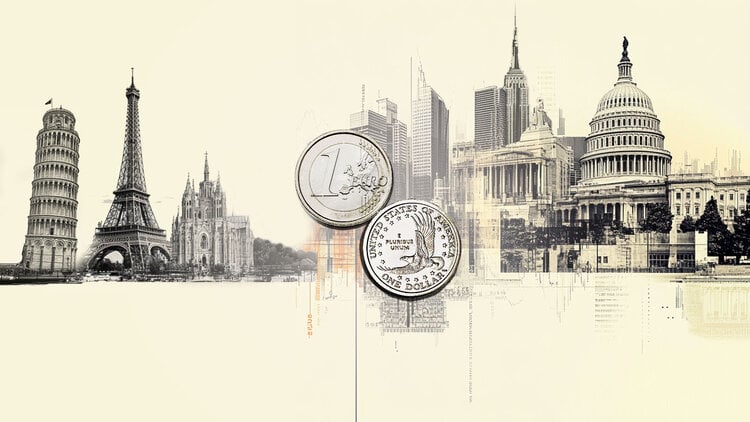
Euro: Holds below 1.15 against US Dollar as yields rise - Danske Bank
Danske Research Team notes that EUR/USD consolidated below 1.15 on Friday as European yields moved higher, with Bund yields rising amid increased French sovereign risk.
Lire la suite
21 Sep 2026
Euro flatlines against the British Pound weighed down by German political uncertainty
The Euro (EUR) trades practically flat, just above 0.8570 against the British Pound (GBP) on Monday, holding losses after Friday’s reversal from the 0.8600 area.
Lire la suite
21 Sep 2026
Apprendre à trader
Qu'est-ce que le trading Forex et comment fonctionne-t-il ?
Le trading Forex, ou trading des changes (FX), est le marché mondial ouvert 24 heures sur 24 pour l’échange d’une devise contre une autre, avec un volume moyen quotidien d’environ 9,6 billions de dollars américains.
Les traders achètent et vendent des paires de devises telles que EUR/USD et USD/JPY pour spéculer sur les variations des taux de change ou couvrir le risque de change, en utilisant des concepts clés tels que les pips, les spreads, l’effet de levier et la marge.
Lire la suite
22 Jul 2026
Comment Commencer le Trading Forex pour Débutants : Un Guide Étape par Étape
Comprendre le trading forex pour les débutants ouvre des opportunités sur le plus grand marché financier mondial. Avec plus de 6 000 milliards de dollars de volume d’échanges quotidien, le marché des changes offre une liquidité et une accessibilité inégalées, vous permettant de trader des paires de devises majeures, mineures et exotiques 24 heures sur 24, cinq jours par semaine. Ce guide complet couvre tout ce que vous devez savoir sur le trading forex, des fondamentaux aux stratégies pour commencer votre parcours de trading forex.
Lire la suite
10 Sep 2026
Lié à Actualités & analyses de marché
Euro remains capped below 1.1500 amid growing political uncertainty in Germany
The Euro (EUR) consolidates losses against the US Dollar (USD) on Monday, as market concerns about the sharp defeat of German Chancellor Friedrich Merz’s ruling party in state elections in northeastern Germany have offset the positive impact of lower Oil prices.
Lire la suite
21 Sep 2026
Euro: Holds below 1.15 against US Dollar as yields rise - Danske Bank
Danske Research Team notes that EUR/USD consolidated below 1.15 on Friday as European yields moved higher, with Bund yields rising amid increased French sovereign risk.
Lire la suite
21 Sep 2026
Euro flatlines against the British Pound weighed down by German political uncertainty
The Euro (EUR) trades practically flat, just above 0.8570 against the British Pound (GBP) on Monday, holding losses after Friday’s reversal from the 0.8600 area.
Lire la suite
21 Sep 2026
Plus
Apprendre à trader
Qu'est-ce que le trading Forex et comment fonctionne-t-il ?
Le trading Forex, ou trading des changes (FX), est le marché mondial ouvert 24 heures sur 24 pour l’échange d’une devise contre une autre, avec un volume moyen quotidien d’environ 9,6 billions de dollars américains.
Les traders achètent et vendent des paires de devises telles que EUR/USD et USD/JPY pour spéculer sur les variations des taux de change ou couvrir le risque de change, en utilisant des concepts clés tels que les pips, les spreads, l’effet de levier et la marge.
Lire la suite
22 Jul 2026
Comment Commencer le Trading Forex pour Débutants : Un Guide Étape par Étape
Comprendre le trading forex pour les débutants ouvre des opportunités sur le plus grand marché financier mondial. Avec plus de 6 000 milliards de dollars de volume d’échanges quotidien, le marché des changes offre une liquidité et une accessibilité inégalées, vous permettant de trader des paires de devises majeures, mineures et exotiques 24 heures sur 24, cinq jours par semaine. Ce guide complet couvre tout ce que vous devez savoir sur le trading forex, des fondamentaux aux stratégies pour commencer votre parcours de trading forex.
Lire la suite
10 Sep 2026
Plus

Ouvrir un compte
FAQ sur l’EUR/NOK
Quel type de paire de devises est l’EURNOK ?
+
Comment l’évolution du prix du pétrole affecte-t-elle l’EURNOK ?
+
Quel rôle le fonds souverain de la Norvège joue-t-il dans la cotation de l’EURNOK ?
+
L’EURNOK est-il adapté aux débutants ?
+
Qu’est-ce qu’1 pip sur l’EURNOK ?
+
Récompenses & Reconnaissance
Courtier Forex
le plus fiable
2024
le plus fiable
2024

Décerné par Wiki Finance Expo, Bangkok
Meilleure plateforme
de trading Forex
2024
de trading Forex
2024
Décerné par IFINEXPO, Hong Kong
Prix SkyLine
Guide 2024
Guide 2024
Décerné par WikiFX SkyLine Guide
Sponsoring sportif
le plus innovant
le plus innovant
Décerné par Forex Sports Awards
Commencez !
Inscrivez-vous et accédez aux Marchés Mondiaux en moins de 3 minutes

Connectez-vous avec Nous









Contacts
Téléphone: +61 2 8036 8388
Fax: +61 2 8036 8388
Email: support@tmgm.com
Web: https://www.tmgm.com



Les informations fournies sur ce site web sont de nature générale uniquement et ne constituent pas un conseil financier personnalisé. Avant d’agir sur la base de toute information figurant sur ce site web, vous devez évaluer la pertinence de ces informations au regard de vos objectifs, de votre situation financière et de vos besoins. Investir dans les CFD et les contrats de marge sur le Forex comporte des risques importants et ne convient pas à tous les investisseurs. Vous pouvez perdre plus que votre dépôt initial. Vous ne détenez pas, et n’avez, aucun droit de propriété ou intérêt sur l’actif sous-jacent. Nous vous recommandons de solliciter un avis indépendant et de vous assurer que vous comprenez pleinement les risques encourus avant de trader. Il est important que vous lisiez et preniez en considération le document d’information avant d’acquérir tout produit présenté sur le site web. Les informations et publicités proposées sur ce site web ne sont pas destinées à être utilisées par toute personne dans tout pays ou toute juridiction où une telle utilisation serait contraire aux lois et réglementations locales. Les Produits et Services proposés sur ce site web ne sont pas destinés aux résidents des États-Unis, de la Malaisie et de la Thaïlande.
TMGM est autorisé et réglementé dans diverses juridictions.
Trademax Australia Limited, opérant sous le nom de TMGM, est réglementé par l'Australian Securities and Investments Commission (ASIC), AFSL no. 436416 et est situé au Level 28, One International Tower, 100 Barangaroo Avenue, 2000 Sydney, NSW Australie.
Email: support@tmgm.com.au
Trademax Global Limited, opérant sous le nom de TMGM, est autorisé et réglementé par la Vanuatu Financial Services Commission (VFSC), numéro d'enregistrement 40356 et enregistré au 1276, Kumul Highway, Port Vila, Vanuatu, République de Vanuatu.
Email: support@tmgm.com
Trademax Global Markets (SE) Limited, exerçant sous le nom TMGM, est autorisée et régulée par la Financial Services Authority (FSA) des Seychelles, sous le numéro de licence SD224. La société est enregistrée au bureau n° 13, Providence Estate ABIS Centre, Mahé, Seychelles.
Email: support@tmgm.com
Trademax Global Markets (International) Pty Ltd, opérant sous le nom de TMGM, est autorisé et réglementé par la Financial Services Commission, Maurice (FSC) avec la licence no. GB22201012, et enregistré au 33, Edith Cavell Street C/o IQ EQ Fund Services (Mauritius) Ltd Port Louis, 11324 Maurice.
Email: support@tmgm.com
Copyright © TMGM. Tous droits réservés