[TMGM Financial Breakfast] Gold Rebounds After Sharp Drop as U.S.–Iran Tensions Escalate, Safe-Haven Demand Returns
Oleh Aiko Tanaka
Diperbarui: 14 Apr 2026


ARTIKEL POPULER

Gold prices plunged more than 2% following the collapse of U.S.–Iran peace talks over the weekend, hitting their lowest level since April 7, before rebounding sharply and showing strong resilience.
On Monday, spot gold experienced a dramatic rollercoaster session. The volatility was driven by a combination of escalating geopolitical tensions, renewed inflation expectations, and fluctuating movements in the U.S. dollar. These factors have prompted global investors to reassess gold’s role as a safe-haven asset.
The trigger for the market turmoil was the complete breakdown of U.S.–Iran peace negotiations. U.S. President Donald Trump announced that American forces had initiated a blockade targeting vessels departing Iranian ports. Speaking from the White House and on social media, Trump took a hardline stance, claiming that Iran’s navy had been largely destroyed in previous conflicts and warning that any Iranian vessels approaching the blockade zone would be swiftly eliminated.
Iran responded forcefully, threatening retaliatory strikes on ports in Gulf countries. At the same time, Israel continued military operations against Hezbollah-controlled areas in southern Lebanon, further escalating regional tensions. While NATO allies such as the United Kingdom and France declined to participate in the blockade, emphasizing that involvement would only come after the conflict ends, the strategic importance of the Strait of Hormuz — which handles around 20% of global oil and LNG shipments — has placed markets on edge.
The sharp rise in oil prices has quickly fed into inflation expectations, becoming a central concern for investors. Since the outbreak of the U.S.–Israel conflict with Iran on February 28, crude oil prices have risen by approximately 40%, with rising energy costs directly impacting global consumers. This has raised concerns about stagflation, where slowing economic growth coincides with persistently high inflation.
High oil prices are now a key constraint on Federal Reserve policy. While gold is traditionally viewed as a hedge against inflation, a high-interest-rate environment reduces its attractiveness as a non-yielding asset.
Markets currently estimate the probability of a Fed rate cut by year-end at around 29%, down significantly from 40% a month earlier. Since the conflict began, spot gold prices have fallen more than 10%. However, rate futures have largely ruled out the possibility of further rate hikes this year, providing some support for gold.
From a longer-term perspective, despite the roughly 10% decline since the conflict began, gold has demonstrated notable resilience compared to its historical performance during geopolitical crises. Analysts suggest that if the blockade leads to tighter alignment between spot and futures prices, or if tensions escalate further, gold could see additional upside.
Market Interpretation:
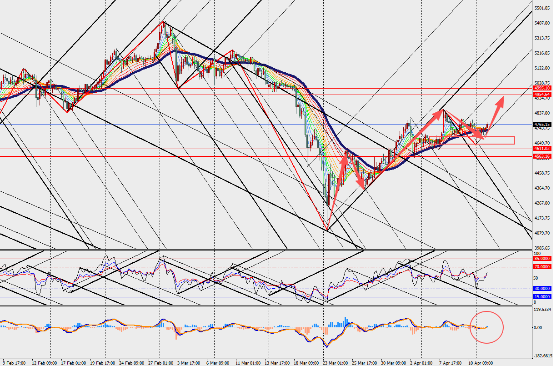
On the four-hour chart, gold is showing a rebound from recent lows, with MACD lines and volume bars expanding below the zero axis. Oil prices will be the key variable in the coming weeks. If the Strait of Hormuz remains closed, sustained inflation pressures could continue to support gold. Conversely, if the U.S. and Iran reach a new agreement through intermediaries such as Pakistan, a pullback in oil prices could temporarily weigh on gold.

Aiko Tanaka is our precious metals specialist with 10 years of experience in commodity markets. She holds a degree in Geology and professional certification in Commodity Market Analysis, covering gold, silver, platinum, and palladium markets with mining industry insights. Alongside her analysis, Aiko has authored thought-leadership pieces on commodities and contributes educational content aimed at new investors in the sector.
Baca Selengkapnya