[TMGM Financial Breakfast] Iran Launches Missile Strike on US Military Base in Kuwait, Sending Gold Down Nearly US$30!
Oleh Aiko Tanaka
Diperbarui: 3 Jun 2026


ARTIKEL POPULER

Spot gold came under pressure and fell nearly US$30 after Iran’s Revolutionary Guard launched a precision missile strike on a US military base in Kuwait in retaliation for US attacks on oil tankers, reigniting tensions in the Middle East.
Tensions in the Middle East suddenly escalated once again as news of Iran’s precision missile strike on a US military base in Kuwait quickly spread across global markets. This retaliatory action not only sharply increased geopolitical risks but also directly pressured international gold prices lower. At the same time, the latest US Job Openings and Labor Turnover Survey (JOLTS) delivered mixed signals from the labor market. A stronger-than-expected increase in job openings provided support for the US dollar, further intensifying volatility in the gold market.
Against the backdrop of geopolitical uncertainty and conflicting macroeconomic signals, market sentiment fluctuated sharply. Oil prices surged significantly, with US crude oil reaching its highest level in a week and a half. Rising inflation expectations followed, creating considerable pressure on non-yielding assets such as gold.
While military tensions intensified, diplomatic negotiations also revealed clear divisions.
Iranian media reported that Tehran is reviewing a ceasefire proposal put forward by the United States but has not communicated with Washington for several days and continues to maintain a relatively hardline position. However, US President Donald Trump directly rejected those reports, insisting that dialogue between the two sides has continued uninterrupted, including communications over the past several days.
Trump stated that an agreement could potentially be reached within the coming week to extend the ceasefire and reopen the Strait of Hormuz. US Secretary of State Marco Rubio also indicated that Iran has agreed to negotiate certain aspects of its nuclear program, while emphasizing that this does not guarantee a final agreement will ultimately be reached. Iran, meanwhile, hopes to ease economic pressures through a limited temporary agreement while maintaining its core position on nuclear issues, and is demanding a complete halt to hostilities across all fronts, including Lebanon.
The gold market is currently caught in an intense battle between geopolitical safe-haven demand and expectations for tighter macroeconomic policy. Although Commerzbank recently lowered its year-end gold price forecast to US$4,800, the bank maintained its longer-term target of US$5,200 by the end of 2027. It also emphasized the structural factors supporting gold prices, including persistent long-term uncertainty, geopolitical risk premiums, and ongoing gold purchases by central banks around the world.
Market Analysis:
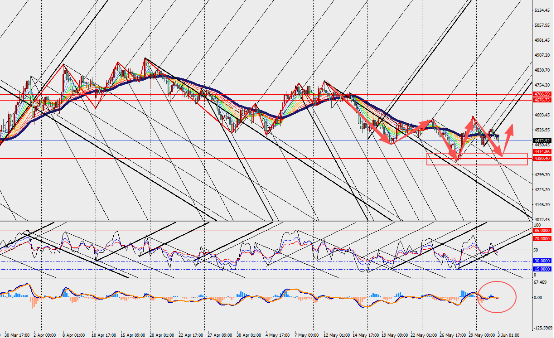
Gold continued to pull back on the 4-hour chart timeframe, while both the MACD lines and histogram expanded near the zero axis. If tensions in the Middle East escalate further or negotiations achieve a meaningful breakthrough, gold prices could experience significant volatility. At the same time, with US economic data remaining resilient and inflation pressures still present, gold is unlikely to resume a strong upward trend unless safe-haven demand decisively outweighs expectations for continued monetary tightening.

Aiko Tanaka is our precious metals specialist with 10 years of experience in commodity markets. She holds a degree in Geology and professional certification in Commodity Market Analysis, covering gold, silver, platinum, and palladium markets with mining industry insights. Alongside her analysis, Aiko has authored thought-leadership pieces on commodities and contributes educational content aimed at new investors in the sector.
Baca Selengkapnya