BoE expected to keep interest rate unchanged as inflation pressures abate
Oleh FXStreet Team
Diperbarui: 18 Jun 2026


ARTIKEL POPULER
The Bank of England (BoE) is on track to leave the benchmark Bank Rate unchanged at 3.75% for the fourth consecutive time on Thursday, as the US-Iran peace deal and the softer-than-expected consumer inflation figures seen earlier in the week have eased pressures to tighten its monetary policy.
- The Bank of England is expected to hold the key interest rate at 3.75% for the fourth straight meeting on Thursday.
- UK inflation steadied in May, and hopes of peace in the Middle East have sent Oil prices tumbling.
- The Pound Sterling might come under pressure if the BoE turns dovish.
The Bank of England (BoE) is on track to leave the benchmark Bank Rate unchanged at 3.75% for the fourth consecutive time on Thursday, as the US-Iran peace deal and the softer-than-expected consumer inflation figures seen earlier in the week have eased pressures to tighten its monetary policy.
UK economy is giving worrying signs of weakening at the outset of the second quarter, and Consumer Prices Index (CPI) figures have shown inflationary pressures remained somewhat contained in May. With Oil prices in decline and a US-Iran peace deal at the table, the BoE seems unlikely to hike interest rates on Thursday and probably not in the rest of the year either.
It will not be a “Super Thursday,” and therefore, Governor Andrew Bailey will not speak after the decision. Markets will look through the minutes of the bank and analyze changes in the vote split to try to assess the bank’s forward path.
What to expect from the Bank of England policy announcements?
Recent UK data and the progress on the US-Iran peace process have significantly changed the scenario for the Bank of England, and although the bank is unlikely to alter its “wait-and-see” stance, these new circumstances might prompt BoE policymakers to adopt a more dovish stance.
Oil prices have dropped sharply from recent highs: Brent Oil is about 30% below the level it was at the previous BoE meeting. The US and Iran have advanced towards a peace deal that might lead to resuming toll-free shipping through the Strait of Hormuz, which would contribute to easing energy prices further.
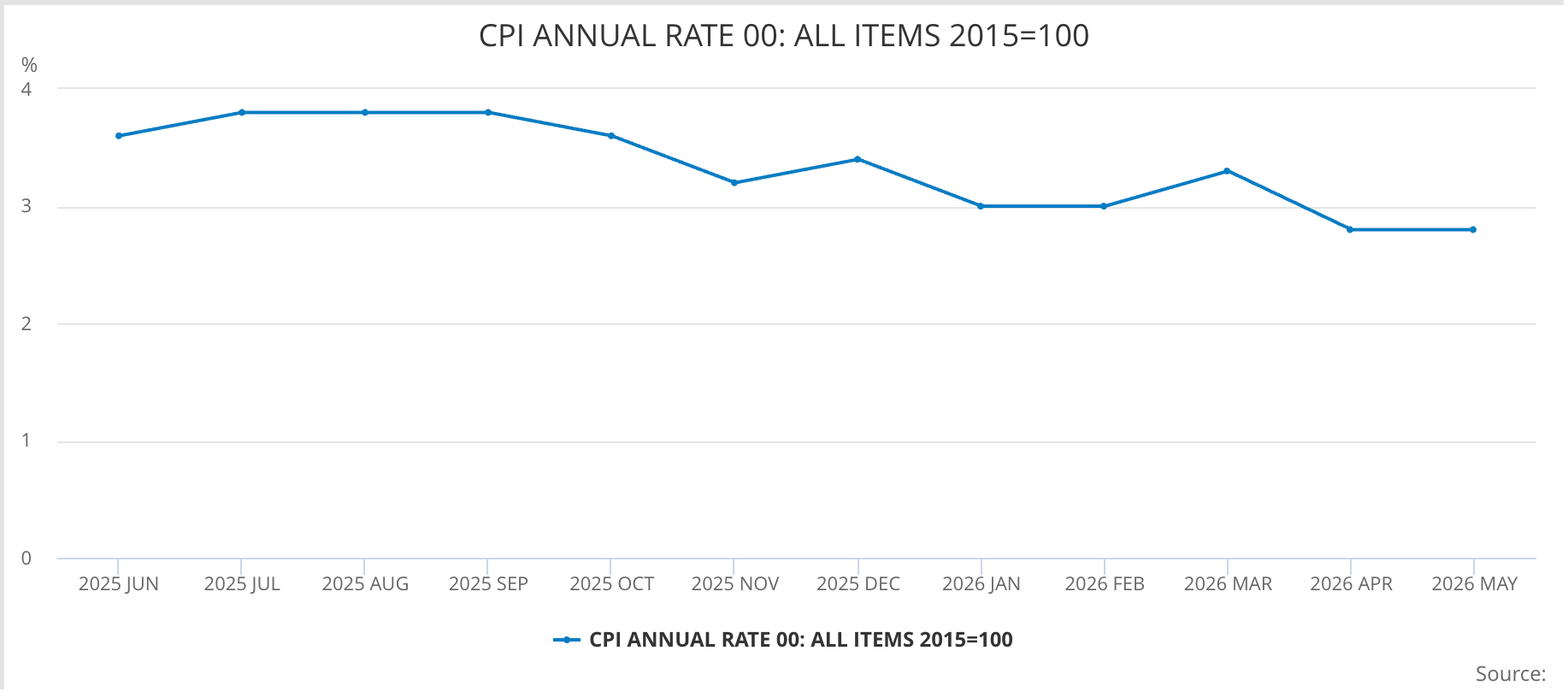
In the UK, Consumer Price Index figures released on Wednesday delivered a positive surprise. Yearly inflation remained steady at 2.8%, significantly below the 3.3% peak reached in March, with monthly inflation easing to 0.2% from 0.7% in the previous month and core inflation growing below expectations. May’s inflation figures are below the Bank of England’s February projections, easing pressure on the bank to hike interest rates in the coming months.
Beyond that, the UK economy is giving signs of exhaustion. Gross Domestic Product (GDP) shrank 0.1% in April, following a 0.3% growth in March and 0.4% in February, and Industrial Production stalled after a 0.2% contraction in the previous month. In this context, the BoE risks tipping the economy into a long-lasting recession by tightening borrowing costs.
The bank voted in April to keep interest rates on hold by 8 votes against 1, with the bank’s Chief Economist, Huw Pill, calling for a rate hike. Investors will be eager to know whether Pill has changed his mind in the new scenario, and, possibly, for any potential voices bringing rate cuts back to the table.
In conclusion, recent developments have cemented market expectations that the BoE will stand pat on Thursday, shifting the focus to the vote split to assess whether the soft inflation and economic growth data have prompted committee members to ditch hopes of interest rate hikes.
Analysts at Deutsche Bank agree that recent developments have provided some leeway for the BoE to maintain its policy unchanged: “The sting from the Iran conflict looks less than markets initially assumed. The peak in CPI could end up well below what we saw last year. This could give the BoE some pause for thought. Indeed, it could buy the MPC more time to assess the risks around so-called second round effects.”
How will the BoE interest rate decision impact GBP/USD?
The British Pound (GBP) has been trading sideways around 1.3400 against the US Dollar (USD) this week, after picking up from two-month lows near 1.3300. Reports of progress in the US-Iran peace talks have supported a moderate Pound recovery, as risk appetite undermined demand for the safe-haven USD.
The pair, however, remains halfway through the monthly trading range, with upside attempts limited below the 1.3500 area.
The risk from the BoE’s monetary policy decision is skewed to the downside, as macroeconomic data has paved the way for the bank to leave interest rates unchanged in the near-term. With this in mind, investors will be looking for hints of a dovish turn, which might increase negative pressure on the Pound.
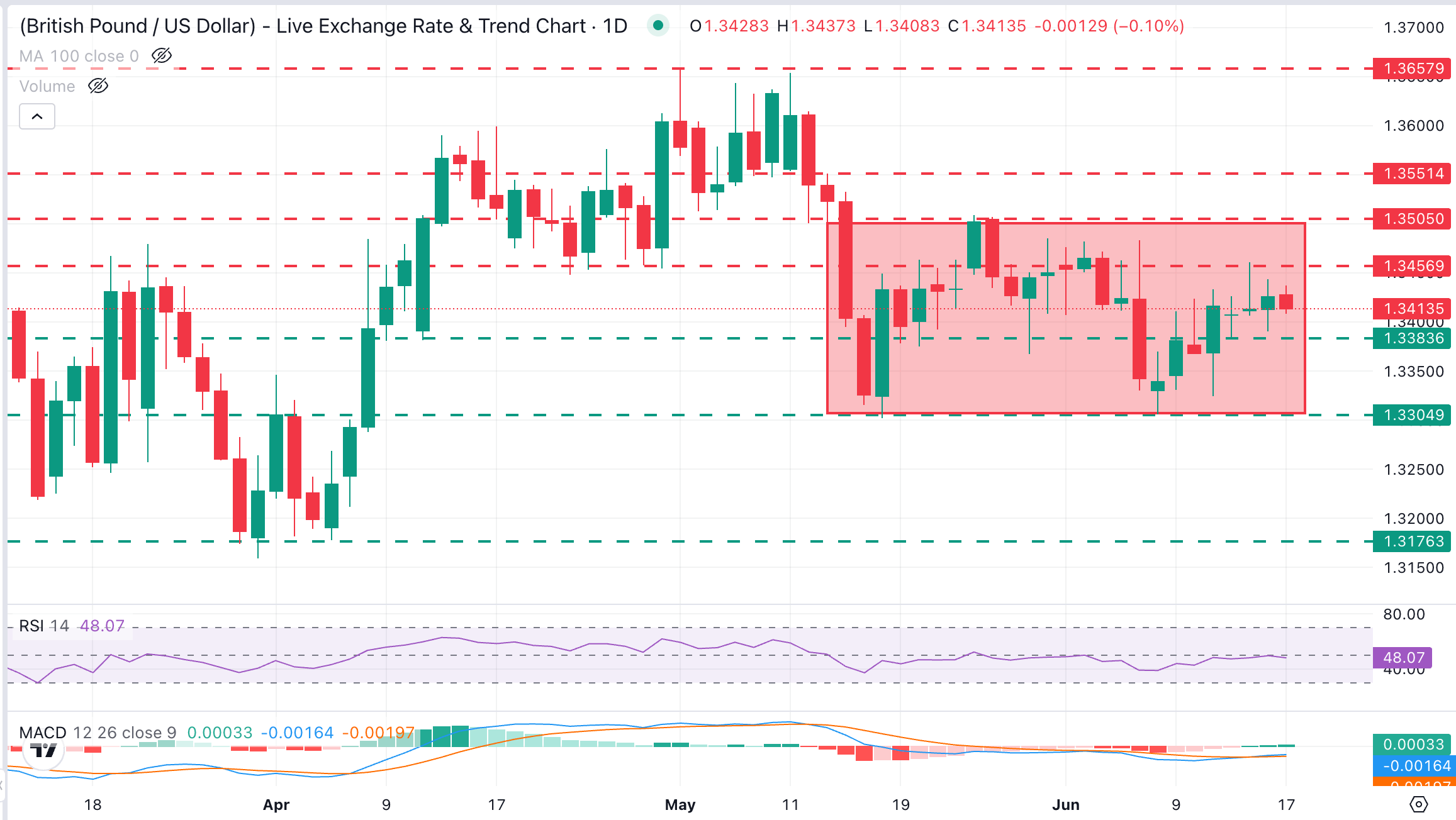
Guillermo Alcalá, FX Analyst at FXStreet, sees the GBP/USD likely to drift lower towards the 1.3300 area if the BoE delivers a “dovish hold”: “The pair lost momentum after the release of the UK CPI data and might extend its reversal if the BoE turns dovish. Immediate support at the 1.3380-1.3390 area might give way, but it might require additional impulse to breach the key 1.3300 area.”
Upside attempts remain limited for now, but Alcalá warns that the confirmation of a peace deal in the Middle East might send the GBP surging: “Pound buyers are lacking incentives right now, but we should not forget that the reaction to the US-Iran deal has been tame so far. If the peace agreement is confirmed and the Strait of Hormuz reopens, risk appetite might boost the Pound to 1.3500 and beyond.”
Interest rates FAQs
Interest rates are charged by financial institutions on loans to borrowers and are paid as interest to savers and depositors. They are influenced by base lending rates, which are set by central banks in response to changes in the economy. Central banks normally have a mandate to ensure price stability, which in most cases means targeting a core inflation rate of around 2%. If inflation falls below target the central bank may cut base lending rates, with a view to stimulating lending and boosting the economy. If inflation rises substantially above 2% it normally results in the central bank raising base lending rates in an attempt to lower inflation.
Higher interest rates generally help strengthen a country’s currency as they make it a more attractive place for global investors to park their money.
Higher interest rates overall weigh on the price of Gold because they increase the opportunity cost of holding Gold instead of investing in an interest-bearing asset or placing cash in the bank. If interest rates are high that usually pushes up the price of the US Dollar (USD), and since Gold is priced in Dollars, this has the effect of lowering the price of Gold.
The Fed funds rate is the overnight rate at which US banks lend to each other. It is the oft-quoted headline rate set by the Federal Reserve at its FOMC meetings. It is set as a range, for example 4.75%-5.00%, though the upper limit (in that case 5.00%) is the quoted figure. Market expectations for future Fed funds rate are tracked by the CME FedWatch tool, which shapes how many financial markets behave in anticipation of future Federal Reserve monetary policy decisions.
Economic Indicator
BoE Interest Rate Decision
The Bank of England (BoE) announces its interest rate decision at the end of its eight scheduled meetings per year. If the BoE is hawkish about the inflationary outlook of the economy and raises interest rates it is usually bullish for the Pound Sterling (GBP). Likewise, if the BoE adopts a dovish view on the UK economy and keeps interest rates unchanged, or cuts them, it is seen as bearish for GBP.
Read more.Next release: Thu Jun 18, 2026 11:00
Frequency: Irregular
Consensus: 3.75%
Previous: 3.75%
Source: Bank of England

Lebih dari satu juta pengguna mengandalkan FXStreet untuk data pasar real-time, alat charting, wawasan ahli, dan berita forex. Kalender ekonomi komprehensif dan webinar edukatif membantu trader tetap mendapat informasi dan membuat keputusan terukur. FXStreet memiliki sekitar 60 profesional yang tersebar antara kantor pusat Barcelona dan berbagai wilayah global.
Baca Selengkapnya