Neither China nor India: This is the country’s central bank that has bought more Gold this year
Oleh Valeria Bednarik
Diperbarui: 9 Jun 2026


ARTIKEL POPULER

Poland’s central bank was the top Gold buyer in April among its peers, consolidating its position as one of the world’s most active sovereigns that accumulate the precious metal.
- The National Bank of Poland continued to add to its Gold reserves in April, becoming the top buyer among central banks so far this year.
- Globally, central banks resumed net purchases in April after recording net sales seen a month earlier.
- Gold prices remain subdued despite continued demand from central banks due to elevated global bond yields.
Poland’s central bank was the top Gold buyer in April among its peers, consolidating its position as one of the world’s most active sovereigns that accumulate the precious metal.
The bank bought 14 tonnes of Gold in the month, bringing the country’s year-to-date purchases to 45 tonnes, according to the most recent data published by the World Gold Council (WGC).
Poland’s central bank Gold purchases so far this year have exceeded those of Uzbekistan and China, the second and third in the ranking, respectively.
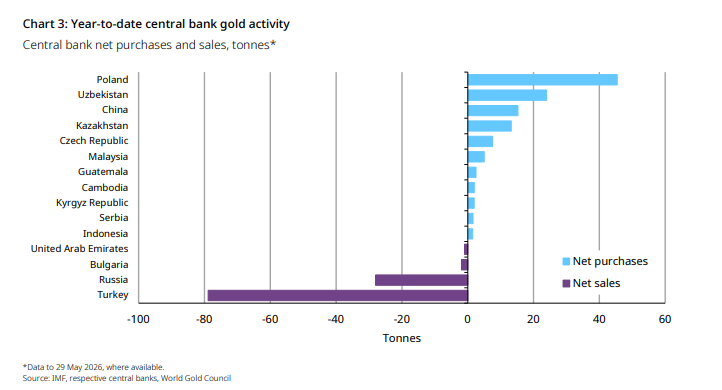
The National Bank of Poland’s Gold holdings are at 595 tonnes, about 30% of its total reserves. The bank has doubled down its bet on the precious metal as a geopolitical hedge due to increased uncertainty.
Data from the WGC shows that global central banks resumed net Gold purchases in April, rebounding from the net sales reported in March. Back then, the immediate economic fallout from the Iran war forced some sovereigns in emerging markets to offload Gold to protect their currencies.
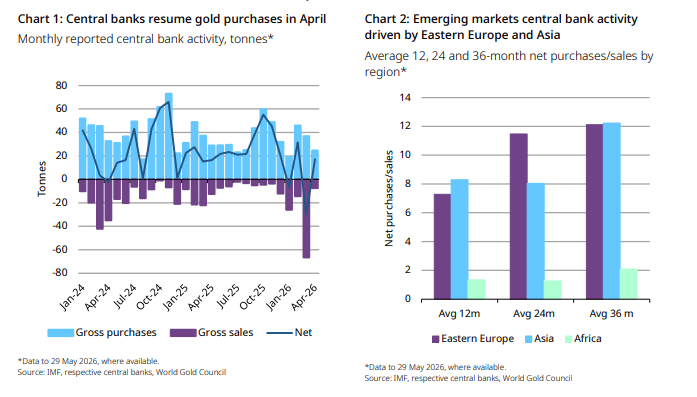
Central bank buying has been a key driver of Gold’s rally, which saw the metal almost double in price in 2025. The pace of purchases jumped significantly in 2022, after Russia’s foreign reserves were immobilized following its invasion of Ukraine.
Gold touched an all-time high of around $5,600 per troy ounce in January but has fallen about 23% since then, trading at around $4,300.
Gold’s most recent correction, which has driven its price below its 200-day Simple Moving Average since October 2023, has been triggered by a surprisingly strong US jobs report for May, which prompted markets to price in upcoming interest-rate hikes by the Federal Reserve. As Gold doesn’t yield interest, investors have fled to other interest-bearing assets such as bonds.

Lebih dari satu juta pengguna mengandalkan FXStreet untuk data pasar real-time, alat charting, wawasan ahli, dan berita forex. Kalender ekonomi komprehensif dan webinar edukatif membantu trader tetap mendapat informasi dan membuat keputusan terukur. FXStreet memiliki sekitar 60 profesional yang tersebar antara kantor pusat Barcelona dan berbagai wilayah global.
Baca Selengkapnya