U.S.–Iran Ceasefire Extended but Tensions Persist, Adding New Variables to Gold Market
President Trump announced an extension of the ceasefire without specifying a timeline, aiming to create space for further negotiations. However, Iran’s Revolutionary Guard stated that Iran did not request the extension and warned it could break the blockade by force. The U.S. continues to block Iranian oil shipments, and the standoff in the Strait of Hormuz remains unresolved. As a result, downside pressure on the U.S. dollar has been limited, while gold’s upside has also been constrained.
Meanwhile, strong U.S. retail sales data has reinforced expectations of economic resilience, prompting economists to revise upward their forecasts for first-quarter growth. This has further reduced bearish momentum in the dollar.

In addition, Kevin Warsh has outlined a comprehensive reform blueprint for the Federal Reserve. His proposals target structural weaknesses in the current system and are likely to significantly reshape the framework for gold trading. Market speculation suggests that he may pursue balance sheet reduction through measures such as reducing bond purchases, allowing assets to mature without reinvestment, and encouraging banks to absorb more Treasury supply.
Warsh also proposed eliminating the Fed’s regular post-meeting press conferences and abandoning forward guidance, arguing that these tools fail to stabilize market expectations and instead constrain policy flexibility. More controversially, he questioned the long-standing reliance on core PCE inflation as the Fed’s primary benchmark, describing it as an imprecise measure of price trends and signaling a willingness to overhaul the central bank’s analytical framework.
While some market participants initially viewed Warsh’s proposals as politically motivated, they increasingly appear to form part of a broader policy mix combining balance sheet reduction with potential rate cuts. The goal would be to lower long-term interest rates and ease the burden of borrowing costs for U.S. households, including mortgages and consumer credit.
For gold, this creates a complex dynamic. Rate cuts are typically supportive for non-yielding assets like gold, but simultaneous balance sheet reduction would withdraw liquidity and potentially raise real interest rates, exerting downward pressure on prices. Meanwhile, uncertainty surrounding the U.S.–Iran situation remains a key driver, with internal divisions in Iran and continued U.S. military buildup adding to the uncertainty.
Market Interpretation:
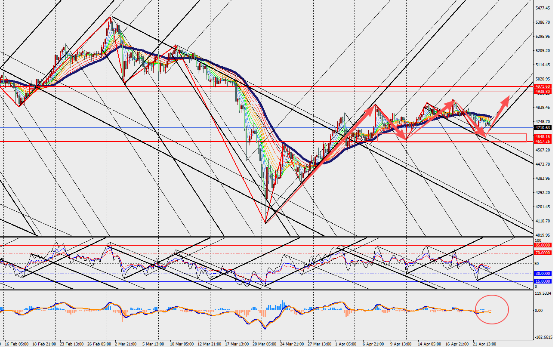
On the four-hour chart, gold is showing a slight pullback, with MACD lines and volume bars expanding near the zero axis. From a broader perspective, geopolitical developments may lead to an unusual dynamic where gold moves inversely to traditional risk expectations, especially as the U.S. seeks favorable outcomes in negotiations ahead of political cycles.
Although Warsh has emphasized the Fed’s independence, the possibility of rate cuts remains, given his acknowledgment of the economic strain caused by high interest rates. In the near term, this provides some support for gold.
Over the longer term, traditional drivers — including the rate-cut narrative, continued central bank gold purchases, and moderating global inflation — are likely to reassert themselves as the dominant forces shaping gold prices.