Gold Stages Dramatic Rebound! Hopes for US-Iran Peace Ignite Markets as Fed Rate Expectations Suddenly Shift — Is Gold’s Next Stop 4,700?
Last Saturday, President Trump announced on social media that the United States and Iran had “basically reached” a memorandum of understanding for peace, which would help reopen the Strait of Hormuz. The news spread rapidly across global markets. Although disagreements remain on key details, the signal that a breakthrough may finally be emerging was enough to significantly boost investor sentiment.
Gold’s decline last week was mainly driven by persistently elevated energy prices. The Iran conflict disrupted shipping through the Strait of Hormuz, causing international oil prices to remain elevated and directly pushing up global inflation expectations. Interest-rate futures at the time showed markets pricing in as much as a 67% probability that the Federal Reserve would raise rates by at least 25 basis points before year-end. Under such conditions, gold’s attractiveness as a non-yielding asset weakened significantly.

Comments from Federal Reserve Governor Christopher Waller further intensified market anxiety. Waller, previously viewed as relatively dovish, suddenly publicly urged the Fed to abandon its accommodative stance and remain open to further rate hikes. He stated bluntly that with inflation not only failing to decline but also spreading from goods into services, continuing to discuss rate cuts was inappropriate. This hawkish shift rapidly pushed markets to price in tighter monetary policy, triggering a noticeable decline in gold prices last Friday.
Since the Middle East conflict erupted in late February, gold prices have fallen approximately 14%. For an extended period, gold has been trapped under the triple pressure of high interest rates, elevated inflation, and weak growth expectations. Investors have continuously weighed safe-haven demand against rising opportunity costs, keeping gold trapped within a relatively narrow trading range.
Monday’s sharp rebound in gold was driven entirely by geopolitical easing expectations. Markets became increasingly optimistic that the United States and Iran were approaching a peace agreement, directly causing oil prices to gap down by more than US$5. This development rapidly eased investor concerns over prolonged energy-driven inflation pressures, providing strong upward momentum for gold. At the same time, the US Dollar Index also opened sharply lower and continued weakening, adding further support for gold prices.
In the short term, positive developments in US-Iran negotiations have given gold temporary breathing room, while falling oil prices and a weaker dollar together created favorable momentum. However, whether this rebound can continue will depend on the final outcome of negotiations. If a formal agreement is ultimately reached and shipping through the Strait of Hormuz resumes quickly, inflation pressures could ease significantly, potentially weakening gold’s safe-haven appeal temporarily. On the other hand, if negotiations collapse or tensions flare up again, gold would still have a strong foundation for renewed upside momentum.
Market Analysis:
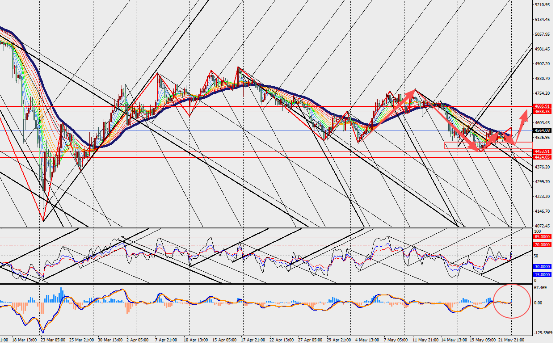
Gold broke higher on the 4-hour chart timeframe, while both the MACD lines and histogram expanded near the zero axis. The remaining key economic data for this week will be released on Thursday. Investors will closely monitor preliminary Q1 GDP data, preliminary PCE inflation data, weekly jobless claims, April durable goods orders, and new home sales data.