Rising Treasury Yields Are Reshaping Dollar Dynamics — Gold Faces Shakeout Risk Around the Key Level
The U.S. Dollar Index briefly touched a high of 100.11 before pulling back slightly to around 99.77, where it continues to fluctuate. Safe-haven demand driven by geopolitical risks, combined with elevated Treasury yields, is providing strong support to the dollar. Meanwhile, spot gold is locked in a tug-of-war around the $5,000 level. Although Middle East tensions provide a solid risk premium, expectations that the Federal Reserve may delay rate cuts are limiting further upside in gold prices.
Overall, markets are closely watching developments in the Strait of Hormuz and the upcoming FOMC meeting, with liquidity remaining cautious amid heightened volatility.

The recent strength in the U.S. dollar is fundamentally driven by the structural rise in U.S. Treasury yields. Due to geopolitical risks disrupting energy supply, oil prices have consistently reached higher highs over recent trading sessions. This inflationary transmission has led to a bear steepening in the Treasury market. The 10-year U.S. Treasury yield has climbed from around 3.925% to approximately 4.2%, increasing yield premiums and strengthening the dollar’s interest rate advantage.
The Reserve Bank of Australia unexpectedly raised rates by 25 basis points, citing a meaningful rebound in inflation in the second half of the year. This forward-looking signal has prompted markets to question whether the Federal Reserve might follow suit and withdraw its previous rate-cut guidance.
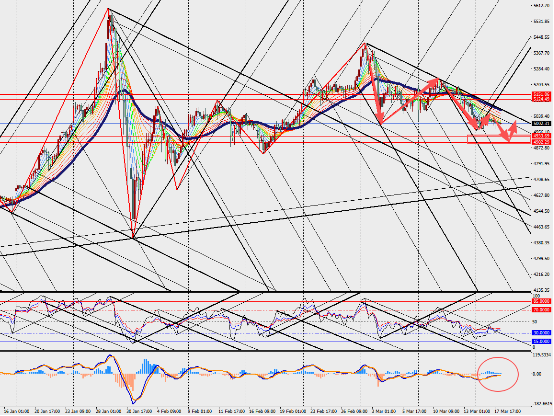
Spot gold is currently exhibiting an unusually tight consolidation pattern. The market is caught between two opposing forces: on one hand, safe-haven demand driven by geopolitical conflict; on the other, rising real yields — fueled by energy-driven inflation expectations — which exert downward pressure on non-yielding assets like gold.
As Middle East tensions enter their third week, disruptions in navigation through the Strait of Hormuz and damage to energy infrastructure have effectively anchored gold’s geopolitical support. However, many economic advisors and research institutions believe this shock may be temporary. If the situation stabilizes within a few weeks, the risk premium embedded in gold prices could fade quickly.
The strength of support around the $5,000 level is critical. If geopolitical tensions do not materially ease, gold may continue to consolidate above this level. However, if the upcoming FOMC meeting delivers a more hawkish-than-expected signal — pushing Treasury yields higher — gold could face downside risk.
Market Interpretation:
For gold, the outlook depends on the balance between safe-haven confidence and interest rate concerns. In the absence of further geopolitical escalation, prices are likely to remain range-bound around the $5,000 level. The market is currently in a post-volatility phase of directional decision-making, where the resilience of the dollar and gold’s safe-haven appeal will remain closely intertwined amid high volatility.