[TMGM Financial Breakfast] UBS Forecasts Gold to Reach Six Thousand Two Hundred as Future Supply Tightens Further
UBS Group has reiterated its bullish stance on gold, projecting that international spot prices could surge to six thousand two hundred within the next few months. The bank noted that commodity prices were volatile at the end of January, yet precious metals, oil, and industrial metals all posted gains for the month. As volatility begins to ease, the fundamental outlook for commodities remains supportive, driven primarily by supply-demand imbalances, geopolitical shifts, and structural trends.
On the geopolitical front, global macro uncertainty remains the dominant long-term theme. Tensions between the United States and Iran have escalated recently, keeping geopolitical risks in the Middle East elevated. The region now hosts two aircraft carriers, fighter jets, and refueling aircraft, with U.S. military deployment exceeding levels seen earlier this year before actions near Venezuela’s coast. Whether an agreement with Iran can be reached remains uncertain, as the likelihood of military action appears to be increasing.

The macroeconomic environment also provides a solid foundation for continued gains in gold. UBS expects the Federal Reserve to extend its easing cycle and forecasts two rate cuts of twenty-five basis points each before late September. With inflation pressures expected to ease further in the coming months, and the Fed potentially adopting a more dovish stance in the second half of the year, a weaker U.S. dollar and lower real interest rates would directly enhance gold’s investment appeal.
UBS maintains that although some recent employment data have been strong and Federal Open Market Committee minutes revealed slightly hawkish tones, the broader disinflation trend in the U.S. economy remains intact.
Structural imbalances in supply and demand form another key pillar of the bullish case for gold.
On the demand side, data from the World Gold Council show that global gold demand in 2025 surpassed five thousand tons for the first time on record. Supported by stronger investment inflows, persistent and determined central bank purchases, and medium-term structural jewelry demand driven by rising household incomes in Asia, global gold demand is expected to remain robust.
Market Interpretation:
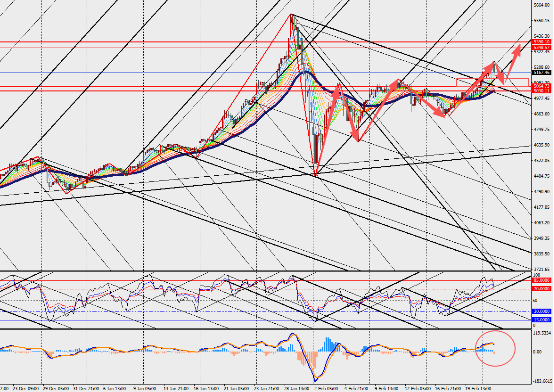
On the four-hour chart, gold is consolidating with a rebound bias, while the MACD lines and histogram continue expanding above the zero axis. In stark contrast to the strong demand backdrop, growth on the global supply side remains constrained. By 2028, around eighty gold mines worldwide are expected to conclude their current production plans. This suggests that although historically high gold prices may incentivize new exploration and development, short-term supply elasticity remains extremely limited and is unlikely to quickly fill the demand gap.