Signs of a U.S.–Iran Ceasefire Emerge: Gold Rises for a Fourth Day as Markets Focus on Trump’s Speech
Driven by both dollar weakness and optimism over easing geopolitical tensions, gold extended its gains on Wednesday. Investors are now firmly focused on Trump’s upcoming speech.
The U.S. dollar index has declined for three straight sessions, making dollar-denominated gold more attractive to holders of other currencies. A weaker dollar is typically a key support factor for gold, as it lowers the cost of buying gold for non-U.S. investors.
Cautious optimism about a potential de-escalation in the Middle East has also lifted broader risk sentiment. Trump stated that Iran has requested a ceasefire, although Iran’s foreign ministry quickly denied the claim. Nevertheless, discussions appear to be ongoing. If the situation moves toward de-escalation, expectations for rate cuts could resurface, providing more sustained support for gold.

Iran, for its part, is demanding a guaranteed ceasefire framework to permanently end the conflict. Meanwhile, U.S. Vice President J.D. Vance has been communicating through intermediaries in Pakistan, signaling that Trump is willing to accept a ceasefire if conditions such as the reopening of the Strait of Hormuz are met.
This easing outlook has directly reduced safe-haven demand for the U.S. dollar. Previously supported by geopolitical risk, the dollar is now weakening as risk appetite improves. Oil prices have also retreated, easing concerns about prolonged inflation driven by supply disruptions.
If tensions in the Middle East continue to ease, gold could potentially return above the $5,000 per ounce level. A revival of rate cut expectations would further reinforce this trend. While gold has recovered from its earlier pullback — driven by war-related oil spikes and inflation fears — volatility remains high. Investors should closely monitor developments around the Strait of Hormuz, a key global energy chokepoint.
Attention will now turn to Friday’s U.S. nonfarm payrolls report for March, with economists forecasting an increase of 50,000 jobs. A sharp deterioration in the labor market could reignite expectations for Fed rate cuts this year, which had largely been priced out due to rising inflation concerns linked to the Iran conflict.
Market Interpretation:
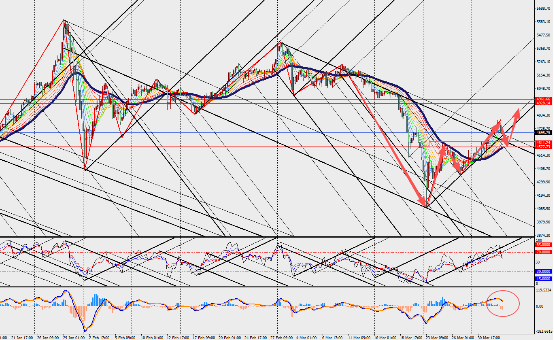
On the four-hour chart, gold is showing signs of resistance after its recent rebound, with MACD lines and volume bars expanding above the zero axis. In the short term, gold will continue to be driven by ceasefire expectations in the Middle East and movements in the U.S. dollar. If Trump’s speech signals clear de-escalation, gold may test higher resistance levels. Conversely, if the conflict persists or escalates, renewed safe-haven demand could push prices higher again.