

Is the Greenland Saga Yet Another Carefully Scripted “TACO” Play by Trump?
작성자 Abel Gao
게시일: 20 Jan 2026 | 수정일: 20 Jan 2026


인기 기사

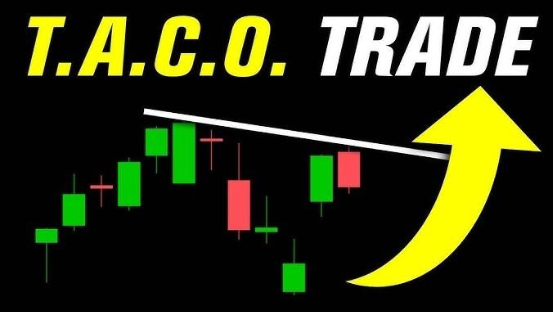
During Trump’s second term, a pattern dubbed the “TACO trade” has quietly become a well-known profit strategy on Wall Street. With Trump now using tariff threats as leverage to pressure the EU into forcing Denmark to sell Greenland, the market is asking: is this latest geopolitical drama yet another carefully choreographed “TACO” show?
The so-called “TACO trade” is a tongue-in-cheek acronym for “Trump Always Chickens Out,” but it also captures a mature strategy of arbitraging his policy flip-flops. Its core playbook has been neatly summarized as: Trump “plays bad cop” to rattle markets, while Treasury Secretary Bessent “plays good cop” to calm things down—a kind of open-secret routine.
Now, that script seems to have spilled into the geopolitical arena: Trump has recently threatened that, if he cannot buy Greenland from Denmark, he will impose punitive tariffs on multiple EU countries. The question is: is this a serious strategic ambition, or just another “TACO moment” for markets to trade?
The Standard Pattern of the “TACO Trade”
To understand the nature of the current Greenland episode, we first need to review the standard pattern of the “TACO trade”. It is not accidental, but a repeatable cycle that can even be systematically traded.
Step 1: Maximum Pressure
Trump typically starts by floating an aggressive, even shocking, policy threat that triggers sharp market volatility. For example, he has threatened tariffs as high as 50% on goods from multiple countries, or suddenly declared in July last year that he wanted to fire Fed Chair Jerome Powell—moves that caused violent swings in US equities, the dollar and gold.
Step 2: The “Good Cop” Reassurance and Retreat
Once markets are in turmoil, the President either walks back his stance, or key lieutenants—especially Treasury Secretary Bessent—step out to deliver soothing messages, hinting that the threat may not materialise or could be delayed. After the “fire Powell” rumours roiled markets, Trump denied it within hours. On tariffs, Bessent has repeatedly been reported as persuading Trump to extend tariff grace periods.
Step 3: Market Conditioning and Arbitrage
After several rounds of this, markets develop a kind of conditioned reflex. Traders begin to fade Trump’s threats—betting that he will ultimately back down—and then take profit when markets rebound. Strategists at Nomura have pointed out that systematically shorting and then covering S&P 500 futures around such episodes once generated returns as high as 12%. Markets have even become “desensitised” to tariff threats, managing to hit new highs despite negative headlines.
This pattern has become so conspicuous that Trump himself is reportedly irritated by the “TACO” label, arguing that it is simply “the art of the deal”—start with a high opening bid, then negotiate downward. But the side effect has been a gradual erosion of policy credibility. So far, his administration has reached very few substantive trade agreements, and his reputation as a “master dealmaker” has come under strain.
Will the Greenland Episode Be Another “TACO”?
Against this backdrop, the recent Greenland saga looks particularly striking. Trump has not only revived his purchase proposal, but on 17 January 2026 escalated his threat, announcing that if no deal is reached, the US will impose an additional 10% tariff from 1 February on imports from several European countries, including Denmark, Germany and France, and raise the rate to 25% from 1 June.
At first glance, this fits Step One of the “TACO trade”: table an apparently impossible demand (buying another country’s territory), backed by severe economic threats. However, this episode differs from the classic “TACO trade” in several key ways that make the outcome far more uncertain:
1. A fundamentally different type of bargaining chip
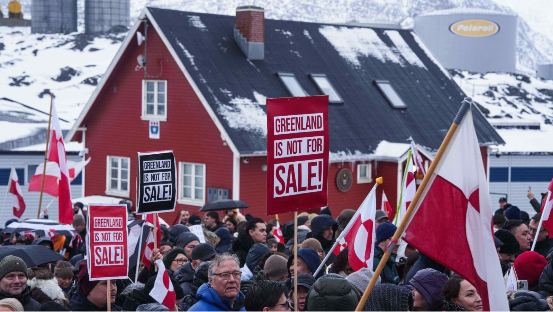
Previous tariff threats mostly revolved around economic interests and trade terms, where there was room for negotiation and compromise. Buying Greenland, by contrast, touches on core issues of sovereignty, territorial integrity and national dignity. The response from Denmark, Greenland’s own authorities and the EU has been unusually unified and resolute: a clear “not for sale,” along with condemnation of the move as “shameful” and damaging to alliance relations. That leaves much less room for a negotiated middle ground.
2. The reality of the strategic objective
Unlike a pure bargaining chip, control of Greenland carries real strategic value. The island is rich in rare earths and hydrocarbons and sits at a key Arctic chokepoint, making it highly significant in great-power competition. Trump’s long-standing interest in the island may well be tied to a strong desire to build a lasting “political legacy.”
3. A much narrower escape route
In a standard trade dispute, a president can retreat “with some dignity” after absorbing a certain amount of domestic political pressure. But in the case of Greenland, Trump has explicitly linked tariffs to a territory purchase and set a public, escalating tariff timetable.
If he ultimately backs down, it would not only cement the “TACO” label, but also risk being interpreted as a major strategic defeat in front of US allies. If he presses ahead, it could lead to a historic fracture within NATO.
Conclusion
Taken together, the Greenland episode looks more like Trump recklessly applying his familiar “art of the deal” playbook from domestic politics to the far more complex arena of geopolitics. It bears the outward features of a “TACO trade”, but its core has escalated from tactical economic bluffing to a strategic probing of the foundations of the international order.
Therefore, while we cannot completely rule out the possibility that, under heavy pressure from the EU and mounting domestic opposition, the situation ultimately de-escalates in some form, Wall Street should not mechanically assume that this will inevitably follow the old script of “threat → panic → retreat.”

100만 명이 넘는 사용자가 FXStreet를 통해 실시간 시장 데이터, 차트 도구, 전문가 인사이트, 포렉스 뉴스를 이용합니다. 포괄적인 경제 캘린더와 교육 웨비나는 트레이더가 정보를 유지하고 신중한 결정을 내리도록 돕습니다. FXStreet는 바르셀로나 본사와 전 세계 지역에 걸쳐 약 60명의 팀으로 구성되어 있습니다.
더 읽기








