

Trade The World
BoJ's Ueda says weak Japanese Yen pushes up import prices, factor in higher CPI
작성자 Lallalit Srijandorn
게시일: 21 Nov 2025 | 수정일: 21 Nov 2025


POPULAR ARTICLES
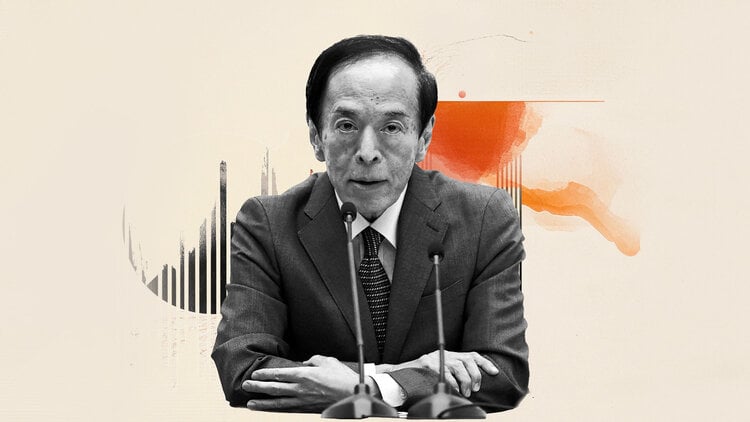
Bank of Japan (BoJ) Governor Kazuo Ueda said on Friday that the Japanense Yen (JPY) weakness is increasingly feeding into import costs and consumer inflation, adding that currency swings have a bigger impact than in the past.
Bank of Japan (BoJ) Governor Kazuo Ueda said on Friday that the Japanense Yen (JPY) weakness is increasingly feeding into import costs and consumer inflation, adding that currency swings have a bigger impact than in the past.
Key quotes
Compared with past, companies are becoming more keen to raise wages and prices.
Against such backdrop, foreign exchange moves could have bigger impact on prices.
We must also be mindful of the chance foreign exchange moves could affect inflation expectations, underlying inflation.
Will scrutinize impact of foreign exchange volatility on prices.
Our basic stance is to continue raising interest rates if economy and prices move in line with forecast.
Prospects of our projections materializing increasing.
We decided to keep policy steady to spend a bit more time to confirm whether firms active wage-setting behaviour will not be disrupted.
We are still at a stage where we need to scrutinize this point, especially initial momentum of next year's wage talks
We want to make use at next meeting and onward information we gather including form surveys collected by our branches nationwide.
We will debate timing and likelihood of rate hike at upcoming policy meeting by scrutinising various data.
Market reaction
As of writing, the USD/JPY pair is down 0.21% on the day at 157.25.
Bank of Japan FAQs
The Bank of Japan (BoJ) is the Japanese central bank, which sets monetary policy in the country. Its mandate is to issue banknotes and carry out currency and monetary control to ensure price stability, which means an inflation target of around 2%.
The Bank of Japan embarked in an ultra-loose monetary policy in 2013 in order to stimulate the economy and fuel inflation amid a low-inflationary environment. The bank’s policy is based on Quantitative and Qualitative Easing (QQE), or printing notes to buy assets such as government or corporate bonds to provide liquidity. In 2016, the bank doubled down on its strategy and further loosened policy by first introducing negative interest rates and then directly controlling the yield of its 10-year government bonds. In March 2024, the BoJ lifted interest rates, effectively retreating from the ultra-loose monetary policy stance.
The Bank’s massive stimulus caused the Yen to depreciate against its main currency peers. This process exacerbated in 2022 and 2023 due to an increasing policy divergence between the Bank of Japan and other main central banks, which opted to increase interest rates sharply to fight decades-high levels of inflation. The BoJ’s policy led to a widening differential with other currencies, dragging down the value of the Yen. This trend partly reversed in 2024, when the BoJ decided to abandon its ultra-loose policy stance.
A weaker Yen and the spike in global energy prices led to an increase in Japanese inflation, which exceeded the BoJ’s 2% target. The prospect of rising salaries in the country – a key element fuelling inflation – also contributed to the move.

FXStreet
100만 명이 넘는 사용자가 FXStreet를 통해 실시간 시장 데이터, 차트 도구, 전문가 인사이트, 포렉스 뉴스를 이용합니다. 포괄적인 경제 캘린더와 교육 웨비나는 트레이더가 정보를 유지하고 신중한 결정을 내리도록 돕습니다. FXStreet는 바르셀로나 본사와 전 세계 지역에 걸쳐 약 60명의 팀으로 구성되어 있습니다.
Read More








