

ECB’s Lagarde: New tariffs could be inflationary in the near term
작성자 Sagar Dua
게시일: 21 Jan 2026 | 수정일: 21 Jan 2026


인기 기사
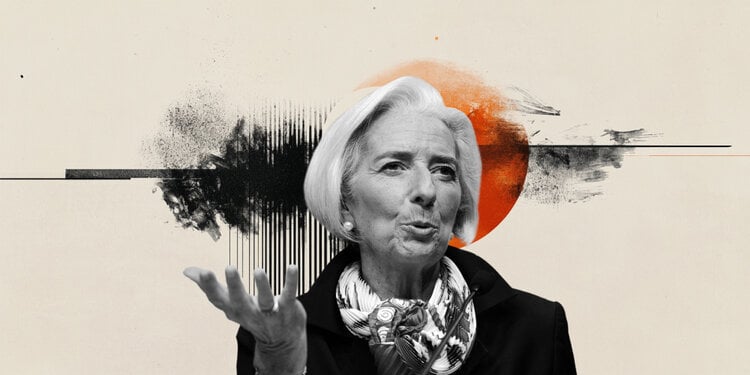
European Central Bank (ECB) President Christine Lagarde said during European trading hours on Wednesday that trade disputes between the United States (US) and the European Union (EU) underscore the need for a deep review of how we organize the European economy.
European Central Bank (ECB) President Christine Lagarde said during European trading hours on Wednesday that trade disputes between the United States (US) and the European Union (EU) underscore the need for a deep review of how we organize the European economy.
Additional remarks
New world economic order must lead us to a deep review of how we organize European economy.
German economy would be more impacted than French economy by tariff hikes.
Inflation would be slightly affected by new tariffs, likely upwards.
Since inflation is under control at 1.9%, the impact would be minimal.
I am on alert, we have a good monetary position, but economy, productivity, public finances could do better.
European countries would be much stronger if they scrapped non-tariff trade barriers within the EU.
Market reaction
There seems to be no significant impact of ECB Lagarde's comments on the Euro (EUR). As of writing, EUR/USD trades 0.1% lower to near 1.1710.
ECB FAQs
The European Central Bank (ECB) in Frankfurt, Germany, is the reserve bank for the Eurozone. The ECB sets interest rates and manages monetary policy for the region. The ECB primary mandate is to maintain price stability, which means keeping inflation at around 2%. Its primary tool for achieving this is by raising or lowering interest rates. Relatively high interest rates will usually result in a stronger Euro and vice versa. The ECB Governing Council makes monetary policy decisions at meetings held eight times a year. Decisions are made by heads of the Eurozone national banks and six permanent members, including the President of the ECB, Christine Lagarde.
In extreme situations, the European Central Bank can enact a policy tool called Quantitative Easing. QE is the process by which the ECB prints Euros and uses them to buy assets – usually government or corporate bonds – from banks and other financial institutions. QE usually results in a weaker Euro. QE is a last resort when simply lowering interest rates is unlikely to achieve the objective of price stability. The ECB used it during the Great Financial Crisis in 2009-11, in 2015 when inflation remained stubbornly low, as well as during the covid pandemic.
Quantitative tightening (QT) is the reverse of QE. It is undertaken after QE when an economic recovery is underway and inflation starts rising. Whilst in QE the European Central Bank (ECB) purchases government and corporate bonds from financial institutions to provide them with liquidity, in QT the ECB stops buying more bonds, and stops reinvesting the principal maturing on the bonds it already holds. It is usually positive (or bullish) for the Euro.

100만 명이 넘는 사용자가 FXStreet를 통해 실시간 시장 데이터, 차트 도구, 전문가 인사이트, 포렉스 뉴스를 이용합니다. 포괄적인 경제 캘린더와 교육 웨비나는 트레이더가 정보를 유지하고 신중한 결정을 내리도록 돕습니다. FXStreet는 바르셀로나 본사와 전 세계 지역에 걸쳐 약 60명의 팀으로 구성되어 있습니다.
더 읽기








