

Trade The World
WTI falls to near $62.00 on rising hopes for Ukraine-Russia peace
작성자 Akhtar Faruqui
게시일: 19 Aug 2025 | 수정일: 19 Aug 2025


POPULAR ARTICLES
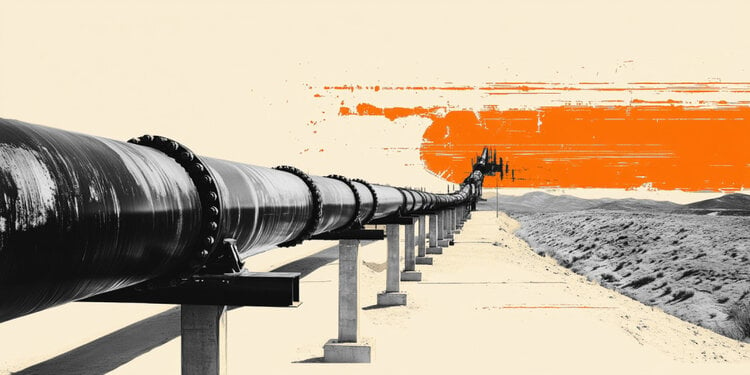
West Texas Intermediate (WTI) Oil price declines more than 0.5%, trading around $62.10 per barrel during the European hours on Tuesday.
- WTI weakens as supply concerns ease, supported by positive signals of a potential Ukraine-Russia resolution.
- Trump and Zelenskyy expressed hope that Monday’s meeting would pave the way for trilateral talks with Putin.
- Oil prices may appreciate as recent US data keeps intact the case for a Fed rate cut in September.
West Texas Intermediate (WTI) Oil price declines more than 0.5%, trading around $62.10 per barrel during the European hours on Tuesday. Crude Oil prices lose ground amid easing supply concerns, driven by positive signals toward a possible resolution of the Ukraine-Russia war, which could lead to an end to sanctions on Russian energy exports.
US President Donald Trump and Ukrainian President Volodymyr Zelenskyy both hoped that Monday’s gathering would eventually lead to three-way talks with Russian President Vladimir Putin. Trump posted on social media, saying that he had spoken with the Russian leader and begun arranging a meeting between Putin and Zelenskyy, to be followed by a trilateral summit with all three presidents.
Reuters cited Suvro Sarkar, lead energy analyst at DBS Bank, saying that "Trump's language on secondary sanctions on importers of Russian oil has also eased off, which would have otherwise posed a risk of disruptions to global oil supplies. Hence, we believe geopolitical risks have eased a tad for the oil market this week.”
Oil prices may regain its ground as recent United States (US) economic data support the case for a Federal Reserve (Fed) rate cut in September. It is worth noting that lower borrowing costs could stimulate economic activity in the United States, the world’s largest oil consumer, which in turn may lend support to crude prices.
CME’s FedWatch tool suggests that markets are pricing in 84% odds of a 25 basis point Fed rate cut in September. Meanwhile, attention now shifts to the Federal Reserve’s annual Jackson Hole symposium later this week, where global policymakers will discuss labor market dynamics and the outlook for monetary policy. Fed Chair Jerome Powell is scheduled to deliver remarks on the economy and the central bank’s policy stance.
WTI Oil FAQs
WTI Oil is a type of Crude Oil sold on international markets. The WTI stands for West Texas Intermediate, one of three major types including Brent and Dubai Crude. WTI is also referred to as “light” and “sweet” because of its relatively low gravity and sulfur content respectively. It is considered a high quality Oil that is easily refined. It is sourced in the United States and distributed via the Cushing hub, which is considered “The Pipeline Crossroads of the World”. It is a benchmark for the Oil market and WTI price is frequently quoted in the media.
Like all assets, supply and demand are the key drivers of WTI Oil price. As such, global growth can be a driver of increased demand and vice versa for weak global growth. Political instability, wars, and sanctions can disrupt supply and impact prices. The decisions of OPEC, a group of major Oil-producing countries, is another key driver of price. The value of the US Dollar influences the price of WTI Crude Oil, since Oil is predominantly traded in US Dollars, thus a weaker US Dollar can make Oil more affordable and vice versa.
The weekly Oil inventory reports published by the American Petroleum Institute (API) and the Energy Information Agency (EIA) impact the price of WTI Oil. Changes in inventories reflect fluctuating supply and demand. If the data shows a drop in inventories it can indicate increased demand, pushing up Oil price. Higher inventories can reflect increased supply, pushing down prices. API’s report is published every Tuesday and EIA’s the day after. Their results are usually similar, falling within 1% of each other 75% of the time. The EIA data is considered more reliable, since it is a government agency.
OPEC (Organization of the Petroleum Exporting Countries) is a group of 12 Oil-producing nations who collectively decide production quotas for member countries at twice-yearly meetings. Their decisions often impact WTI Oil prices. When OPEC decides to lower quotas, it can tighten supply, pushing up Oil prices. When OPEC increases production, it has the opposite effect. OPEC+ refers to an expanded group that includes ten extra non-OPEC members, the most notable of which is Russia.

FXStreet
100만 명이 넘는 사용자가 FXStreet를 통해 실시간 시장 데이터, 차트 도구, 전문가 인사이트, 포렉스 뉴스를 이용합니다. 포괄적인 경제 캘린더와 교육 웨비나는 트레이더가 정보를 유지하고 신중한 결정을 내리도록 돕습니다. FXStreet는 바르셀로나 본사와 전 세계 지역에 걸쳐 약 60명의 팀으로 구성되어 있습니다.
Read More








