

Ripple Price Forecast: XRP risks deeper pullback below $1.40 despite capital inflows
- XRP remains technically weak, testing support at $1.40 on Thursday.
- XRP’s downward trajectory may persist as key momentum indicators weaken.
- XRP spot ETFs and derivatives demand hold steady as market participants remain confident despite the correction from weekly highs.
Ripple (XRP) is grinding lower toward the $1.40 short-term support area at the time of writing on Thursday. The correction from the weekly high at $1.46, reached the previous day, aligns with the broader crypto market, which has seen Bitcoin (BTC) test support at $80,000 after hitting a three-month high at $82,850.

Stable ETF inflows, retail growth support XRP
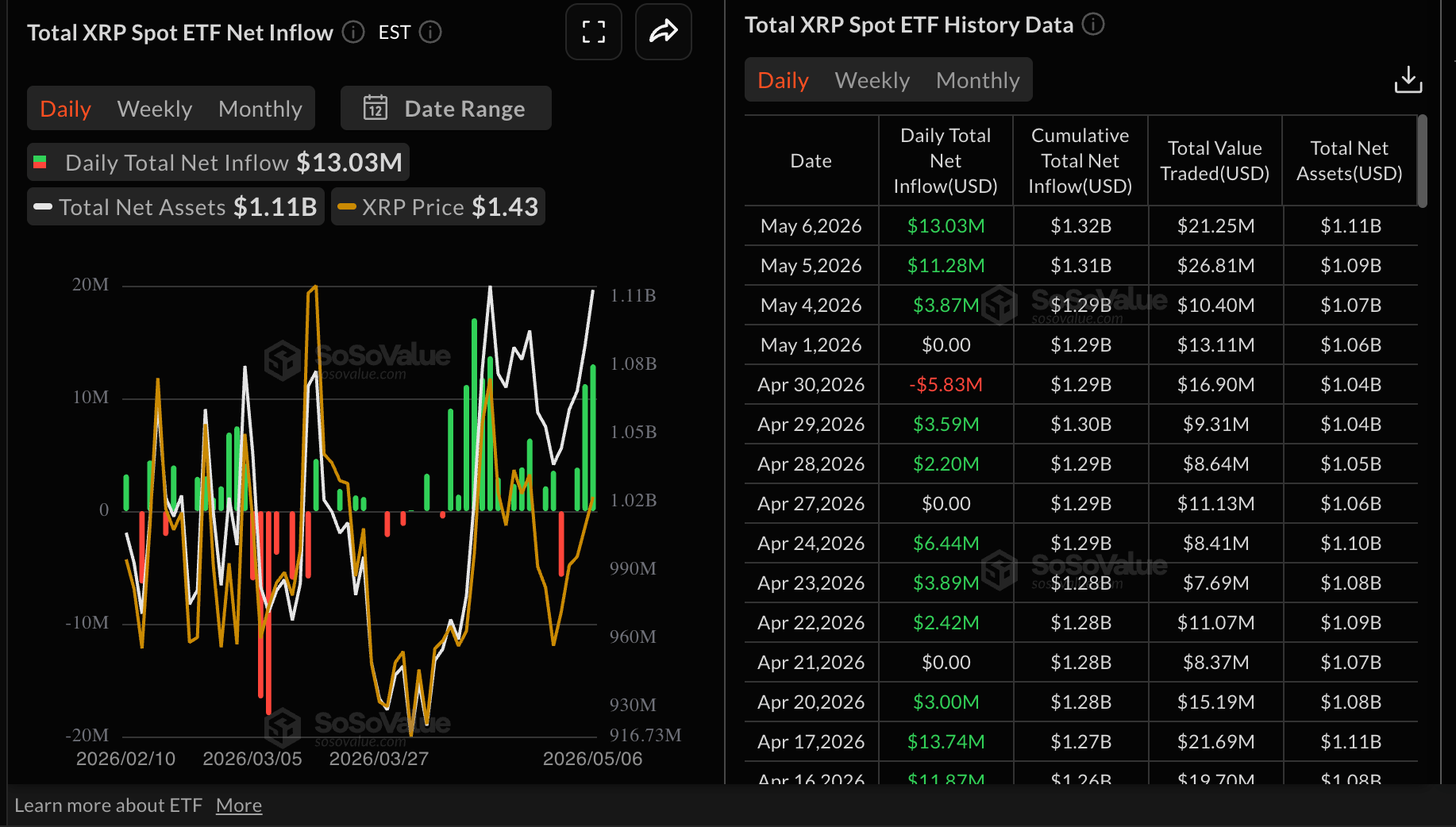
Market participants have maintained confidence in XRP, increasing exposure through spot Exchange-Traded Funds (ETFs) and derivatives. After facing volatility last week, US-listed XRP spot ETFs recorded increasing inflows from Monday’s $3.87 million, Tuesday’s $11.28 million and Wednesday’s $13.03 million. SoSoValue data shows that cumulative inflows now average $1.32 billion, with net assets under management at $1.11 billion.
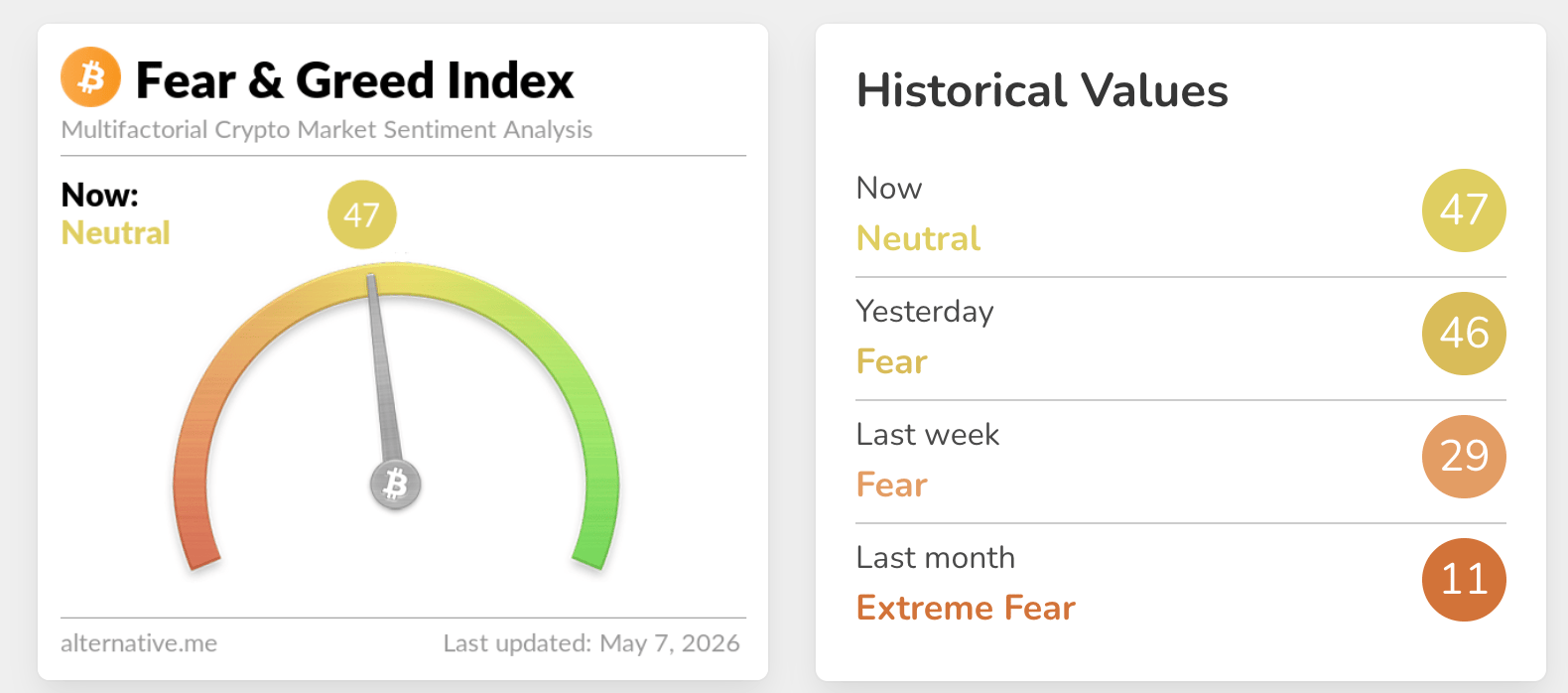
The increase in demand for XRP ETFs aligns with rising market sentiment, as reflected in the Crypto Fear & Greed Index, which holds at 47 on Thursday, marginally up from 46 the day before. Sustained price rallies in crypto markets are typically underpinned by robust demand and persistently positive investor sentiment.
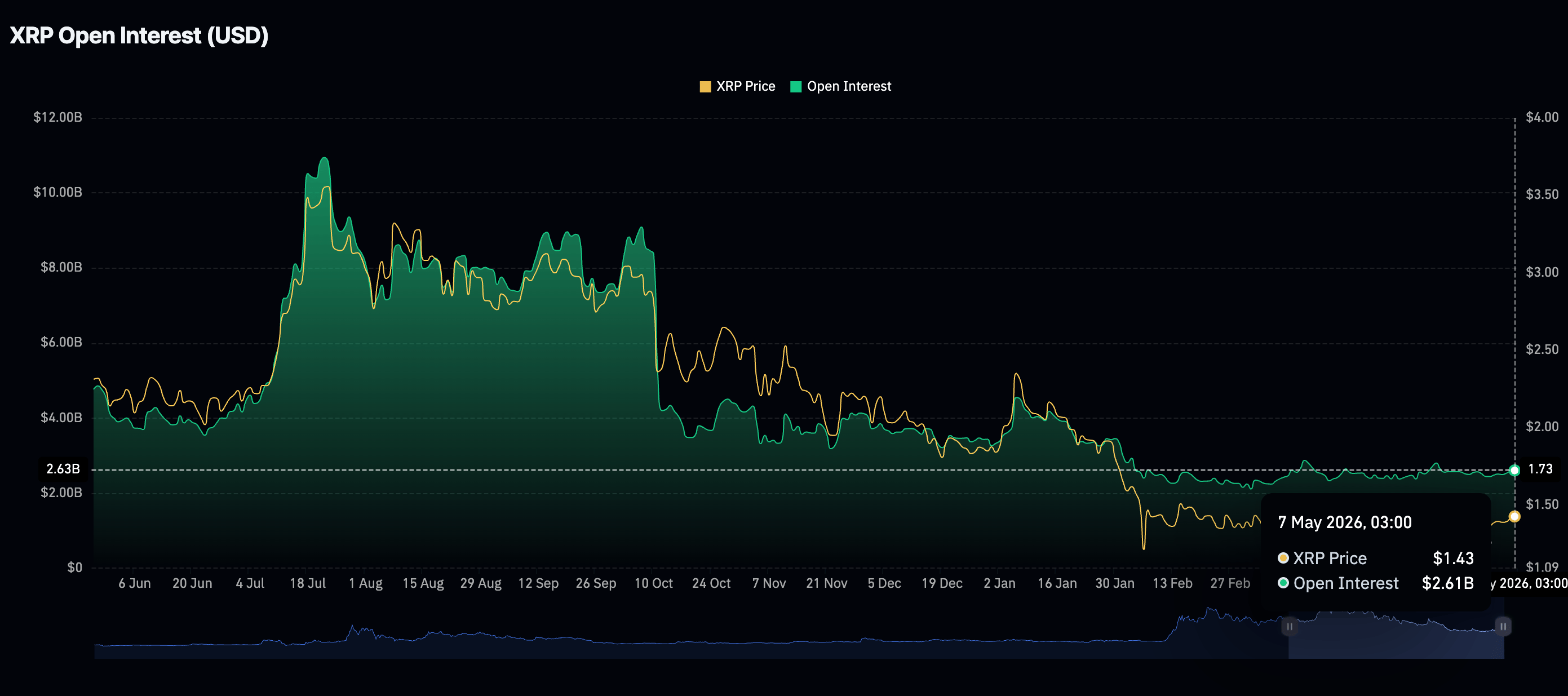
The derivatives market also shows increasing strength, albeit gradually, with the futures Open Interest (OI) rising to $2.61 billion on Thursday from $2.59 billion the previous day.
Despite the mild increase, the current retail demand pales in comparison to the OI peak of $10.94 billion reached in July, around the time XRP hit a new record high of $3.66. For a sustained bullish outlook over the medium- to long-term, open interest should rise in tandem with price appreciation.
Technical outlook: XRP downside risks escalate as $1.40 support holds
XRP trades above $1.41, holding marginally above the 50-day Exponential Moving Average (EMA) at $1.41, which offers initial trend support but is still well beneath the 100-day and 200-day EMAs at $1.50 and $1.74. This configuration hints at a neutral-to-mildly constructive near-term bias, with the pair attempting to stabilize within a broader corrective context.
Meanwhile, the Relative Strength Index (RSI) around 52 on the daily chart suggests balanced momentum after the latest pullback, while the Moving Average Convergence Divergence (MACD) histogram has inched back above the zero line, hinting at a tentative recovery in buying pressure rather than a decisive bullish shift.
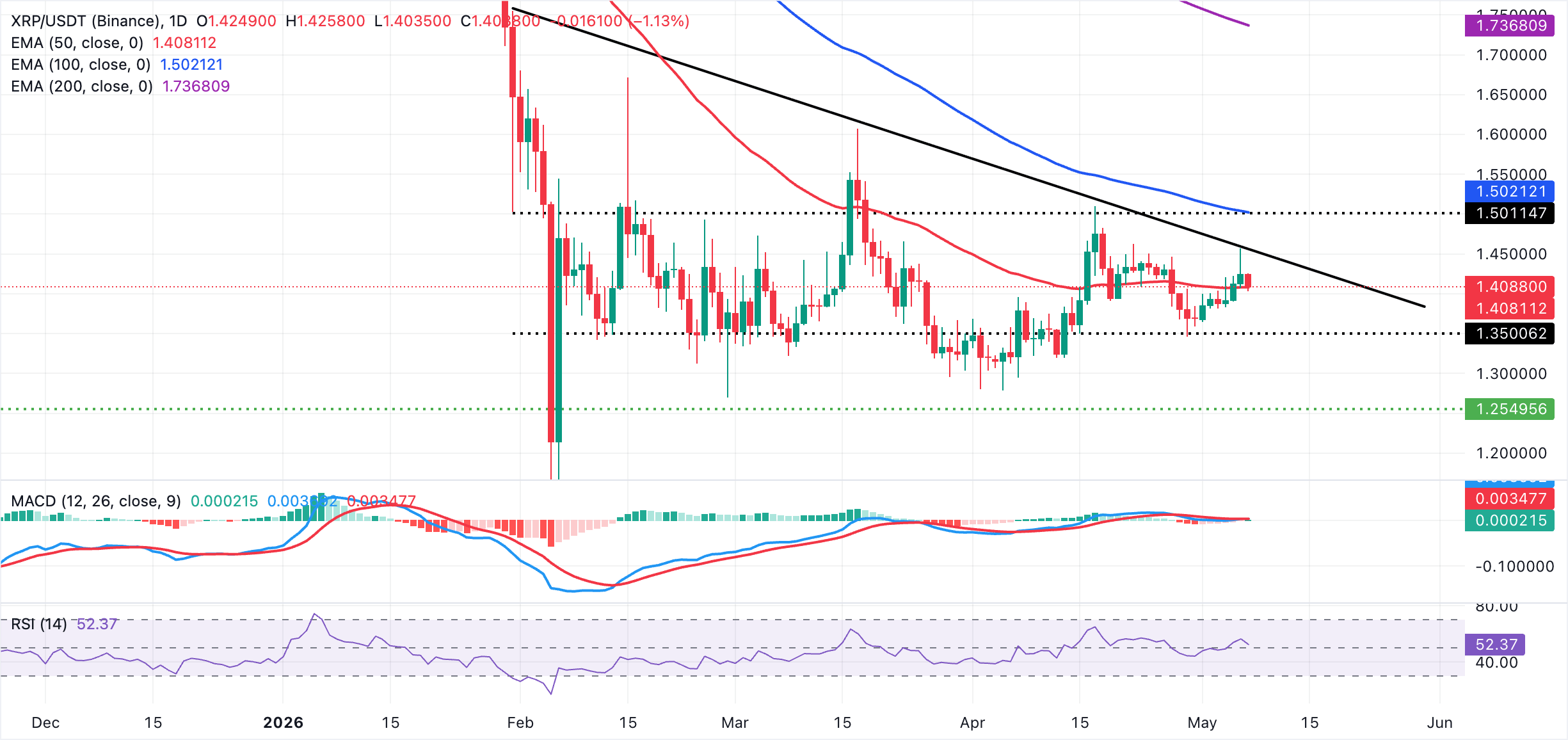
On the topside, immediate resistance emerges at the descending trendline break area near $1.45, where prior rallies have struggled, followed by the 100-day EMA at $1.50 and then the more distant 200-day EMA at $1.74, which continues to cap the larger bearish structure. On the downside, the 50-day EMA at $1.41 is the first level to watch as short-term support. A clear daily close back below this floor would expose a deeper retracement and undermine the nascent improvement in momentum.
(The technical analysis of this story was written with the help of an AI tool.)
Open Interest, funding rate FAQs
Higher Open Interest is associated with higher liquidity and new capital inflow to the market. This is considered the equivalent of increase in efficiency and the ongoing trend continues. When Open Interest decreases, it is considered a sign of liquidation in the market, investors are leaving and the overall demand for an asset is on a decline, fueling a bearish sentiment among investors.
Funding fees bridge the difference between spot prices and prices of futures contracts of an asset by increasing liquidation risks faced by traders. A consistently high and positive funding rate implies there is a bullish sentiment among market participants and there is an expectation of a price hike. A consistently negative funding rate for an asset implies a bearish sentiment, indicating that traders expect the cryptocurrency’s price to fall and a bearish trend reversal is likely to occur.














