

Trade The World
BoE’s Taylor: We’re getting closer to the soft landing
Oleh Pablo Piovano
Tarikh Diterbitkan: 3 Sep 2025 | Tarikh Diubah: 3 Sep 2025


POPULAR ARTICLES
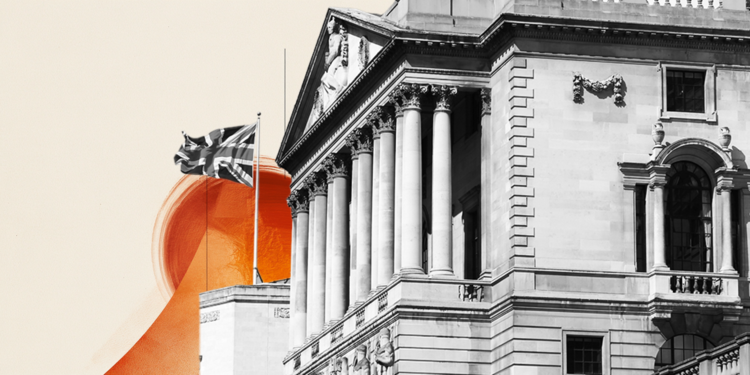
In his annual report to the Treasury Select Committee, Bank of England (BoE) policymaker Alan Taylor said the British economy was edging closer to a “soft landing.” He added that policy would have to be judged carefully over the coming months, since the outlook remained fragile.
In his annual report to the Treasury Select Committee, Bank of England (BoE) policymaker Alan Taylor said the British economy was edging closer to a “soft landing.” He added that policy would have to be judged carefully over the coming months, since the outlook remained fragile.
Key Quotes
My main concern has been to get inflation sustainably back to the 2% target, maintaining monetary policy restrictiveness as long as necessary but no longer.
The greater danger is that we get behind the curve, stay too tight in the short-term.
We are getting closer to the soft landing for UK economy now, but we are also in a fragile moment.
BoE FAQs
The Bank of England (BoE) decides monetary policy for the United Kingdom. Its primary goal is to achieve ‘price stability’, or a steady inflation rate of 2%. Its tool for achieving this is via the adjustment of base lending rates. The BoE sets the rate at which it lends to commercial banks and banks lend to each other, determining the level of interest rates in the economy overall. This also impacts the value of the Pound Sterling (GBP).
When inflation is above the Bank of England’s target it responds by raising interest rates, making it more expensive for people and businesses to access credit. This is positive for the Pound Sterling because higher interest rates make the UK a more attractive place for global investors to park their money. When inflation falls below target, it is a sign economic growth is slowing, and the BoE will consider lowering interest rates to cheapen credit in the hope businesses will borrow to invest in growth-generating projects – a negative for the Pound Sterling.
In extreme situations, the Bank of England can enact a policy called Quantitative Easing (QE). QE is the process by which the BoE substantially increases the flow of credit in a stuck financial system. QE is a last resort policy when lowering interest rates will not achieve the necessary result. The process of QE involves the BoE printing money to buy assets – usually government or AAA-rated corporate bonds – from banks and other financial institutions. QE usually results in a weaker Pound Sterling.
Quantitative tightening (QT) is the reverse of QE, enacted when the economy is strengthening and inflation starts rising. Whilst in QE the Bank of England (BoE) purchases government and corporate bonds from financial institutions to encourage them to lend; in QT, the BoE stops buying more bonds, and stops reinvesting the principal maturing on the bonds it already holds. It is usually positive for the Pound Sterling.

FXStreet
Lebih sejuta pengguna bergantung pada FXStreet untuk data pasaran masa nyata, alat carta, pandangan pakar dan berita Forex. Kalendar ekonomi yang komprehensif dan webinar pendidikan mereka membantu pedagang kekal bermaklumat dan membuat keputusan yang dikira. FXStreet disokong oleh pasukan kira-kira 60 profesional di ibu pejabat Barcelona dan pelbagai wilayah global.
Read More








