Trump Announces Two-Week Middle East Ceasefire, Oil Prices Plunge, Gold Surges to Two-Week High
During early trading on Wednesday, oil prices plunged by more than $20 in a short period, while gold prices surged over 2%, reaching a two-week high. Market sentiment rapidly shifted from risk aversion to risk-on.
Trump elaborated on the background of the decision, stating that following discussions with Pakistan’s Prime Minister and Army Chief, both sides requested a delay of the planned “devastating strike” on Iran scheduled for that evening. The condition was that Iran would fully, immediately, and safely reopen the Strait of Hormuz. Trump ultimately agreed to a two-week suspension of military action, emphasizing that it would serve as a bilateral ceasefire.

He further claimed that the United States had achieved and even exceeded all of its military objectives, making significant progress toward securing a long-term peace agreement with Iran and achieving lasting stability in the Middle East. Trump noted that Iran had proposed a ten-point plan, which the U.S. considers a viable basis for negotiation. According to him, both sides have already reached agreement on most key issues, and the two-week ceasefire period will be used to finalize and formally sign the agreement.
Trump concluded by saying that, as President of the United States and on behalf of countries in the Middle East, he is honored to see a long-standing regional issue nearing resolution and expressed appreciation for global attention to the matter.
Iran responded positively to the ceasefire proposal. According to Iran’s Mehr News Agency, citing the Supreme National Security Council Secretariat, negotiations between Iran and the United States are set to begin on April 10 in Islamabad, Pakistan, and will last for two weeks.
Following the ceasefire announcement, market concerns over geopolitical risk in the Middle East quickly eased. International oil prices dropped sharply, with losses expanding to as much as 18%. This decline reflects not only reduced fears of supply disruptions but also a direct easing of global inflation pressures.
Spot gold prices, on the other hand, rose more than 2%. Prior to the announcement, the gold market had largely remained in a wait-and-see mode. However, continued gold purchases by China’s central bank provided additional upward momentum. Data released on Tuesday showed that China’s gold reserves increased to 74.38 million ounces at the end of March, up by 160,000 ounces from the previous month — marking the 17th consecutive month of gold accumulation. This steady reserve-building strategy has further strengthened bullish sentiment in the gold market.
Looking ahead, investors will closely monitor developments in the Middle East, particularly the progress of U.S.–Iran negotiations in Islamabad, as well as shifts in risk sentiment across oil and equity markets. At the same time, macroeconomic data will remain a key focus, including the release of the Federal Reserve’s March meeting minutes, U.S. Personal Consumption Expenditures (PCE) data, and Consumer Price Index (CPI) figures.
Market Interpretation:
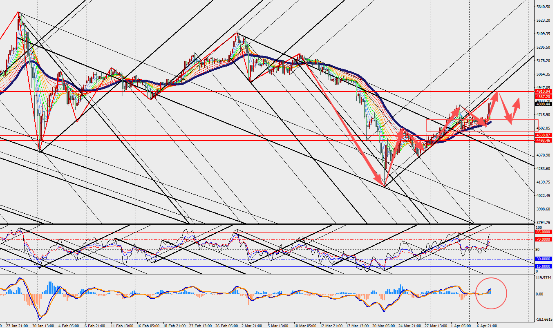
On the four-hour chart, gold has staged a strong rebound, with MACD lines and volume bars expanding above the zero axis. Overall, Trump’s unexpected announcement of a two-week ceasefire has provided a stabilizing effect on previously tense geopolitical conditions. The sharp drop in oil prices and the strong rebound in gold reflect the market’s rapid repricing of peace expectations, as well as the swift shift in investor sentiment between risk and opportunity.