[TMGM Financial Breakfast] Gold Prices Fell Nearly Three Percent Last Week! Middle East Conflict Drives Dollar Surge — Will Gold Continue to Decline This Week?
The market had initially expected gold to shine amid geopolitical tensions, but the reality has been dominated by the strength of the U.S. dollar and inflation fears fueled by the escalating conflict in the Middle East. Although long-term asset allocation logic still supports a bullish outlook for gold, the dollar has surged to its highest level in nearly four months since the Iran conflict began, pushing gold prices lower. The combined pressure of a stronger dollar and war-driven inflation fears has placed gold in an unusually difficult short-term position.

The dollar’s sharp rally has been the most direct driver of the recent decline in gold prices. Last Friday, the U.S. Dollar Index rose 0.75%, breaking above the 100 level and closing near 100.54, a ten-month high. The weekly gain reached 1.67%, marking the largest weekly increase in nearly a year and a half. For investors holding euros, yen, and other currencies, gold priced in dollars has become significantly more expensive, sharply reducing buying interest.
At the same time, U.S. economic data has reinforced the dollar’s strength. January consumer spending rose 0.4% month-on-month, slightly above expectations, while the core PCE price index increased 0.4% month-on-month and reached its highest year-on-year level since March 2024. Market expectations for interest rate cuts by the end of 2026 have dropped dramatically from more than 50 basis points before the conflict to around 22 basis points. This sharp revision has removed one of gold’s key supportive factors — its appeal as an asset benefiting from rate cuts.
The escalation of the Middle East conflict has also created a dilemma for gold’s traditional safe-haven role. After announcing a 30-day partial exemption for sanctioned Russian oil, former U.S. President Donald Trump warned that the United States could launch extremely severe strikes against Iran within the coming week. The ongoing U.S.–Israel conflict with Iran, which has lasted nearly three weeks, has resulted in more than 2,000 deaths. Meanwhile, the Strait of Hormuz — through which roughly one-fifth of the world’s oil supply passes — has nearly come to a halt, leading to what could become the largest disruption to global oil supply in history.
Although gold is traditionally considered a hedge against inflation and uncertainty, the current environment has turned high oil prices into a negative factor. Rising energy costs are intensifying fears of stagflation, and investors are increasingly favoring higher-yielding dollar-denominated assets rather than non-yielding assets such as gold.
This week, markets will closely watch Federal Reserve Chair Jerome Powell’s remarks following Wednesday’s Fed meeting, along with updated interest rate projections. The threshold for the Fed to appear more hawkish than market expectations is relatively low, suggesting that the timeline for rate cuts could be further extended. While gold may remain under pressure in the short term due to the strong dollar and geopolitical tensions, the long-term asset allocation case for gold remains intact. The partial resumption of gold outflows from Dubai also suggests that physical demand has not completely disappeared.
Market Interpretation:
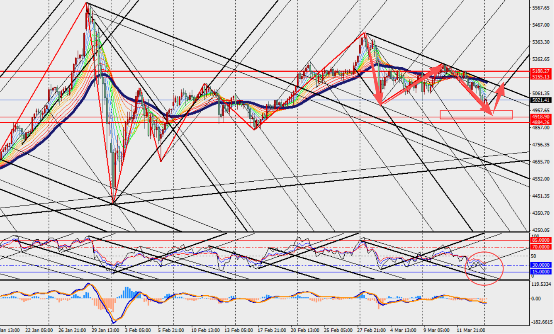
Overall, the recent correction in gold prices reflects the combined effects of a stronger U.S. dollar, rising inflation expectations, and a delayed timeline for Federal Reserve rate cuts. In the short term, as long as oil prices remain elevated and bond yields continue to face upward pressure, gold may remain vulnerable and could test lower support levels. However, from a medium- to long-term perspective, the prolonged uncertainty surrounding the Iran conflict, risks of global supply chain disruptions, and gold’s enduring role as the ultimate safe-haven asset still provide a solid foundation for a potential rebound.