Is the Panic Over OpenAI Missing Targets Overdone? Oracle May Offer a Buying Opportunity After Sharp Decline
In its latest research note, Wedbush Securities argued that market panic has significantly diverged from fundamentals, creating an attractive buying opportunity in AI infrastructure leaders such as Oracle. Demand for OpenAI remains strong across both consumer and enterprise segments. Following its recent $122 billion fundraising round, OpenAI now has at least three years of sufficient budget for computing capacity purchases.
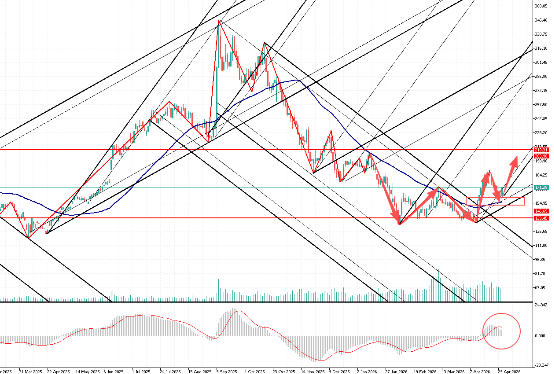
Oracle’s remaining performance obligations (RPO) total approximately $553 billion, with around $300 billion tied to a five-year cloud computing agreement with OpenAI. This contract provides Oracle with unprecedented revenue visibility and gives it a strong defensive position relative to peers. Oracle’s stock has declined about 38% over the past six months, offering what many see as a meaningful valuation discount.

Notably, Wedbush’s bullish stance on Oracle’s AI strategy is not new. The firm recently initiated coverage with an Outperform rating and a $225 price target, highlighting that Oracle’s capital expenditures are contract-backed rather than speculative. Its capex-to-RPO ratio is about 9%, far below the industry average of roughly 45.6%.
The recent wave of selling was sparked by reports that OpenAI failed to meet its internal targets for user growth and revenue. Specifically, ChatGPT did not achieve its goal of reaching 1 billion weekly active users by the end of 2025.
At the same time, OpenAI is facing intensifying competition in coding tools and enterprise markets, particularly from Anthropic, whose Claude AI model has gained strong industry recognition. Google’s Gemini AI has also seen rapid user growth, eroding OpenAI’s market share.
Despite Wedbush’s bullish view, market concerns are not entirely unfounded. According to sources, OpenAI’s CFO has warned internally that if revenue growth does not accelerate, the company may struggle to meet its substantial compute purchasing commitments with partners like Oracle. This internal concern adds a layer of structural uncertainty.
Meanwhile, the “Stargate” flagship data center expansion project in Texas — a joint initiative between OpenAI and Oracle — was officially shelved in March due to financing challenges and shifting demand conditions. The project had aimed to expand capacity from 1.2GW to nearly 2GW. Reports suggest that Meta is now considering taking over the expansion.
Market Interpretation
The debate surrounding Oracle’s $300 billion exposure to OpenAI has created a clear divide on Wall Street.
Bullish arguments focus on:
Massive backlog providing strong revenue visibility
Sufficient financing to support project execution
Long-term demand for AI infrastructure remaining intact
At a deeper level, Oracle’s substantial RPO base offers a strong defensive buffer, allowing the company to withstand short-term demand fluctuations far better than its peers.
Overall, while near-term uncertainties persist, many investors see the recent sell-off as a potential entry point into a structurally strong AI infrastructure story.