

Crypto Today: Bitcoin, Ethereum, XRP tick up despite macro uncertainty, retail exodus
Por John Isige
Data de Publicação: 4 Feb 2026 | Data de Modificação: 4 Feb 2026


ARTIGOS POPULARES

Bitcoin (BTC) is advancing above $76,000 at the time of writing on Wednesday, following a sharp correction to $72,946 the previous day, amid macro uncertainty across the crypto market.
- Bitcoin rises above $76,000 following an extended decline to $72,946 the previous day as Fed-related headlines keep investors on edge.
- Ethereum advances toward the $2,300 hurdle amid low retail interest, with futures Open Interest falling to $26.3 billion.
- XRP edges up above $1.60 as the RSI lifts within oversold territory, hinting at bearish exhaustion.
Bitcoin (BTC) is advancing above $76,000 at the time of writing on Wednesday, following a sharp correction to $72,946 the previous day, amid macro uncertainty across the crypto market.
Altcoins, including Ethereum (ETH) and Ripple (XRP), are also posting subtle gains after extending their downtrend on Tuesday as retail investors retreated into the sidelines. Heightened volatility saw futures Open Interest (OI) drop further, adding to the selling pressure.
Fed reforms trigger macro uncertainty as crypto prices wobble
Global markets continue to face macroeconomic uncertainty amid Federal Reserve (Fed) reforms. Right after the United States (US) central bank maintained its target interest rate in the 3.50%-3.75% range on January 28, President Donald Trump nominated Kevin Warsh to succeed Jerome Powell as the next Fed Chair.
Market participants are reassessing Warsh’s previous hawkish stance as Fed governor, which is resulting in instability and a sharp sell-off across precious metals such as Gold and Silver, as well as digital assets.
Kaiko Research stated amid recovery in Gold and Silver prices that “The reversal came as markets reassessed the Warsh nomination. While initial reactions focused on hawkish policy, Warsh's reputation as a defender of Fed independence gradually reassured investors.”
Although Bitcoin shows short-term signals of a trend reversal above $76,000 and toward the $80,000 pivotal level, a K33 Research report suggests the crypto market could be mimicking the price action seen in the 2018 and 2022 selloffs.
“Despite stronger institutional and regulatory tailwinds, including $55 billion in inflows into regulated products, expanding advisor access, and banks launching crypto services amid an easing rate backdrop, market psychology and profit-taking have reinforced steady selling pressure,” K33 Research stated in the report released on Tuesday.
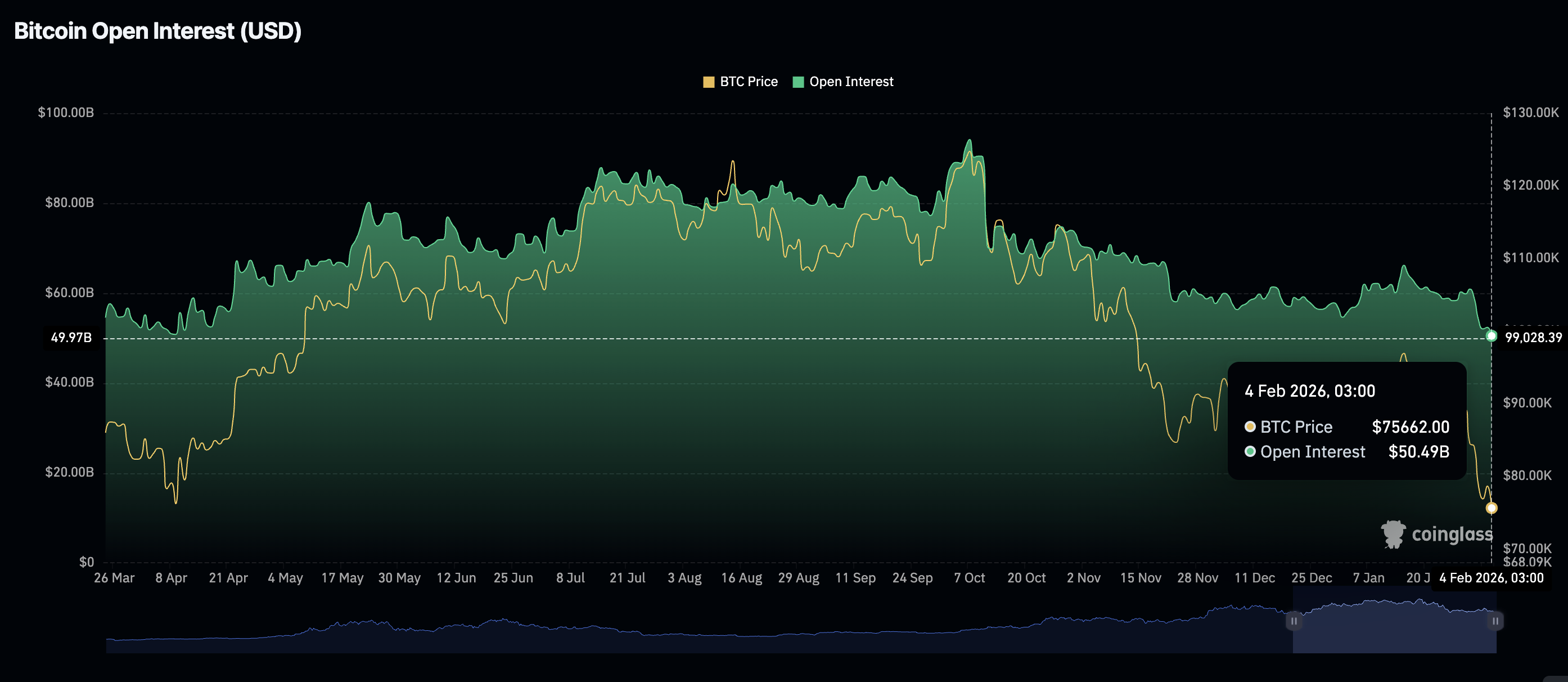
Meanwhile, Bitcoin faces an extended drawdown in the derivatives market. The futures Open Interest (OI) has, for the first time since April, fallen to $50.5 billion on Wednesday, confirming the lack of retail confidence in Bitcoin’s ability to sustain an uptrend in the short to medium term. The OI averaged at $52.4 billion on Tuesday, significantly below the record $94.1 billion on October 7.
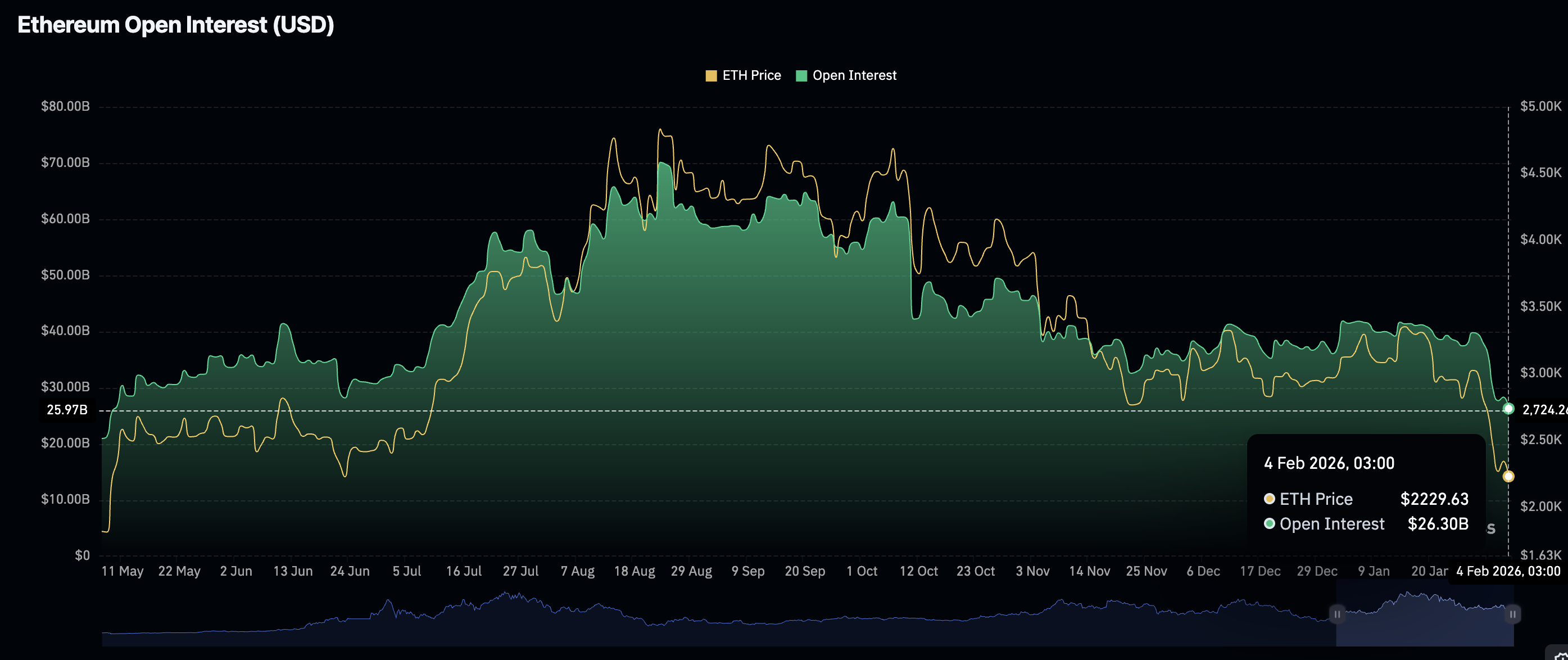
Ethereum is also facing an exodus of retail investors, who continue to reduce their risk exposure amid growing uncertainty. The drop in futures OI to $26.3 billion on Wednesday, from $28.3 billion the previous day, undermines Ethereum’s ability to advance from its recent low at $2,110. The OI hit a record $70.1 billion in August, reinforcing the need for steady retail demand to support the next recovery leg.
Similarly, XRP remains on the back foot as derivatives demand slows further to $2.6 billion on Wednesday, from $2.9 billion the previous day. The futures OI has not exceeded $5 billion since the October 10 crash, and remains significantly below the $10.9 billion record high reached on July 22.
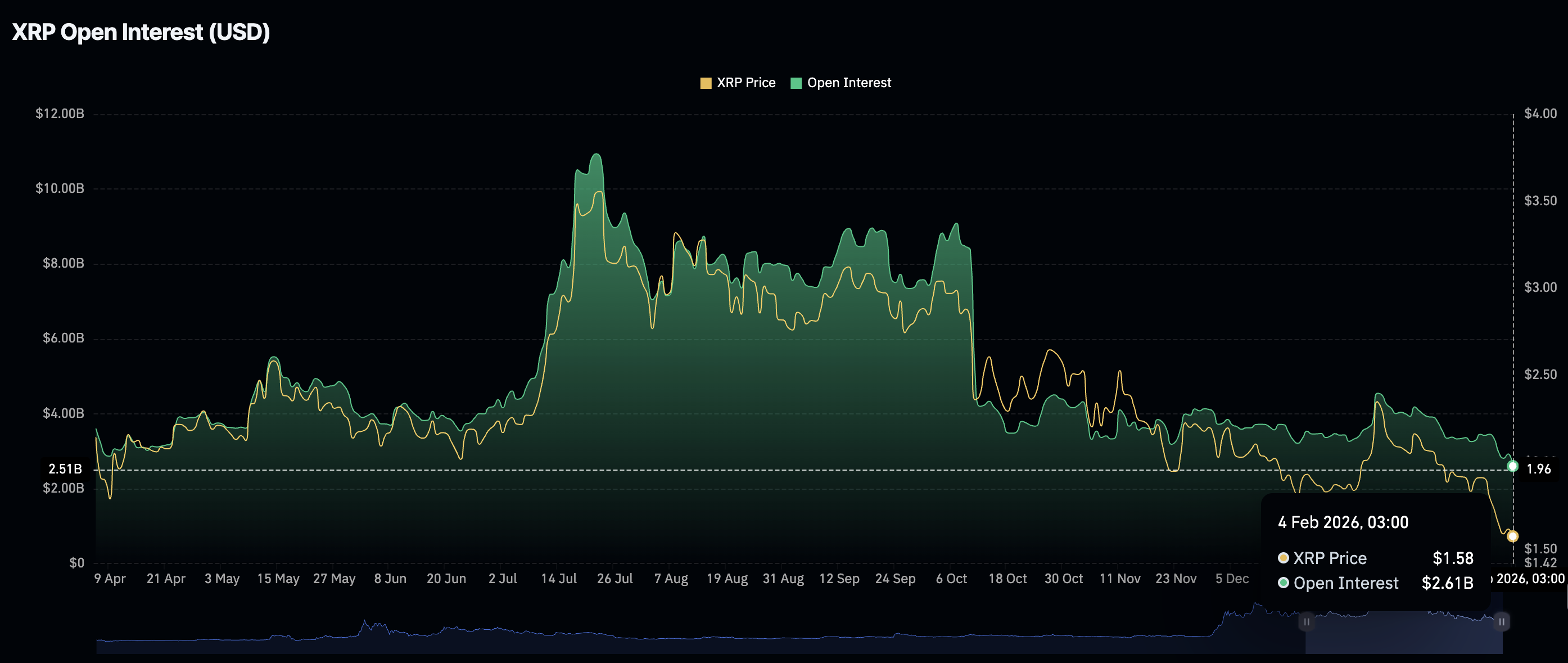
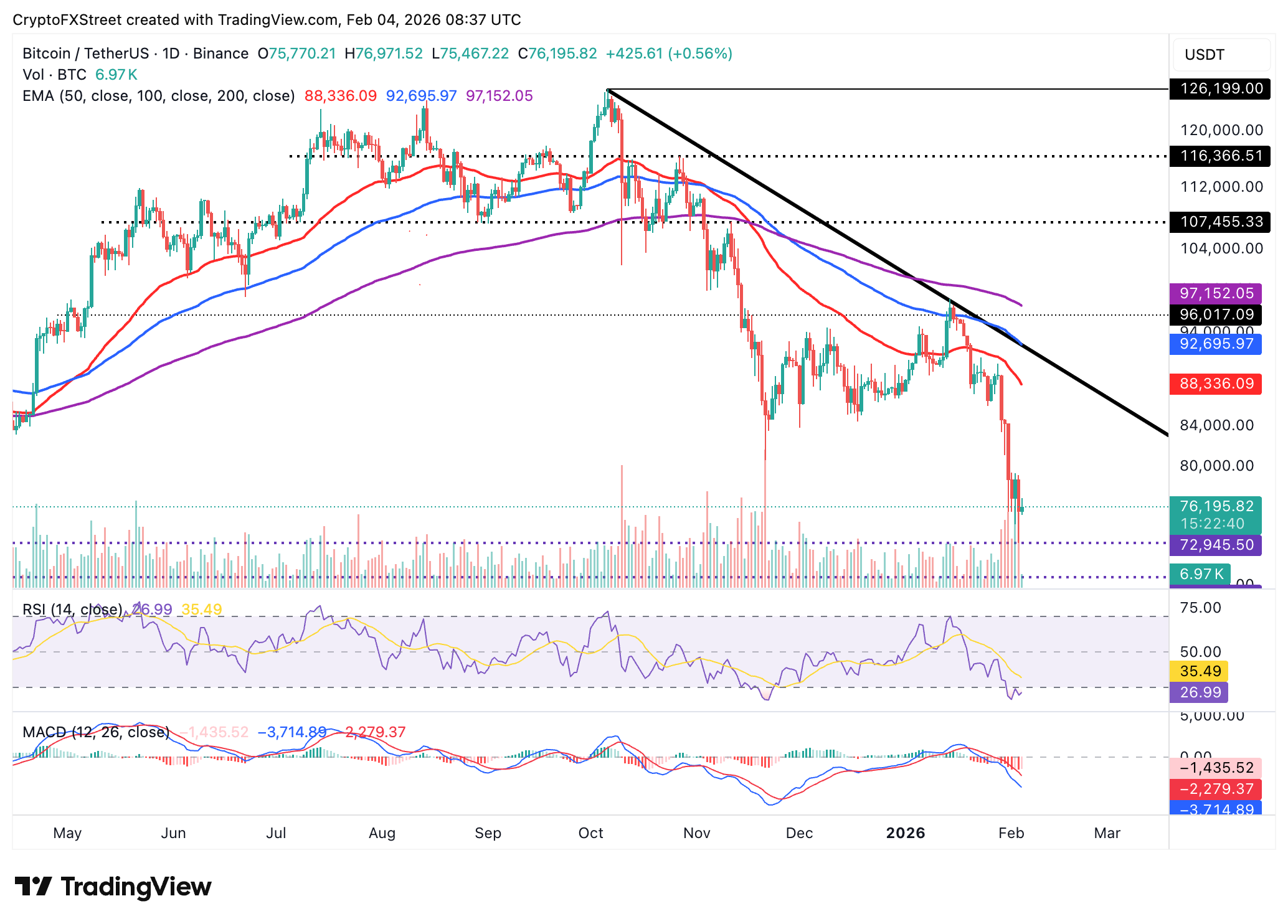
Chart of the day: Bitcoin holds above support
Bitcoin is delicately holding short-term support at $76,000 as the Relative Strength Index (RSI) rises to 27 within oversold territory on the daily chart, indicating that while selling pressure is apparent, bears are overextended.
A daily close above the immediate support ($76,000) will likely strengthen a potential bullish outlook toward the $80,000 level. However, the Moving Average Convergence Divergence (MACD) indicator is extending below its signal line on the same chart, suggesting bearish momentum is increasing. Trading below $76,000 may accelerate the downtrend by 4% to Tuesday’s low of $72,946.
Altcoins technical outlook: Ethereum, XRP eye short-term rebound
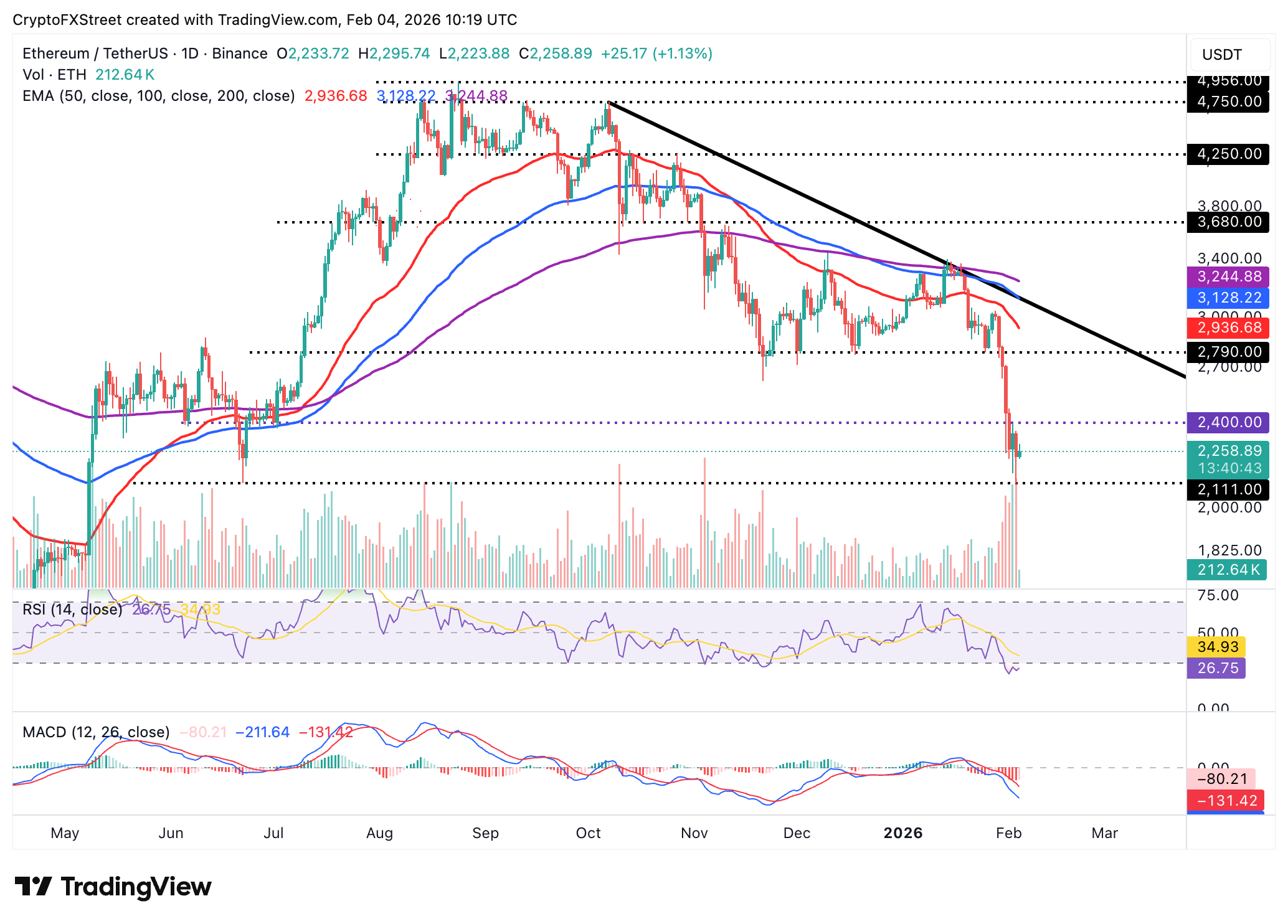
Ethereum is advancing toward the $2,300 resistance at the time of writing on Wednesday, after testing support at $2,110 on Tuesday. A slight increase in the RSI to 27, within oversold territory on the daily chart, suggests a potential decrease in bearish momentum. Traders will watch for the RSI to rise toward the midline to confirm a steady price recovery targeting the next key hurdle at $2,400.
Meanwhile, the MACD indicator remains below the signal line on the same chart, as investors reconsider their risk positions. The red histogram bars appear to be fading, which may signal a bullish return in the near term.
As for XRP, bulls are holding onto support at $1.60 following a sharp correction to $1.53 on Tuesday. A reversal of the RSI above oversold territory at 30 on the daily chart indicates that bearish pressure may be slowly easing.
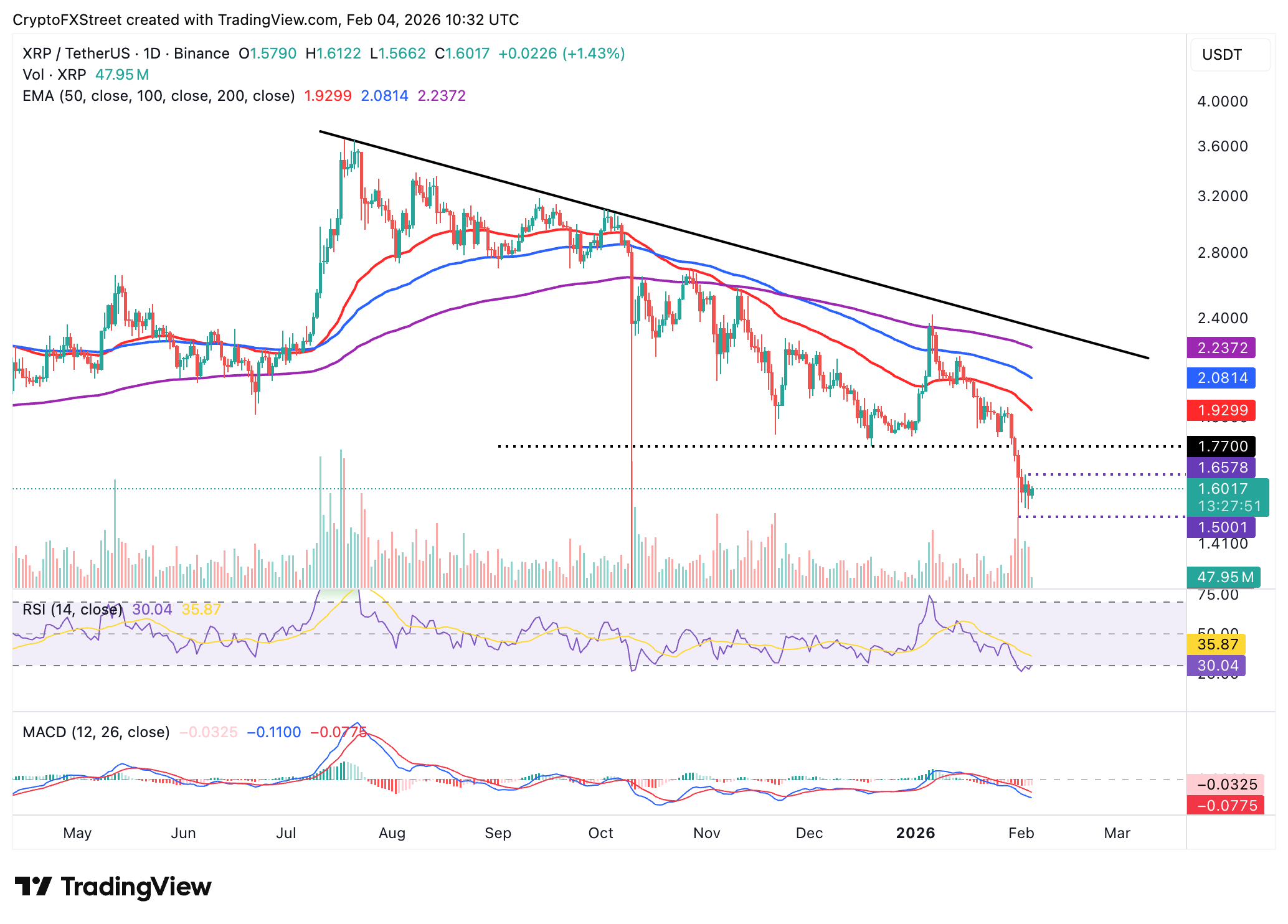
Holding support at $1.60 could signal stability and encourage investors to lean into risk, increasing the odds of a rebound to Monday’s high at $1.66.
Conversely, since the MACD indicator is below the signal line on the same chart, the path of least resistance may remain downward, increasing the odds of an extended correction to $1.50 – a support tested on Saturday.
(This story was corrected at 15:50 GMT to say that the crypto market could be mimicking the price action seen in 2018, not 2028.)
Crypto ETF FAQs
An Exchange-Traded Fund (ETF) is an investment vehicle or an index that tracks the price of an underlying asset. ETFs can not only track a single asset, but a group of assets and sectors. For example, a Bitcoin ETF tracks Bitcoin’s price. ETF is a tool used by investors to gain exposure to a certain asset.
Yes. The first Bitcoin futures ETF in the US was approved by the US Securities & Exchange Commission in October 2021. A total of seven Bitcoin futures ETFs have been approved, with more than 20 still waiting for the regulator’s permission. The SEC says that the cryptocurrency industry is new and subject to manipulation, which is why it has been delaying crypto-related futures ETFs for the last few years.
Yes. The SEC approved in January 2024 the listing and trading of several Bitcoin spot Exchange-Traded Funds, opening the door to institutional capital and mainstream investors to trade the main crypto currency. The decision was hailed by the industry as a game changer.
The main advantage of crypto ETFs is the possibility of gaining exposure to a cryptocurrency without ownership, reducing the risk and cost of holding the asset. Other pros are a lower learning curve and higher security for investors since ETFs take charge of securing the underlying asset holdings. As for the main drawbacks, the main one is that as an investor you can’t have direct ownership of the asset, or, as they say in crypto, “not your keys, not your coins.” Other disadvantages are higher costs associated with holding crypto since ETFs charge fees for active management. Finally, even though investing in ETFs reduces the risk of holding an asset, price swings in the underlying cryptocurrency are likely to be reflected in the investment vehicle too.

Mais de um milhão de usuários confiam na FXStreet para dados de mercado em tempo real, ferramentas de gráficos, insights de especialistas e notícias de Forex. Seu calendário econômico abrangente e webinars educacionais ajudam os traders a se manterem informados e tomarem decisões calculadas. A FXStreet conta com uma equipe de cerca de 60 profissionais, divididos entre a sede em Barcelona e diversas regiões globais.
Ler mais








