

Fed: Warsh’s policy shift and Dollar outlook – Commerzbank
Commerzbank economists Bernd Weidensteiner and Christoph Balz assess how incoming Fed Chair Kevin Warsh could reshape U.S. monetary policy and its implications for the Dollar. They highlight his criticism of past Fed policy, preference for trimmed-mean inflation, focus on AI-driven disinflation, desire for a smaller balance sheet, reduced forward guidance and a likely path toward rate cuts and weaker Fed independence.
Warsh’s stance on inflation and rates
"As for the outlook on inflation, however, he seems more optimistic than many current FOMC members. And this is due in no small part to what he sees as the productivity-boosting effects of the introduction of artificial intelligence (AI)—effects that, in Warsh’s view, received a boost from the Trump administration’s deregulation and tax policies."
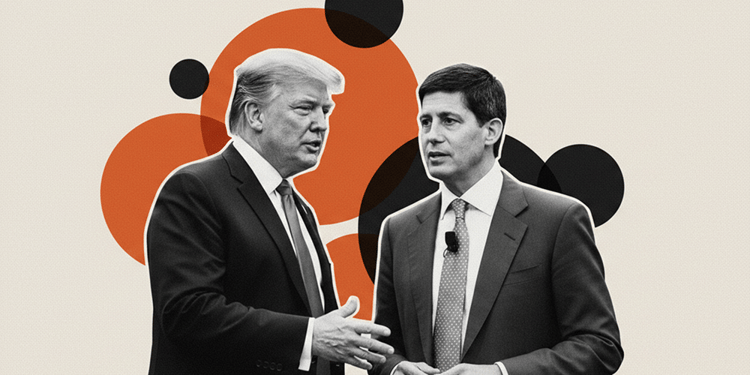
"It is likely to be more difficult for Warsh to build a consensus that inflation risks are diminishing due to the increasing prevalence of artificial intelligence, and that this provides room for interest rate cuts. President Trump will certainly continue to put pressure on the Fed, however."
"Beyond clear majorities within the FOMC, this is likely to have implications for monetary policy, as historical experience suggests. The Fed will probably not be able to hold its ground against the president in the long run; formal independence offers only temporary protection. We continue to expect three interest rate cuts starting at the end of the year."
"The trend in government debt also suggests that presidents after Trump will also push for low key interest rates. After all, the U.S. federal government’s debt recently surpassed the 100% of GDP mark, and interest payments are playing an increasingly significant role in the federal budget. We therefore anticipate a gradual erosion of the Fed’s independence."
(This article was created with the help of an Artificial Intelligence tool and reviewed by an editor.)














