

Торговля
Изучите широкий спектр рынков с конкурентными ценами, высокой ликвидностью и передовыми торговыми инструментами.
Узнать больше 
Платформа
Торгуйте без сбоев на мощной платформе TMGM, созданной для скорости, точности и превосходного торгового опыта.
Узнать больше Торговая платформа
Торговые инструменты
Академия
Изучите основы торговли с помощью материалов для начинающих, включая руководства, вебинары и аналитические обзоры рынка.
Узнать больше Новости и аналитика
Получайте актуальные рыночные обновления и экспертную аналитику, чтобы быть на шаг впереди торговых возможностей
Узнать больше Новости и аналитика
О нас
Узнайте, что отличает TMGM — наше глобальное присутствие, надежное регулирование и приверженность инновациям в трейдинге.
Узнать больше Почему выбирают TMGM
Спонсорство
Japanese Yen recovers from two-month low as BoJ rate hike bets meet intervention risk
- USD/JPY drifts lower on Thursday as BoJ rate hike bets and intervention fears support the JPY.
- Hawkish Fed expectations and geopolitical risks act as a tailwind for the USD and spot prices.
- The fundamental backdrop warrants caution before confirming that the pair has topped out.
The USD/JPY pair attracts some sellers during the Asian session on Thursday, snapping a two-day winning streak to its highest level since early September, around the 160.00 psychological mark touched the previous day. Spot prices, however, show some resilience below mid-159.00s, warranting some caution before positioning for a further decline amid mixed fundamental cues.
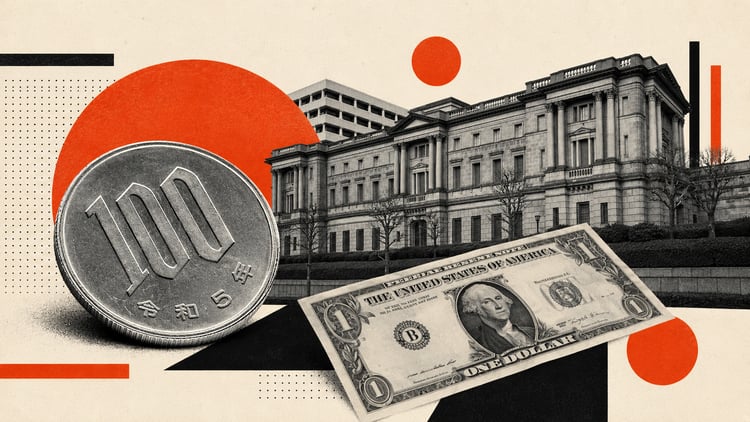
The preliminary Corporate Goods Price Index (CGPI) published by the Bank of Japan (BoJ) showed that wholesale inflation increased by 0.7% in October, marking the first rise in three months. Moreover, the yearly rate accelerated to 7.1% from 6.8% in September, strengthening the case for an imminent BoJ rate hike in December. Adding to this, Japan's top currency diplomat Atsushi Mimura warned against excessive FX volatility, fueling intervention risks and providing a modest lift to the Japanese Yen (JPY).
The US Dollar (USD), on the other hand, consolidates a two-day rally to its highest level since April 2025 and exerts some downward pressure on the USD/JPY pair. However, the growing acceptance that the US Federal Reserve (Fed) will raise borrowing costs again and the possibility of a jumbo 50-basis-point (bps) rate hike in December continue to act as a tailwind for the USD. Moreover, the geopolitical risk premium remains in play amid the US-Iran standoff, which further supports the safe-haven Greenback.
President Donald Trump signaled that further US military action against Iran was unlikely for now, raising hopes that negotiations could bring an end to the conflict. That said, the US has repeatedly struck Iran’s Qeshm Island, while Tehran targeted an Omani island used to help ships navigate the Strait of Hormuz. This tempers expectations for a diplomatic resolution to the US-Iran conflict, which, along with hawkish Fed bets, favors USD bulls and backs the case for the emergence of dip-buying around the USD/JPY pair.
USD/JPY daily chart
Technical Analysis
The USD/JPY pair maintains a bullish near-term bias above the 100-day Simple Moving Average (SMA) at 158.99. Spot prices consolidate just beneath the 61.8% Fibonacci retracement of the 152.88–164.00 rally at 159.75, which is followed by the 78.6% retracement at 161.62. On the downside, initial support emerges at the 100-day SMA at 158.99, ahead of the 50.0% retracement at 158.44. A deeper pullback would expose the 38.2% level at 157.13, with lower structural floors at 155.51 and 152.88.
(The technical analysis of this story was written with the help of an AI tool. Know more.)
Bank of Japan FAQs
The Bank of Japan (BoJ) is the Japanese central bank, which sets monetary policy in the country. Its mandate is to issue banknotes and carry out currency and monetary control to ensure price stability, which means an inflation target of around 2%.
The Bank of Japan embarked in an ultra-loose monetary policy in 2013 in order to stimulate the economy and fuel inflation amid a low-inflationary environment. The bank’s policy is based on Quantitative and Qualitative Easing (QQE), or printing notes to buy assets such as government or corporate bonds to provide liquidity. In 2016, the bank doubled down on its strategy and further loosened policy by first introducing negative interest rates and then directly controlling the yield of its 10-year government bonds. In March 2024, the BoJ lifted interest rates, effectively retreating from the ultra-loose monetary policy stance.
The Bank’s massive stimulus caused the Yen to depreciate against its main currency peers. This process exacerbated in 2022 and 2023 due to an increasing policy divergence between the Bank of Japan and other main central banks, which opted to increase interest rates sharply to fight decades-high levels of inflation. The BoJ’s policy led to a widening differential with other currencies, dragging down the value of the Yen. This trend partly reversed in 2024, when the BoJ decided to abandon its ultra-loose policy stance.
A weaker Yen and the spike in global energy prices led to an increase in Japanese inflation, which exceeded the BoJ’s 2% target. The prospect of rising salaries in the country – a key element fuelling inflation – also contributed to the move.
Лучшие статьи
1Австралийский доллар остается под давлением на фоне сокращения профицита торгового баланса Китая в октябре2Профицит торгового баланса Китая в октябре сократился сильнее ожиданий и составил 712,72 млрд юаней.3Индекс доллара США (DXY) почти не меняется вблизи отметки 101,70 в ожидании данных по CPI в США на фоне неопределенности вокруг Ирана4Экспорт Китая в октябре вырос на 35,2% в годовом выражении, превысив ожидания в 33,5%.5Импорт Китая в октябре превысил ожидания (32%): фактическое значение составило 41,6% г/г6Торговый баланс Китая составил $105,28 млрд, что ниже ожиданий ($125,8 млрд) в октябре.7Сальдо торгового баланса Китая (CNY) в октябре составило 712,78 млрд, что ниже ожиданий в 859 млрд.8Экспорт Китая (г/г, CNY) в октябре снизился до 28,7% с предыдущих 29,6%.9Новозеландский доллар стабилизировался: переговоры по Ирану не смогли подтолкнуть пару NZD/USD вверх.


Начать!
Зарегистрируйтесь и получите доступ к глобальным рынкам менее чем за 3 минуты

Свяжитесь с нами









Контакты
Телефон: +61 2 8036 8388
Факс: +61 2 8036 8388
Эл. почта: support@tmgm.com
Веб-сайт: https://www.tmgm.com



Информация, представленная на этом веб-сайте, носит исключительно общий характер и не является персональной финансовой консультацией. Прежде чем действовать на основании любой информации на этом веб-сайте, вам следует оценить ее уместность с учетом ваших целей, финансового положения и потребностей. Инвестирование в CFD и маржинальные контракты на FX сопряжено со значительными рисками и подходит не всем инвесторам. Вы можете потерять больше, чем ваш первоначальный депозит. Вы не владеете базовым активом и не имеете в нем какой-либо доли. Мы рекомендуем вам обратиться за независимой консультацией и убедиться, что вы полностью понимаете связанные с этим риски, прежде чем начинать торговлю. Важно прочитать и принять во внимание документ с раскрытием информации, прежде чем приобретать любой продукт, указанный на веб-сайте. Информация и рекламные материалы, предлагаемые на этом веб-сайте, не предназначены для использования любым лицом в любой стране или юрисдикции, где такое использование противоречило бы местным законам и нормативным актам. Продукты и услуги, предлагаемые на этом веб-сайте, не предназначены для резидентов США, Малайзии и Таиланда.
TMGM уполномочена и регулируется в различных юрисдикциях.
Trademax Australia Limited, работающая под брендом TMGM, регулируется Australian Securities and Investments Commission (ASIC), AFSL № 436416 и находится по адресу: Level 28, One International Tower, 100 Barangaroo Avenue, 2000 Sydney, NSW Australia.
Email: support@tmgm.com.au
Trademax Global Limited, работающая под брендом TMGM, уполномочена и регулируется Vanuatu Financial Services Commission (VFSC), регистрационный номер 40356, и зарегистрирована по адресу: 1276, Kumul Highway, Port Vila, Vanuatu, Republic of Vanuatu.
Email: support@tmgm.com
Trademax Global Markets (SE) Limited, работающая под брендом TMGM, уполномочена и регулируется Financial Services Authority (FSA) Сейшельских Островов, номер лицензии SD224. Компания зарегистрирована по адресу: Office No 13, Providence Estate ABIS Centre, Mahe, Seychelles.
Email: support@tmgm.com
Trademax Global Markets (International) Pty Ltd, работающая под брендом TMGM, уполномочена и регулируется Financial Services Commission, Mauritius (FSC), лицензия № GB22201012, и зарегистрирована по адресу: 33, Edith Cavell Street C/o IQ EQ Fund Services (Mauritius) Ltd Port Louis, 11324 Mauritius.
Email: support@tmgm.com
Авторское право © TMGM. Все права защищены